Post
[Town Star] Producing 'Gasoline' to Maintain the Town
Town Star has various early builds, but the primary goal is the same: gasoline production. When you first acquire a town site, you are provided with 20,000 funds and 40 gasoline. At this time, gasoline is consumed when selling produced goods through trade, and it is not automatically refilled over time.
Therefore, before consuming all 40 gasoline, you must build a building to produce gasoline directly in order to continue trading and grow the town. If you fail to establish a gasoline production base and use up all the gasoline, there will be no more trade surplus, so there will be no incoming money, but you will have to pay the workers' wages, which will reduce your funds and eventually lead to bankruptcy.
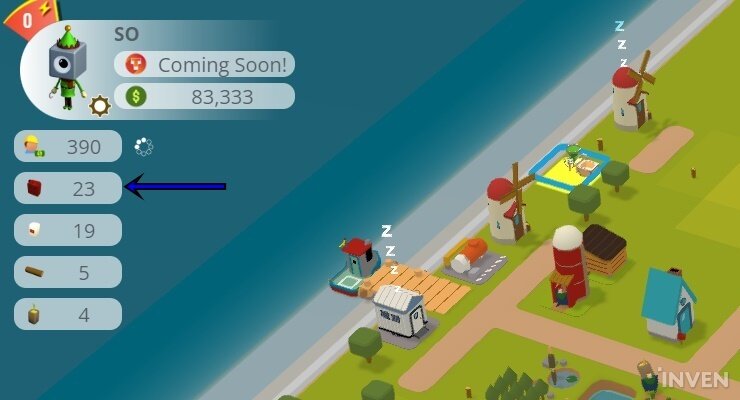
■ Step.1 Let's move past the early build and create primary processed products
Farm or Ranch, either is fine! Choose a primary processed product production build
The only items that can be produced in the town at the beginning are basic products such as wheat. Basically, a wheat farm and farmer tile are provided, and you can earn money through this, but even if you collect 10 units, which is the basic unit of trade, and sell them with difficulty, you only get $3,000. Lumber, another resource that is relatively easy to obtain, also brings in $2,500 for 10 units.
You might think this is not a bad profit in the early stages. However, as mentioned earlier, the important thing is to complete the 'gasoline production facility' before all the gasoline runs out. This includes several oil rigs, a refinery, a power plant, and a water supply or pumping facility. If you waste gasoline selling low-value basic products, you may not be able to maintain the facility, let alone build it.
Therefore, instead of wheat or lumber, you should go one step further and sell products obtained by processing them to earn more money. Primary products are usually popular from windmills or ranches. Windmills can process wheat into flour, sugarcane into sugar, and saltwater into salt, while ranches can produce eggs from chicken farms, milk from barns, and wool from sheep pens, so keep that in mind.

No matter which build you choose, the very beginning is similar. In the case of the most popular wheat farming-flour start, increase the well and wheat farm, which are provided one each at the beginning, to three each. Then, build a lumberjack's lodge to supply lumber, and sell wheat about two or three times each time 10 units are collected to secure additional funds.
If wheat starts to accumulate little by little in the silo, now build one to two windmills. If you want to reduce the daily wage that must be paid to the workers even a little, wait until both windmills are in the construction completion waiting state and the materials to produce flour are collected, and then complete the construction all at once. After that, click on the windmill to start flour production and sell it when 10 units are collected. Compared to selling wheat itself, the term for selling goods is much longer, so don't waste the remaining funds and expand the town slowly. If the remaining money is insufficient and wage payments stop, the workers will not work.
If you want to operate with a ranch tree instead of flour, do the same in the early stages, but instead of windmills, place two feed makers and troughs each, and one ranch worker's house. If the feed trough starts to fill up to some extent, build a sheep pen and start wool production. In addition, if you build the town on the coast, you can build a salt pan instead of a wheat farm from the beginning, and then produce and sell salt from the windmill.
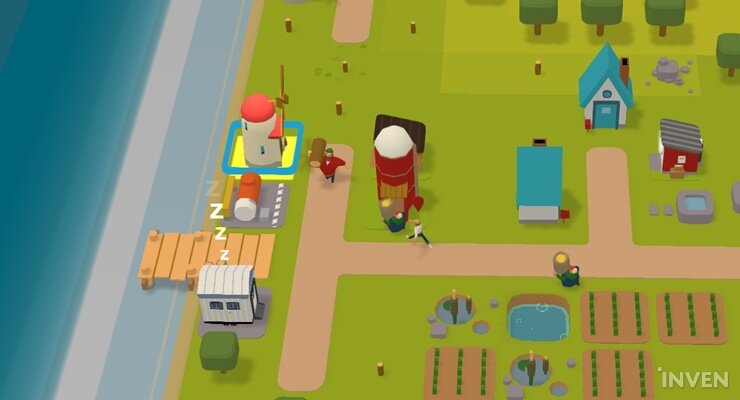
Don't just build it recklessly! Productivity increases if you know water, wind, and shadows
In the process of completing this primary product build, the important points are water, wind & shadows. First of all, water is an essential resource for producing products, from crops to salt pans and ranch operations such as sheep pens and chicken coops. However, in the case of wells, which are easily accessible water sources in the early stages, the production efficiency is quite low because workers have to fetch water directly and supply it to each facility.
What solves this problem is the Pond. Ponds cost $10,000 and the farm worker has to repeat the process of fetching water from the well and putting it in 10 times, so it is difficult to expand in the very early stages. However, once it is built, it automatically supplies '2' of water to the 8 tiles adjacent to it, and '1' of water to the area one tile further away.
The merit of automatic supply is very great. The time it takes for a worker to fetch water is much longer than the time it takes for a crop to grow, so one pond tile extracts the efficiency of several workers. For example, in the case of a wheat field, 3 water is required to enter wheat production, but if there is only a well around, the farm worker has to repeat the process of fetching water and putting it in 3 times. On the other hand, if you build a wheat farm next to a pond, the pond provides 2 water, so you only need to go to the well once. What if you build one more pond? Production resumes immediately without workers carrying water.
If you start building a town in a forest terrain, make full use of the Marsh tile in addition to the pond. It is not as good as a pond that provides water over a wide area, but the swamp also provides 1 water to the immediately adjacent tile.

Wind and shadows should be carefully considered when building windmills or barns. First of all, wind affects the production efficiency of windmills, and tall buildings block this wind flow. Tall buildings such as windmills and silos block the wind up to a distance of 3 tiles, so these buildings must be built more than 3 tiles apart, and worker dormitories also interfere with the wind flow within a 2-tile radius. Relatively small buildings such as warehouses interfere with the wind on the immediately adjacent tile, and very low feed grinders, chicken coops, and sheep pens do not interfere with the wind, so they can be built right next to the windmill.
In addition, the buildings in the early build generally cast 'shadows' around them to the same extent as they block the wind, and the growth of crops is hindered by the tiles covered by shadows. In the case of wheat, growth is completed in 20 seconds in the most comfortable environment, but if you create a wheat field in a location surrounded by windmills and worker dormitories, it takes 160 seconds to grow after all the water is supplied.
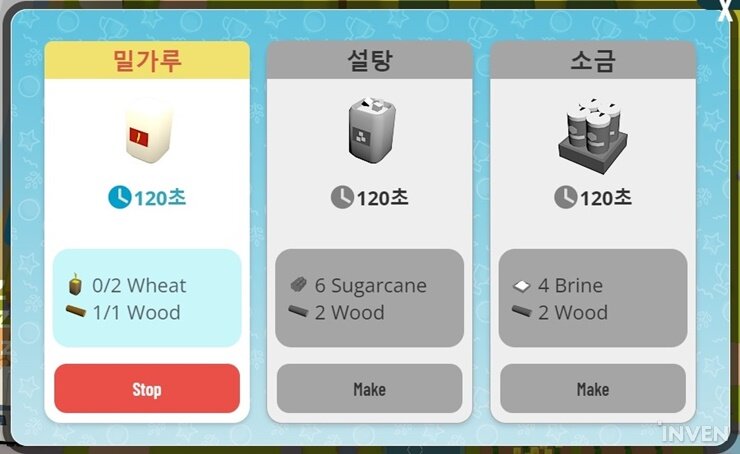
In summary, the conclusion can be easily drawn. In the case of wheat fields, which can be said to be the most basic, do not place tall buildings that cast shadows around them, and install them close to ponds and wetlands that can automatically receive water.
It is ideal to place windmills on the outermost edge of the town. As it is a tall building, it blocks the wind and casts a large shadow, so it is disadvantageous to secure arable land if it is placed in the center of the town. Windmills should be placed more than 3 tiles apart, and chicken coops, sheep pens, feed grinders, etc. that are not affected by wind and shadows should be placed in the space between them.
Expand the town, destroy and rebuild existing buildings, find the optimal location, and promote stabilization. For reference, worker dormitories are facilities that are difficult to place in many ways, such as wind and shadows, but there is a simple solution: place a road in the corner of the town and place dormitories around it. This utilizes the fact that workers do not return to their homes if there are still jobs left, and as a result, it is easy to think of dividing the windmill area/agricultural area/worker residential area.
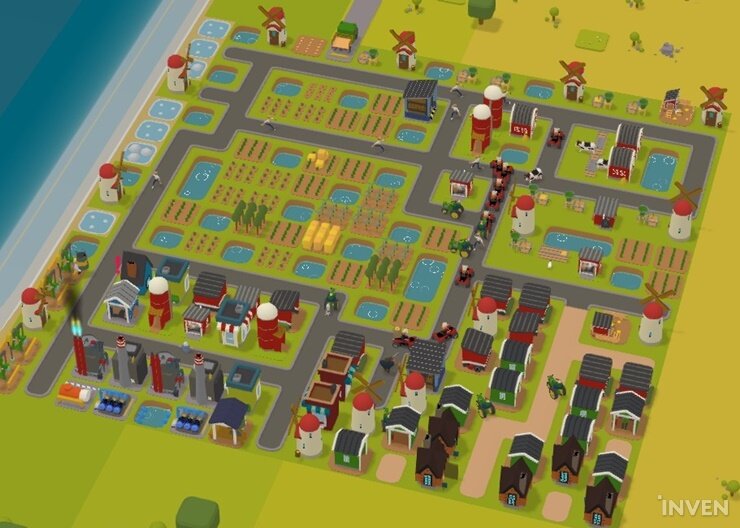
■ Step.2 Preparation is complete! If you have secured capital, extract and refine crude oil
Start with an oil rig, refinery, and wind power generator! Finally, have a power plant
If you sell products that can earn more money, such as wool or flour, you can quickly increase the unit of funds to more than 100,000. If you have not wasted gasoline by selling basic materials with low profitability such as wheat or lumber without thinking, you will have about 20 to 25 gasoline left. (Based on the standard that 1 gasoline is consumed for trade)
If you have come this far, it is time to create facilities for gasoline production. In order to produce gasoline, you must first produce crude oil, process it into oil at a refinery, and then process it into gasoline again. In this process, not only crude oil production but also electricity and industrial water supply are required, so many auxiliary facilities are needed.
The first thing to make is 3 to 4 oil rigs and 1 worker dormitory. At this time, industrial facilities have a different 'pollution' level from wind and shadows, which interferes with the growth of crops in the surrounding area. Therefore, it is important to build industrial facilities away from the farm area, and they are usually located in the corner of the map along with higher-level production facilities or worker dormitories.
When an oil rig is installed, crude oil is automatically produced over time, and workers collect it and store it in the fuel tank. The oil tank can store a total of 40 crude oil, oil, gasoline, and aviation oil, so if you continue to use the 40 gasoline provided at the beginning, it will not easily overflow, so there is no need to install two.
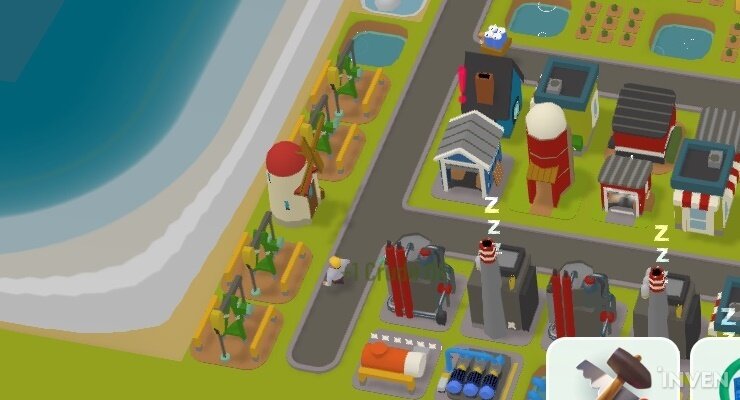
If crude oil starts to accumulate to some extent, you are almost there. Now, install a refinery and equip the facilities for the full-scale crude oil refining process. In addition to the refinery, you need a wind power plant to supply energy, a warehouse to store the produced energy, and a pumping facility to produce water drums. In the case of wind power plants, like windmills, they are affected by the wind, so select a site with no tall buildings around and install about 2 to 3.
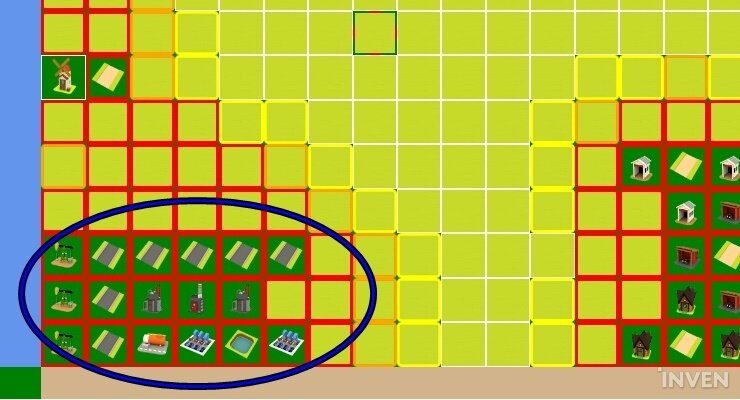
First, create a pond on the site where the refinery will be installed, and place pumping facilities on the left and right of the pond. The pumping facility has the function of automatically supplying water drums to the surrounding 1-tile area, and is an essential building to place a power plant (wind power X) in the future. Then, place the refinery above the pond. This will automatically supply a total of 2 water drums, one from each pumping facility, so the time it takes for refinery workers to move water drums to produce oil or gasoline disappears.
Now all you need is time. When the refinery is completed, first convert the accumulated crude oil into oil, and when the oil accumulates to some extent, change the refinery's production item to gasoline. To increase efficiency, build one more refinery and set it to refine crude oil into oil in one place and oil into gasoline in another. After that, place the power plant mentioned earlier between the refineries. The power plant automatically supplies 3-2-1 energy to the surrounding tiles, so from this point on, wind power plants are no longer needed and the remaining energy can be sold (the value is low).
If you come this far, the gasoline automatic production facility is completed, so you can reduce the worry of going bankrupt due to running out of gasoline and not being able to trade.
게임파이 인벤기자
2023-01-13