Post
Localization of the award-winning story "Heaven Burns Red"
What games come to mind when you think of 'story games'? Everyone will have their own, but you can't leave out Key's games, represented by the 'life' Clannad.
This Key and Wright Flyer Studios (WFS) have collaborated to create the game 'Heaven Burns Red'. 'Jun Maeda', Key's representative scenario writer who participated in works such as 'Kanon', 'AIR', 'Clannad', and 'Angel Beats!', is in charge of the main scenario, and this game was launched in Korea about a year ago.
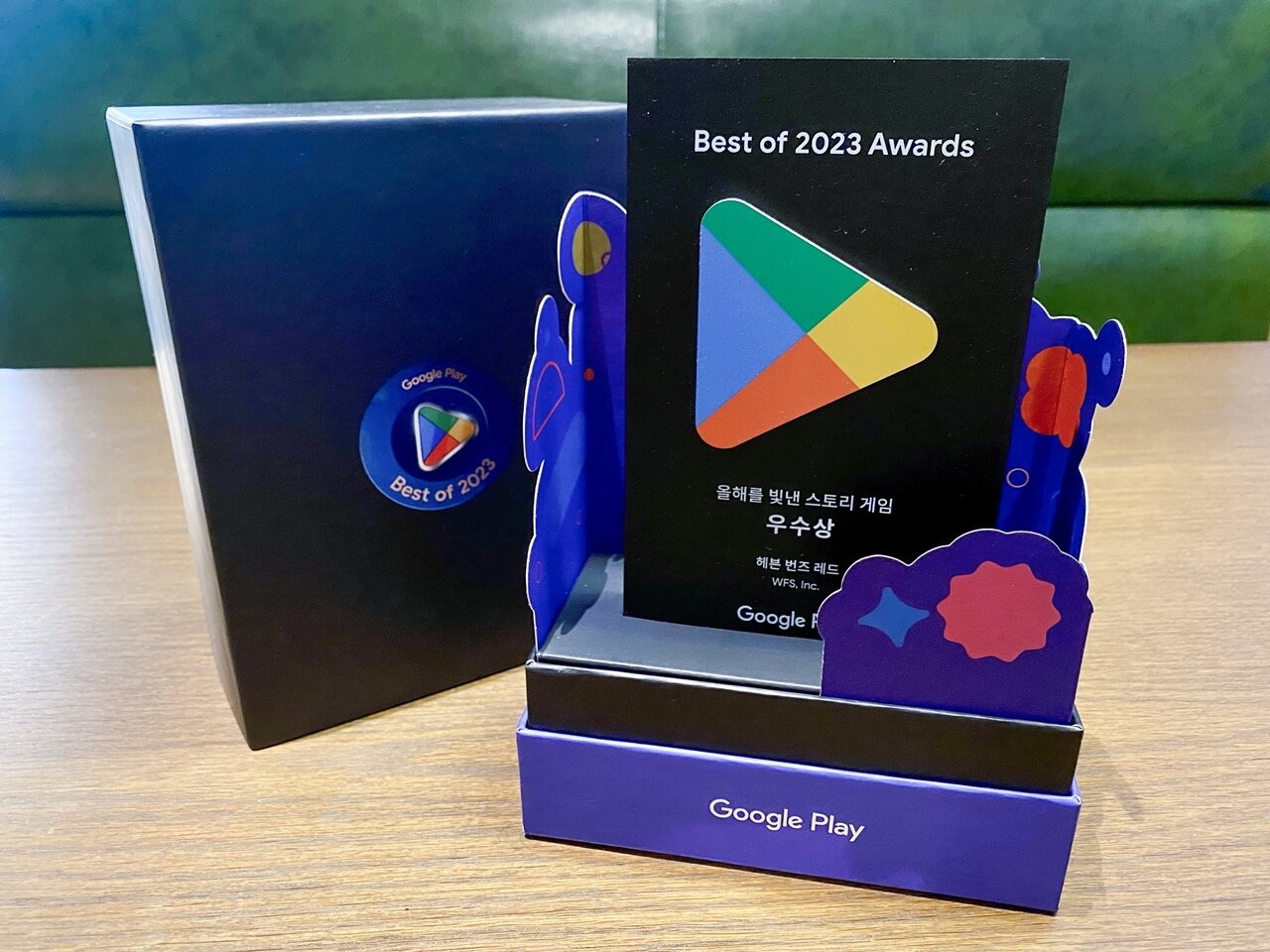
This game, which started its service in Korea with the rare policy of a global one-build that does not have separate servers for each country, has gained word-of-mouth popularity from the beginning with its excellent story and attractive characters, befitting the name of the story master Key. As a result, last year it was selected as the 'Story Game of the Year' at the 'Google Play Awards 2023'.
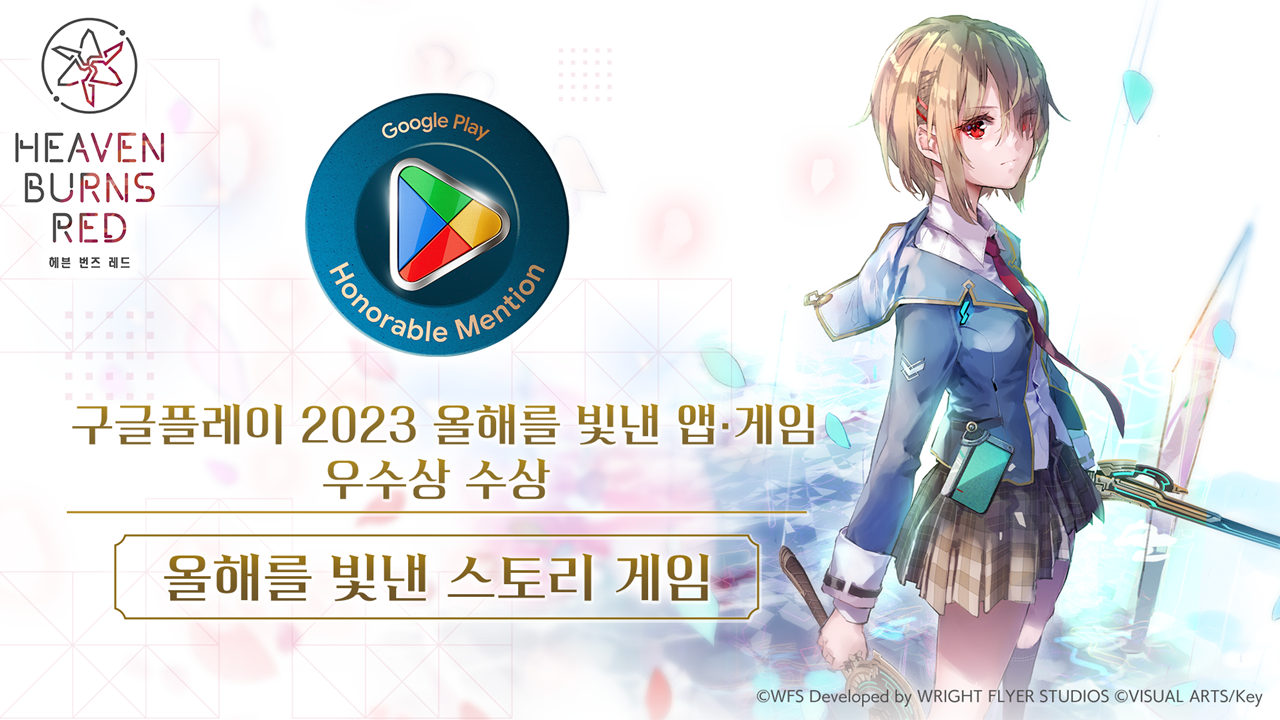
The basis for receiving such an evaluation is the high-quality Korean localization that allows you to enjoy the high-quality story without any regrets.
What is the process of localizing Heaven Burns Red into Korean? Inven conducted an interview with WFS's Heaven Burns Red Localization Director.
Q. Before the interview, please give a brief self-introduction to the Korean Heaven Burns Red users.
= Hello. I am Choi Joo-yeon, the Localization Director for Heaven Burns Red at Wright Flyer Studios (WFS). Nice to meet you.
Q. Heaven Burns Red (hereinafter referred to as Hebon Red) was selected as the 'Story Game of the Year' at the 'Google Play Awards 2023' through user voting. What are your thoughts?
= First of all, I would like to thank all the users who love Hebon Red. I think it was thanks to the users who made Hebon Red shine that it was selected as the winner.
In fact, there are many people in the company who are enjoying it so much that they are clamoring for the next story to be brought in quickly every time there is an update. This award felt like a sign that the users enjoyed it as much as we did, and I felt proud and thought that I should do even better so that you can be satisfied in the future.
We will continue to work hard to ensure that you can comfortably enjoy Hebon Red, where exciting stories will continue to unfold.
Q. What do you think is the secret to Hebon Red's story being so highly praised that it won an award in the story category?
= I think the unique story and lines written by Key's outstanding scenario writer Jun Maeda, and the humor and emotion that are melted into it, go well with Hebon Red's unique characters, which led to high praise.
Therefore, our localization team is always thinking and paying attention to how to convey the various elements that can be enjoyed so that users can understand and enjoy them as easily and interestingly as possible.
Q. As you said, I think the high-quality localization also played a role in receiving good reviews. How is the Korean translation of Hebon Red done and how is it reviewed?
= The translation work goes through several stages, and it generally proceeds in the following flow.
First, we receive the scenario from the production company, Visual Arts, and read it.
Then, we prepare questions by extracting parts that are curious or require explanation.
Then, we participate in the "Japanese Material Explanation Session" with the game designer who is collaborating with the Key development team. At the briefing session, we exchange opinions on the scenario background and translation direction, and only after adjusting them do we begin the translation.
After the translation is finished, the review manager does the proofreading. The proofreading includes the first translation review and the reflection of feedback on past translations collected from the community. Then, the translation is completed after the final review and proofreading by the in-house localization director, including myself.
When the completed translation is reflected in the game after going through these processes, the LQA (Localization QA) team conducts another review. After the LQA team's review is completed, we check the feedback and then proceed with another round of proofreading, including correcting mistranslations and typos. In this way, we are focusing on improving the quality of the translation by repeatedly checking and correcting it.
Q: It goes through many processes. Do you have any memorable episodes that you worked on in connection with the development team or the scenario manager?
= As I mentioned earlier, before starting a new story translation, we actively exchange opinions with the development team through the "Japanese Material Explanation Session". At the briefing session, we listen to explanations about Japanese culture and check what intentions the lines were written with.
In August 2023, an event called "You are this summer's Fairy, I Rec. that figure in my eyes." was held to commemorate the Half Anniversary. There is a scene where Ruka and Yuina make a wish while watching a shooting star. In that scene, there was something like this in Ruka's lines.
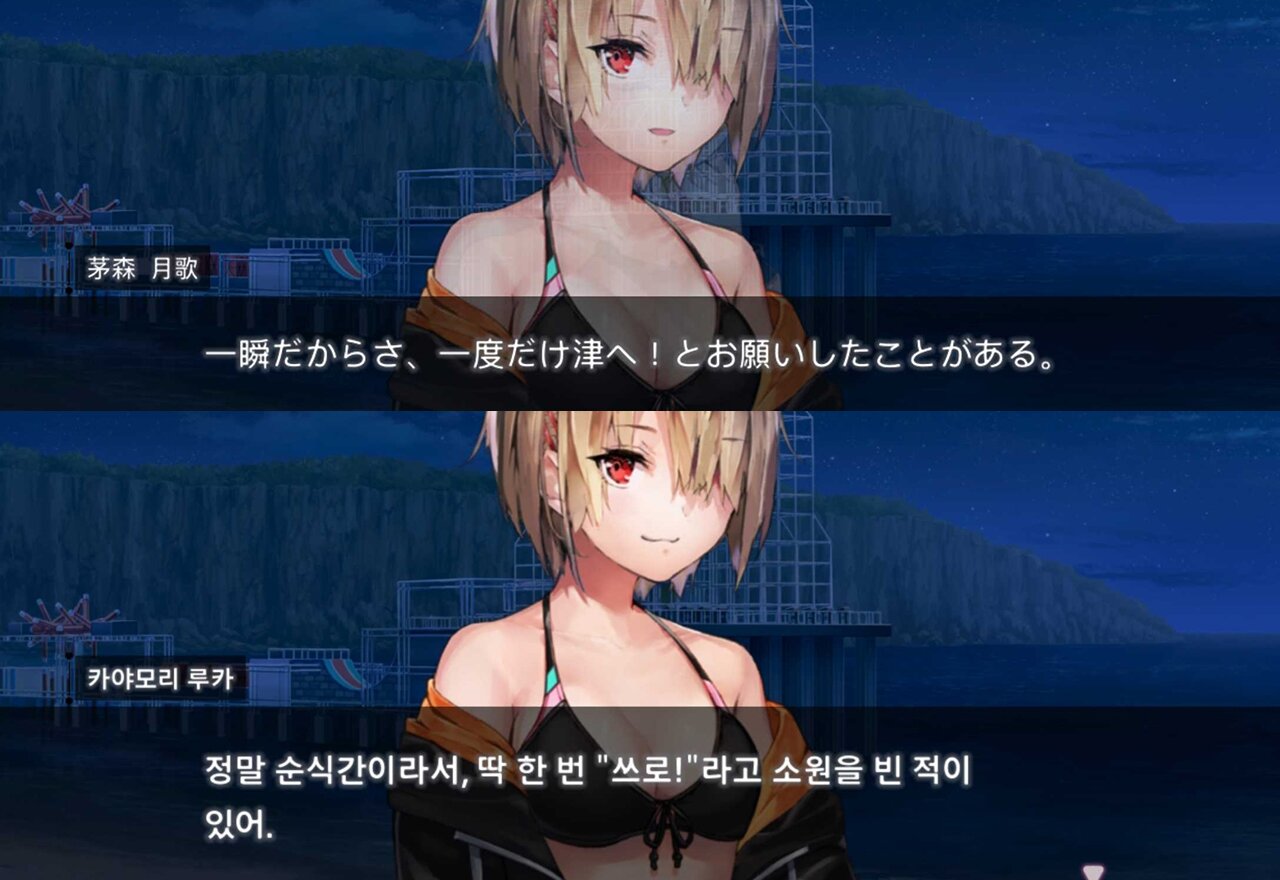
When I first saw this line in the original text, I wondered why "port (津 - Tsu - port, also means ferry)" came out of nowhere. I found out through the Japanese material explanation session that it was not a 'port' but a word referring to Tsu City, a region located in Mie Prefecture, Japan. Also, I learned for the first time that "Tsu (津)" is used as a synonym for short words in Japan.
It was a line that expressed Ruka's quirky charm, trying to say something quickly, anything, rather than making a specific wish in order not to miss the fleeting moment when the shooting star fell. If it weren't for the Japanese material explanation session, I probably wouldn't have been able to properly convey the hidden intention.
Q. There are many parts that are difficult to translate, such as the Japanese slang that Tama mainly uses in the game. Are there any points that you paid special attention to in the translation?
= There are many characters in Hebon Red, so there are many signature lines for each character. In addition, there are many elements related to Japanese culture and parody elements. We are paying special attention to translating those parts so that we can convey the nuances of the original text as much as possible.
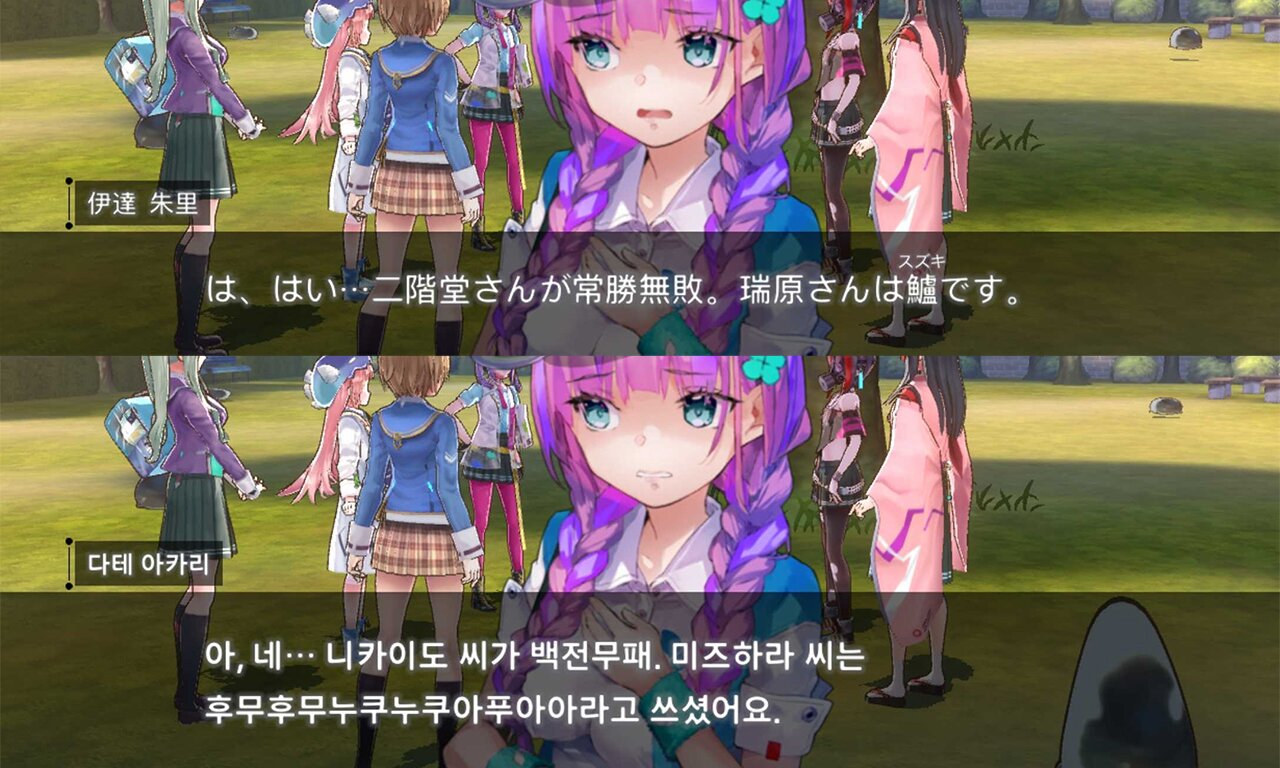
This scene was about writing letters on the character (Date Akari)'s back with a finger and Akari guessing what letters were written. For example, in Japan, the character 鱸 (sea bass) is famous as the kanji with the most strokes. However, if you translate this as 'sea bass' as it is, the intention of the original text will not be properly conveyed. It's a scene where she is surprised to have guessed the kanji at once, even though she wrote the most complicated kanji on her back with her finger. So, instead of the letters used in the original text, we translated it as 'Humuhumunukunukuapua'a', the fish with the longest name in the world, to capture the intention of the original text.
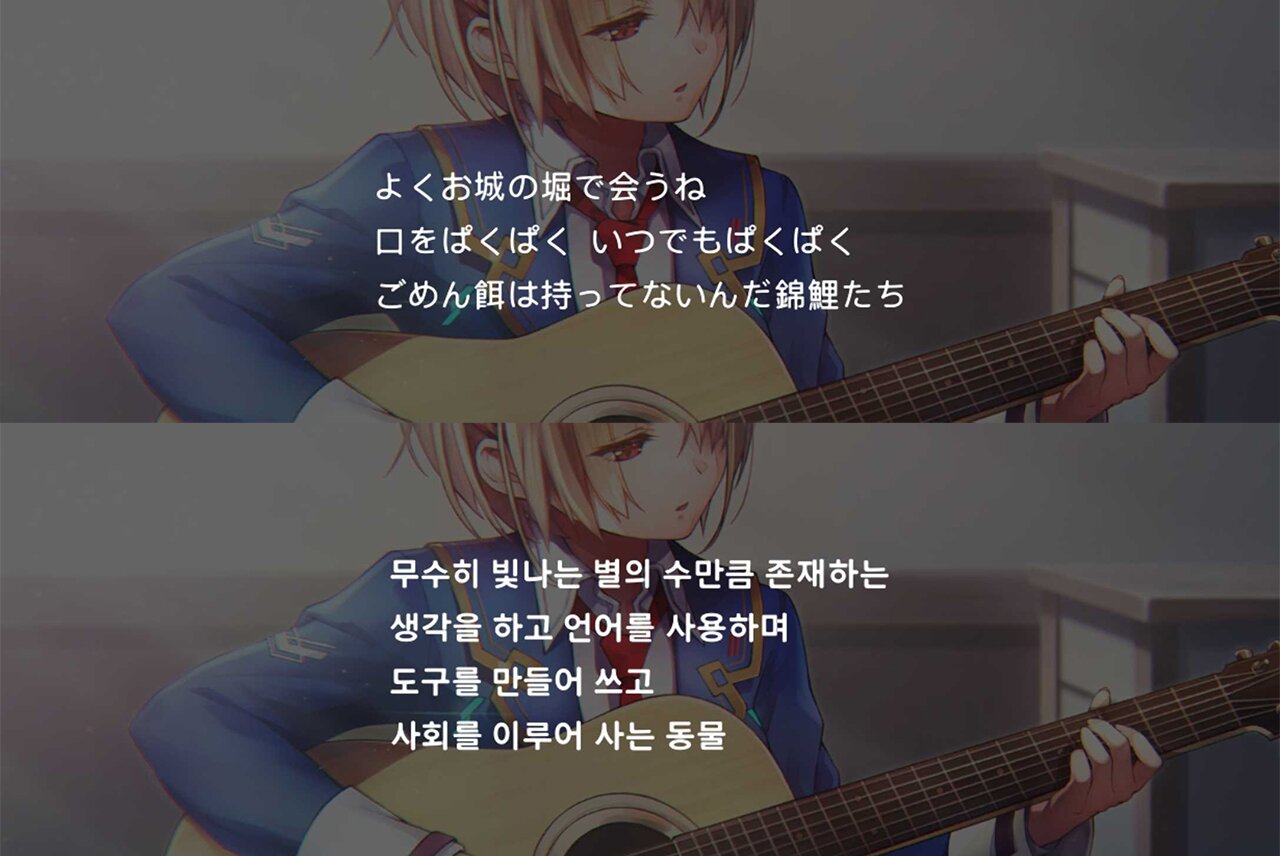
This scene is about writing lyrics with the word 'love'. In Japanese, it is a comical scene where the lyrics are written with the theme of carp (鯉 - Koi), which is a homonym of love (恋 - Koi). Since there is no homonym for love in Korean, we localized it by using the word 'person', which has a similar pronunciation, so that people can understand that it is a pun.
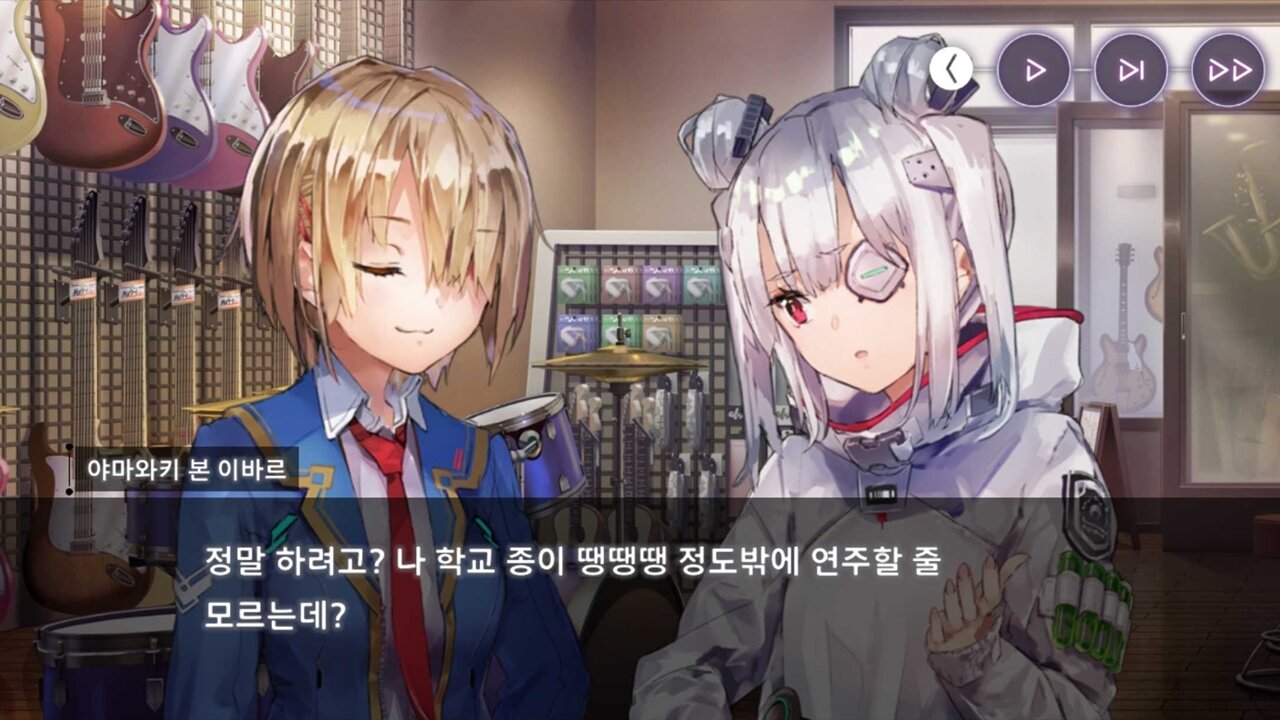
(Are you really going to do it? I can only play Frog Chorus?)
カエルの合唱 (Frog Chorus) is a well-known national children's song with a simple melody in Japan. Instead of the original text, we changed it to 'School Bell', a famous children's song in Korea, and expressed it as 'The school bell is ringing' to better convey the nuance of the original text.
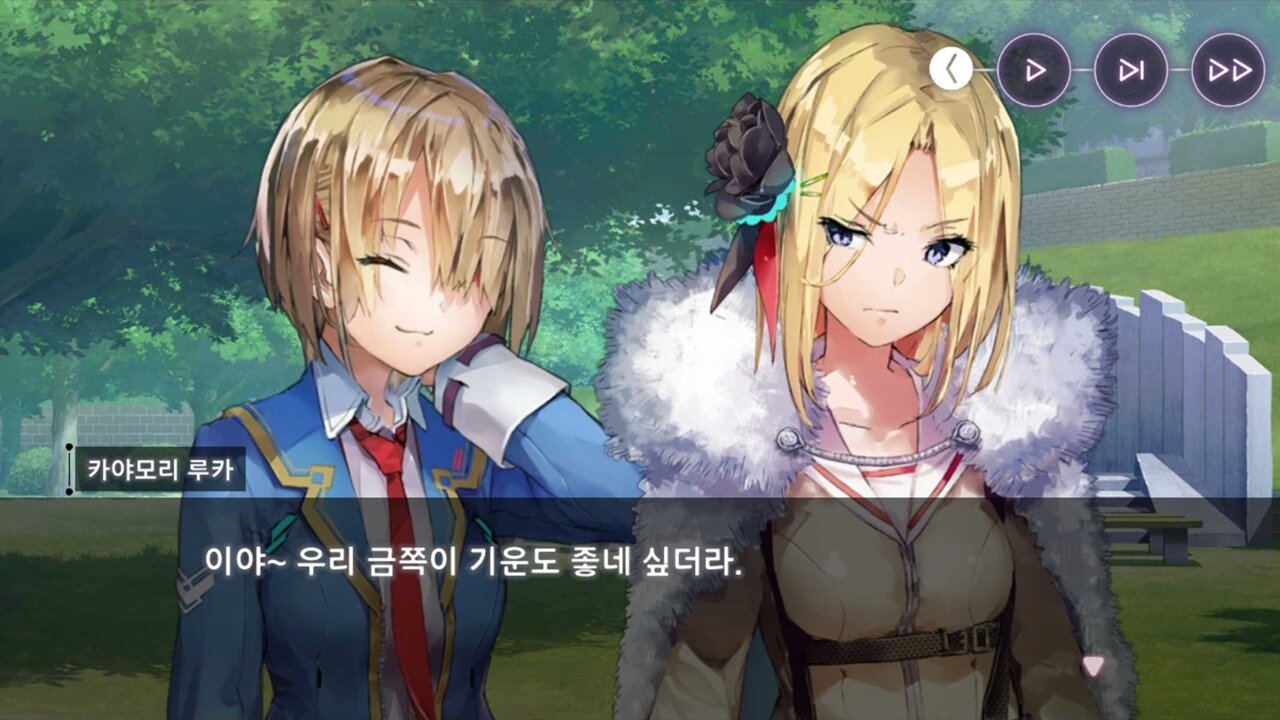
(Yeah, I thought he was a rascal)
The word わんぱく (disobedient rascal) used in the original text was translated as 'Geumjjogi', a term that has been widely used in Korea recently, to better convey that the other person is not communicating.
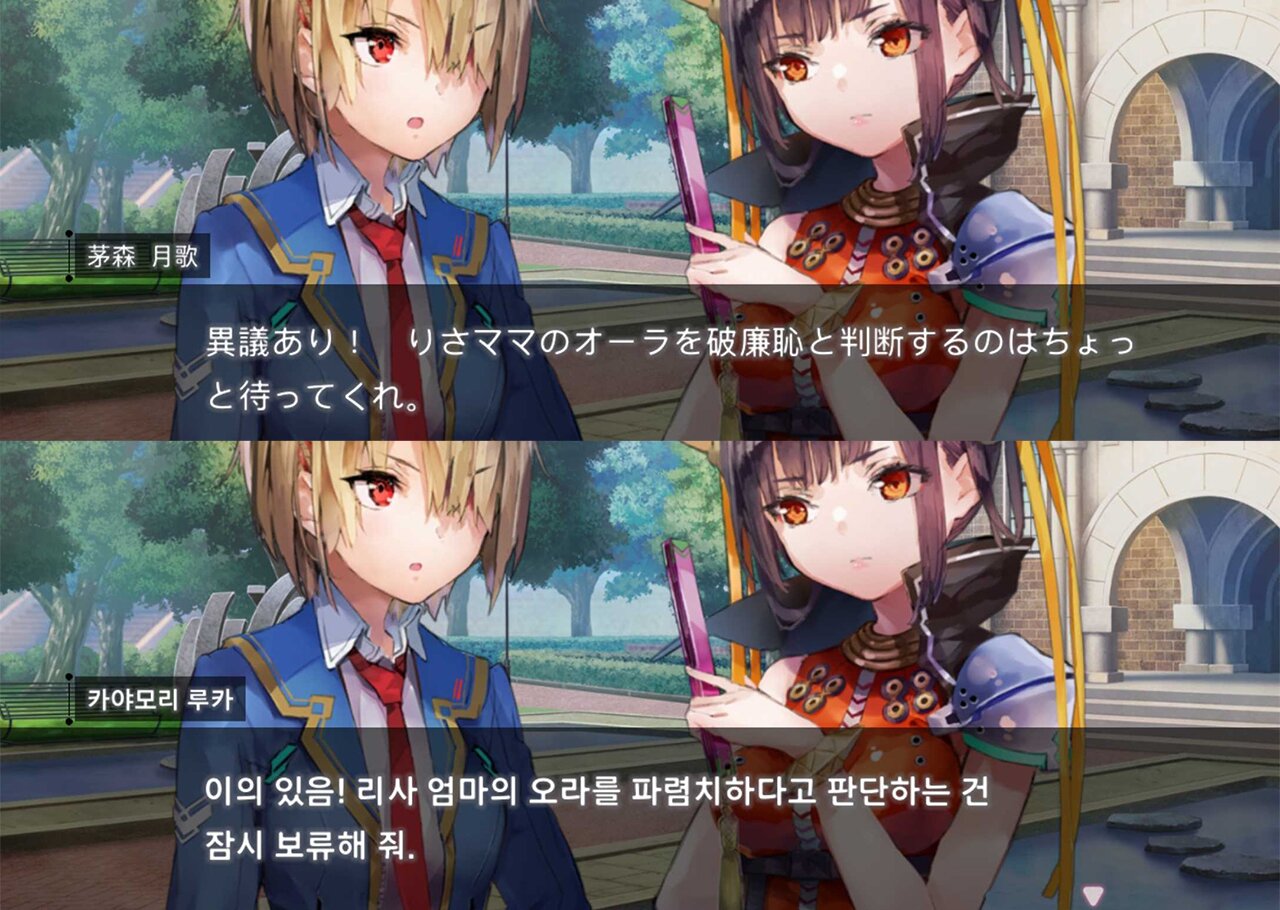
The translation 'Objection!' may feel somewhat unnatural because it has a strong direct translation feel, but in fact, this line is a parody of a famous line that appears in a certain game. Therefore, the translation was done by quoting the line from the game as it is so that many people can notice that it is a parody.
Q. I know that the Korean translation is constantly being improved even after its release. Can you introduce a few representative ones?
= We are always doing our best to deliver high-quality translations from the time of release, but we sometimes revise the translation even after the story is released. This is because users give us feedback on the translation after playing the game. Usually, in these cases, it is common to reflect the users' opinions in the content that is added next. However, we have a policy of adjusting the already released stories by reflecting the users' opinions as much as possible, and we are working on revising the existing translations in parallel with the new translations.
We plan to gradually revise the parts that have not been changed yet by listening to your opinions, so please keep an eye on them.
In order to properly convey one of Hebon Red's charms, the 'story', to you, we are constantly reflecting the opinions of users and the parts that we felt were lacking in the translation to improve it with better quality. Even if you have already played the story, you will be able to feel a fresh fun if you play it again.
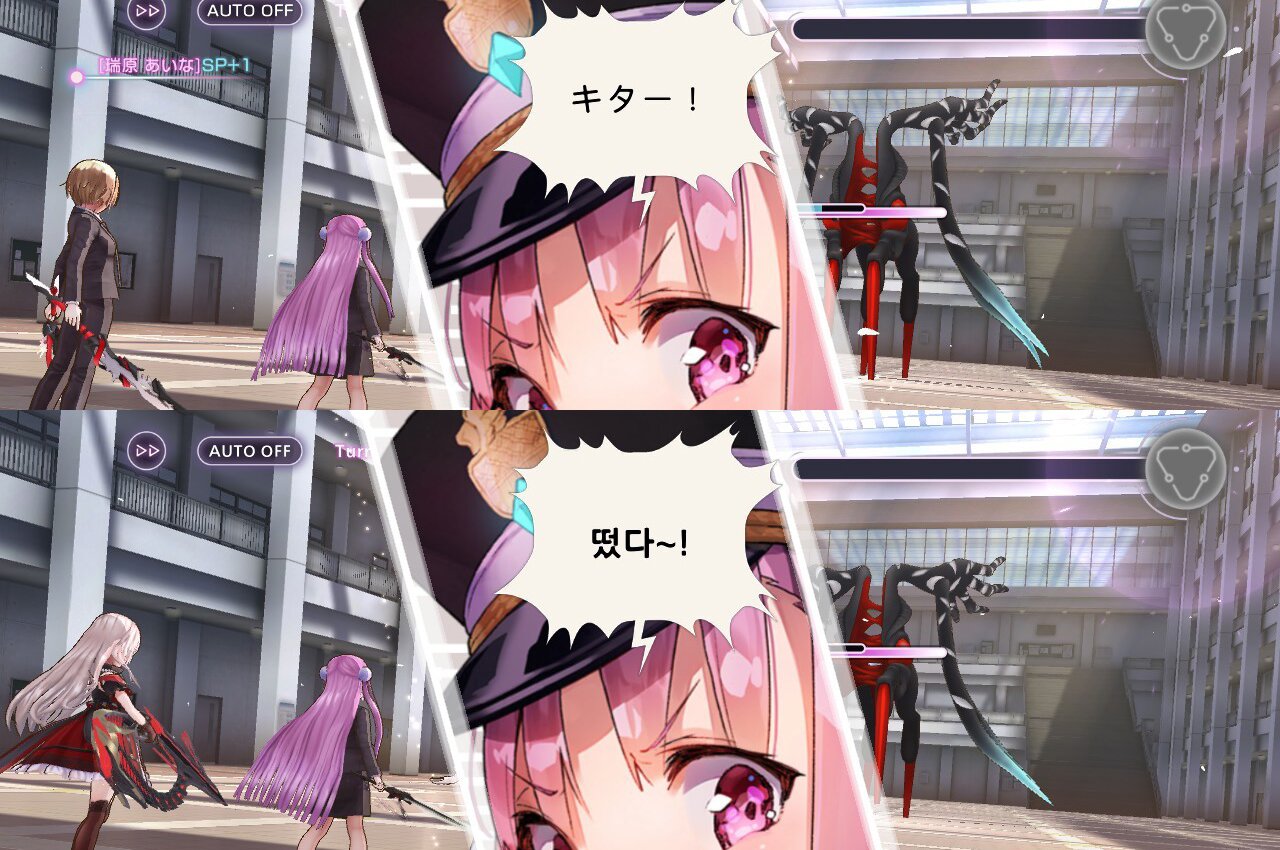
In the early days of the translation work, considering Tama's character, who is good at slang and quirky words, we translated 'キター!' in Tama's lines as 'Come on in~!'. This translation was revised because users actively accepted the opinion that it felt a bit old and damaged the character.
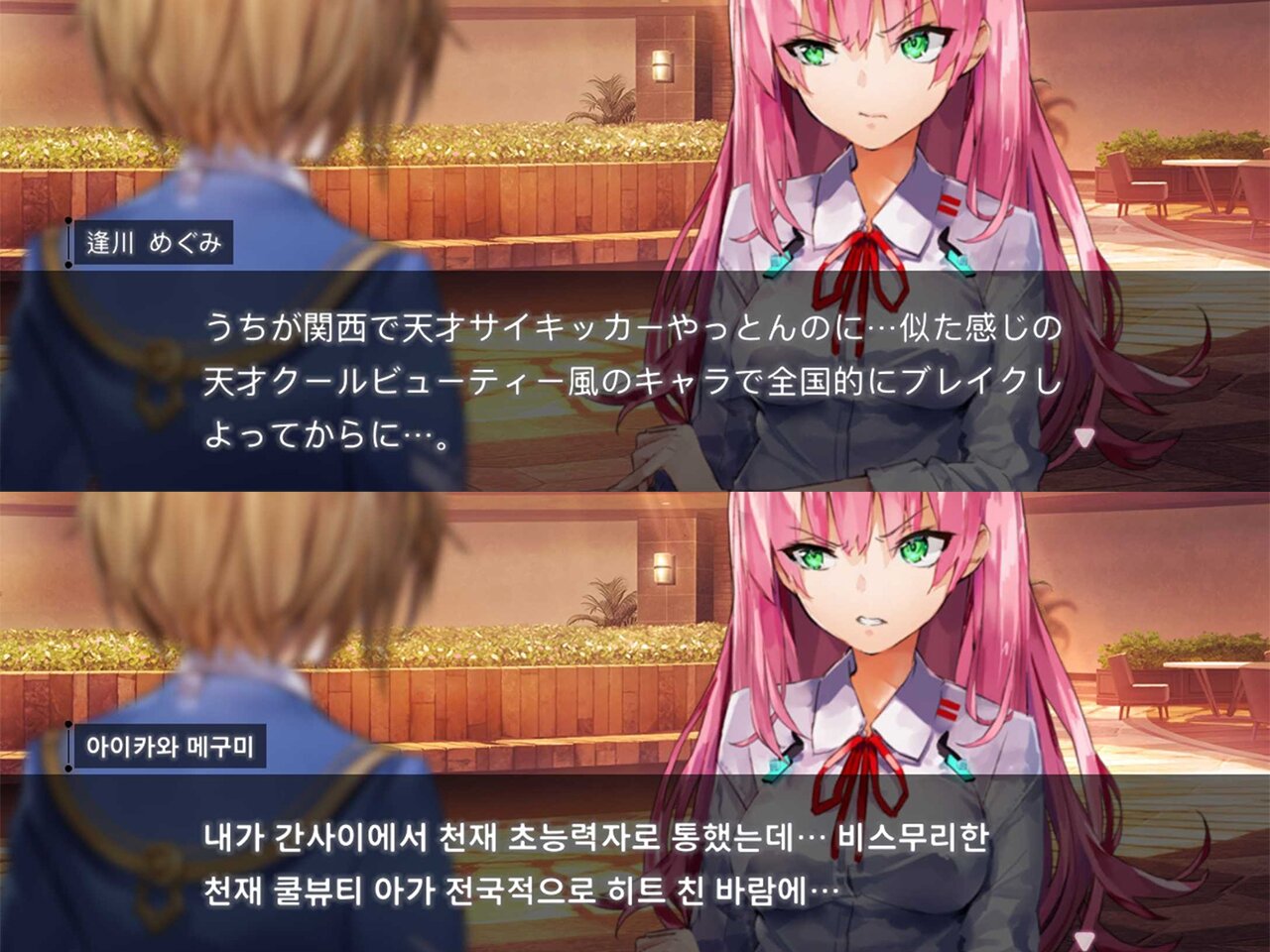
This line was also changed due to user feedback. Before the change, the word 'cold beauty' was not a non-existent word, but it was adjusted according to the opinion that it felt like a word that had gone by too much and that the nuance of the original text was not properly conveyed.
Q. How do you collect user feedback on Korean translation?
= We are checking the opinions posted on the official lounge and user community, and we are also referring to the opinions sent through customer support. Thank you for always sending us affectionate opinions and feedback.
Q. There are mixed notations, such as following the subculture notation (using aspirated sounds even for the first letter) for names, etc., and the standard notation (not using aspirated sounds for the first letter) for place names, etc. Is there a special reason for this?
= We had a lot of concerns about this part at the time of the work. Since Hebon Red is a game that supports full voice, if the character's name is translated into standard notation, it tends to feel awkward because it does not match the sound you hear. In order to reduce such a sense of incongruity, the character's name was translated as it is heard (subculture notation), but place names, etc., were translated into standard notation because they are real places.
Q. If you have any particularly impressive episodes while working on the Korean translation, please let me know.
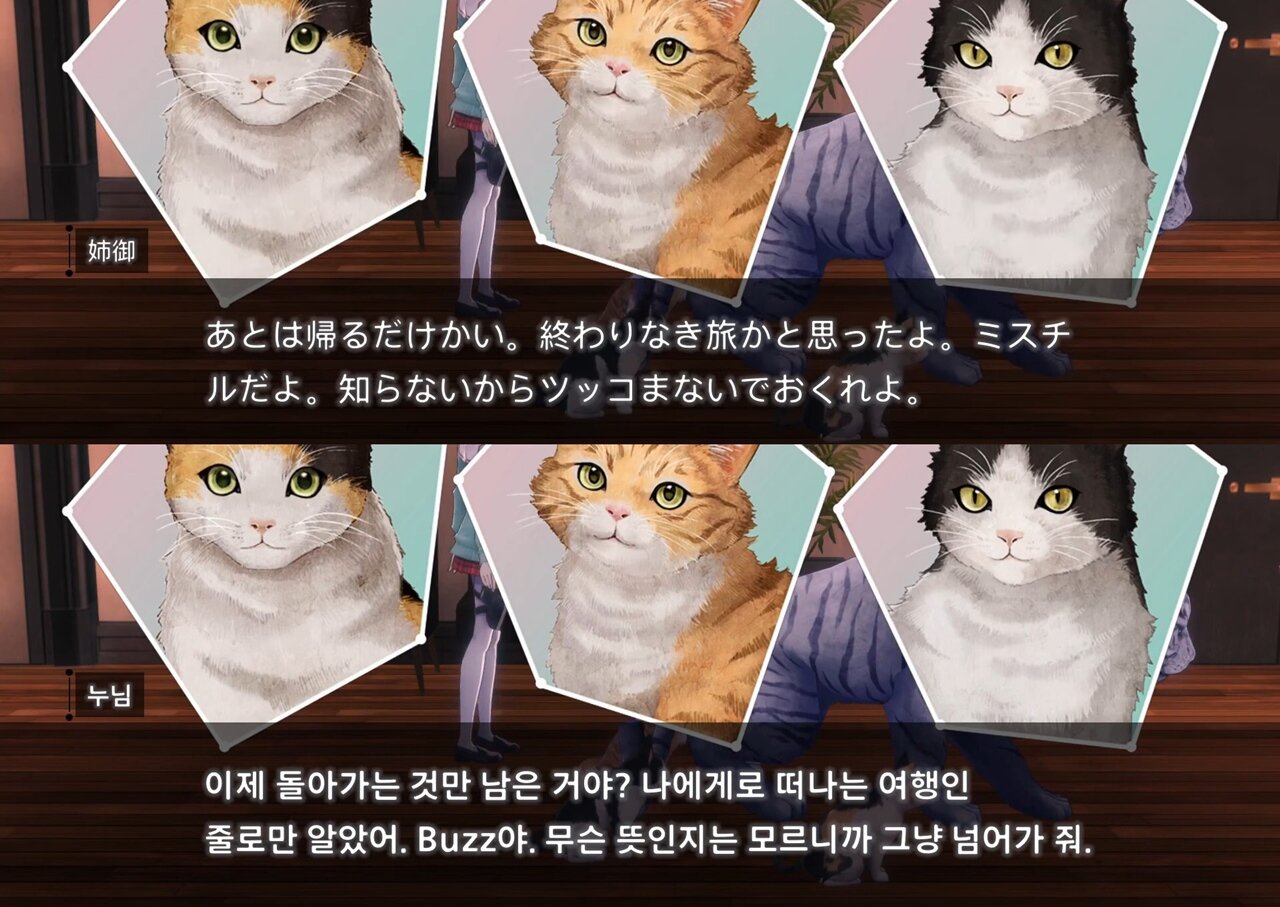
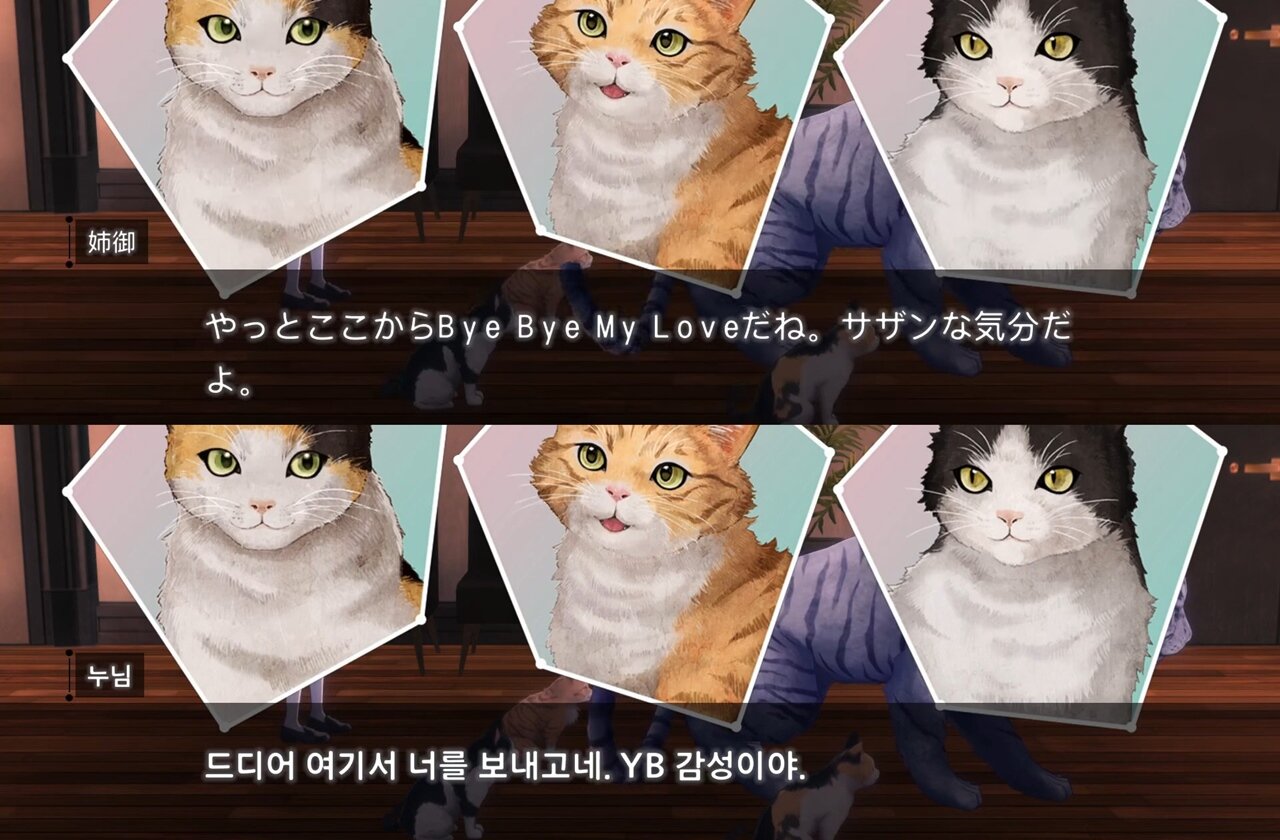
= Hebon Red's 15th event, 'Dignified and Ephemeral Beings', which many people cite as a good translation, has a lot of gag scenes with Japanese bands and song titles.
I think I had a lot of worries in the early stages of translation about whether it would be better to translate it as it is or to localize it. I was also careful because they were real artists and songs. I thought that artists such as Mr. Children and Southern All Stars were so famous that many people in Korea would know them, so I thought about translating them as they were.
However, I decided that it would be right to localize it with Korean artists in order for more users to enjoy it, and as a result, I changed it to domestic artists such as Buzz and YB. I remember it was difficult to find songs with the most similar feeling so that the gag scenes that used not only the artist's name but also the song title could be conveyed well.
I was worried about what the reaction would be until the release, but thanks to the fact that many people praised it, I was able to solidify the direction of the translation.
Q. Finally, do you have anything to say to the Korean Hebon Red users?
= Thank you for always paying attention to Hebon Red and enjoying playing it.
Thanks to your support and encouragement for Hebon Red, we have been able to continue moving forward.
The localization team is continuously conducting reviews by referring to the valuable opinions you have given us, so please continue to keep an eye on us.
Please continue to give Hebon Red a lot of attention and love.
웹진 인벤문용왕 기자
2024-02-07