Post
Turn-based tactics game 'Cape' without the frustration ⭐6.5
The XCOM series has had an almost absolute influence on the turn-based tactics genre. So much so that the name XCOM itself has become a term symbolizing the turn-based tactics genre, and it can be said that it is divided into before and after XCOM. XCOM has had an overwhelming influence in the turn-based tactics genre, but its throne is now almost empty. This is because there has been no news of a new game since Chimera Squad, a spin-off released in 2020. A new game, 'Marvel's Midnight Suns', was released in collaboration with Marvel, but it did not live up to XCOM's status.
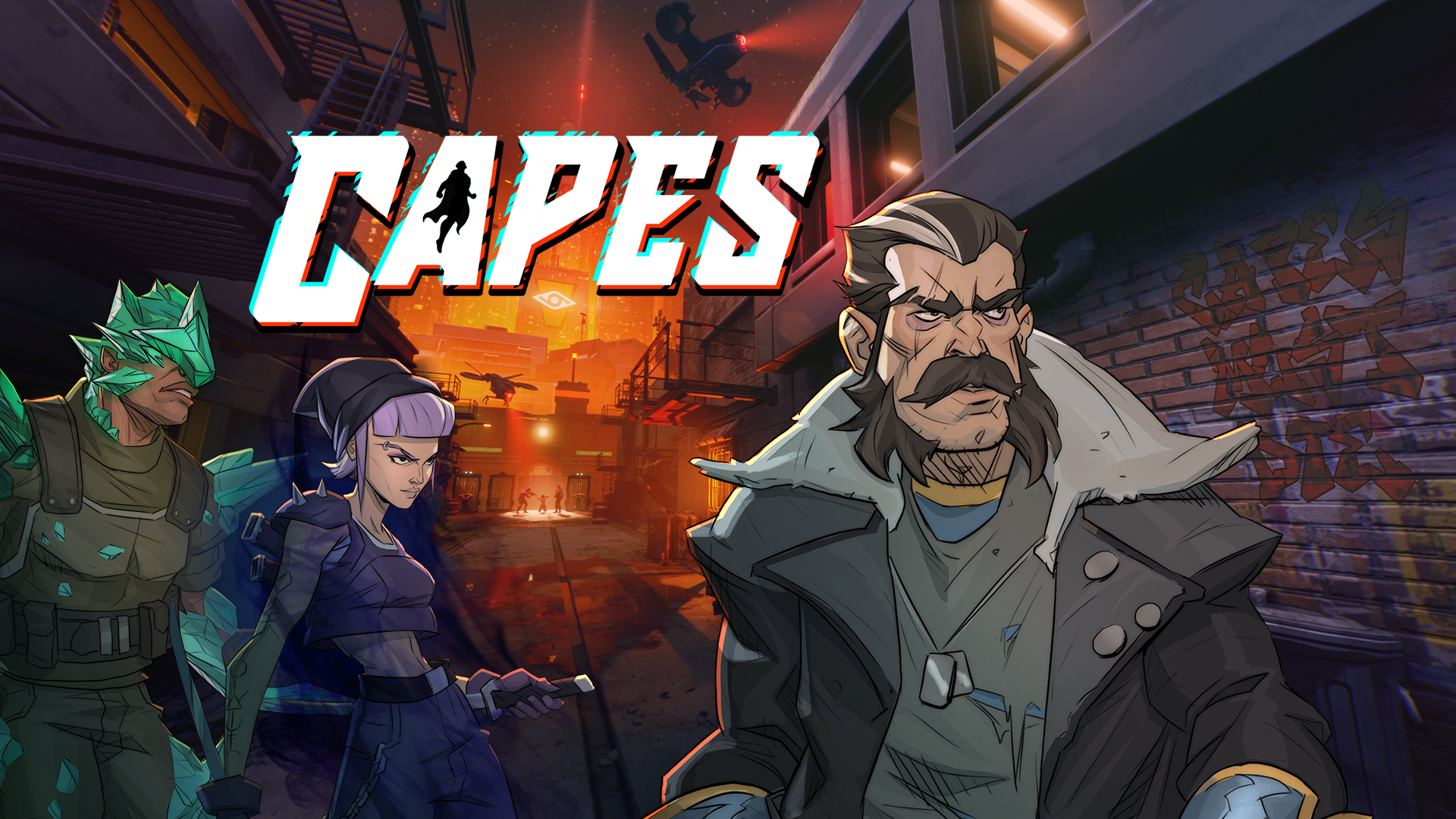
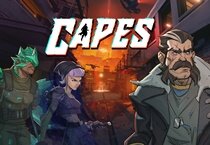
A game has emerged to challenge the throne that has been neglected for so long. Spitfire Interactive's new game 'Capes' is the main character. The biggest feature of 'Capes' is that it completely eliminates probability factors and cover, which are also famous for the meme Gamnabit. Since the advent of XCOM, many turn-based tactics games have faithfully followed the grammar established by XCOM, while only making slight variations, but 'Capes' seeks to break away from that grammar and pioneer its own path.
We took the time to find out if 'Capes' can quench the thirst of users who are thirsty for a new turn-based tactics genre.
장르명: 턴제 전술
출시일: 2024. 5. 30
리뷰판: 리뷰용 빌드
서비스: 데달릭 엔터테인먼트
플랫폼: PC, PS4, PS5, Xbox, NS
플레이: PC
What if Gamnabit is removed from the turn-based tactics genre?
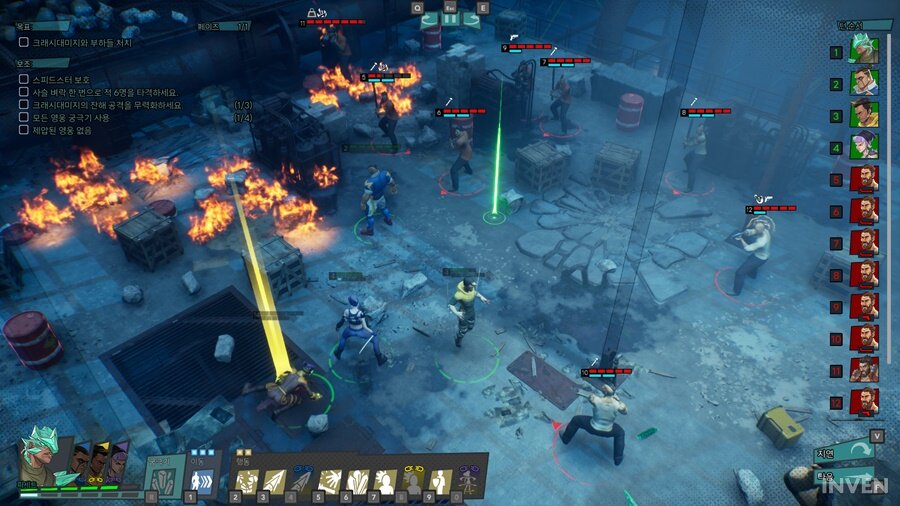
As mentioned in the introduction, the biggest feature of 'Capes' as a turn-based tactics game is that it completely eliminates probability factors and cover. This means that it has virtually broken away from the grammar of turn-based tactics games established by XCOM.
In fact, if you look at other turn-based tactics games based on XCOM, you can see that the battles themselves generally flow in a similar way, even though they have tried to differentiate themselves slightly. 'Gears Tactics', which removes the grid system and allows you to recover action power through the execution system, and 'Girls' Frontline 2', which deletes the hit rate but introduces a formula in which damage is reduced depending on the protection value and the degree of cover, are representative examples of games that have deviated from the standardized form, but still have not completely deviated from the grammar established by XCOM.
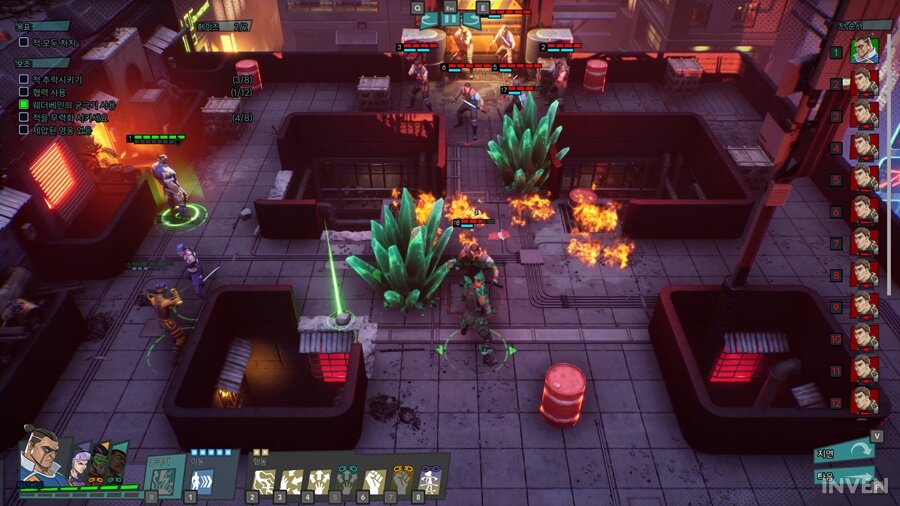
But 'Capes' was different. It sought to break away from the probability factors and cover established by XCOM. It is neither advantageous to be in a high place, nor is it disadvantageous to be in the middle of a battlefield without any cover. If it is within the attack range, it hits 100% and deals damage honestly as written.
At first, I was skeptical. I wondered how I could provide tactical fun in a situation where I was honestly exchanging attacks with each other. It is a probability factor based on cover established by XCOM that gives you stress because it is close to you and the hit rate is 70~80%, but the reason why this system has been loved by many games for a long time is simple. There is no other element that gives you as much tactical fun as this. Isn't that right? On the other hand, if you hit 100% and deal damage honestly regardless of cover or height difference in XCOM, there would be no game as boring as that.
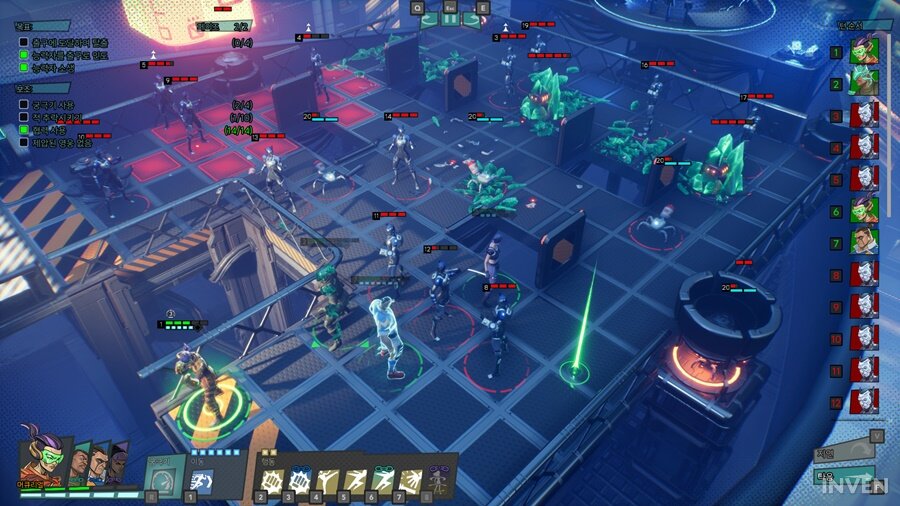

In this way, 'Capes' compensates for the tactical elements that could be diluted by independently assigning turn orders to each character and having them face a large number of enemies. The biggest change in this method is that it has become almost impossible to focus fire. In the case of games where the turns of allies and enemies are clearly distinguished, it is not so difficult to focus fire on a strong enemy or a targeted enemy in one turn. However, in the case of 'Capes', where the turn order is independently assigned, it is a little different. There are many risks to insisting on focusing fire recklessly.
Therefore, the battle of 'Capes' proceeds in a flow like a puzzle, unlike other turn-based tactics games. Unlike other turn-based tactics games that steadily reduce the number of enemies by focusing fire when it is their turn, they lower the health of the enemies while minimizing damage to allies, and then wipe them out at the optimal moment.
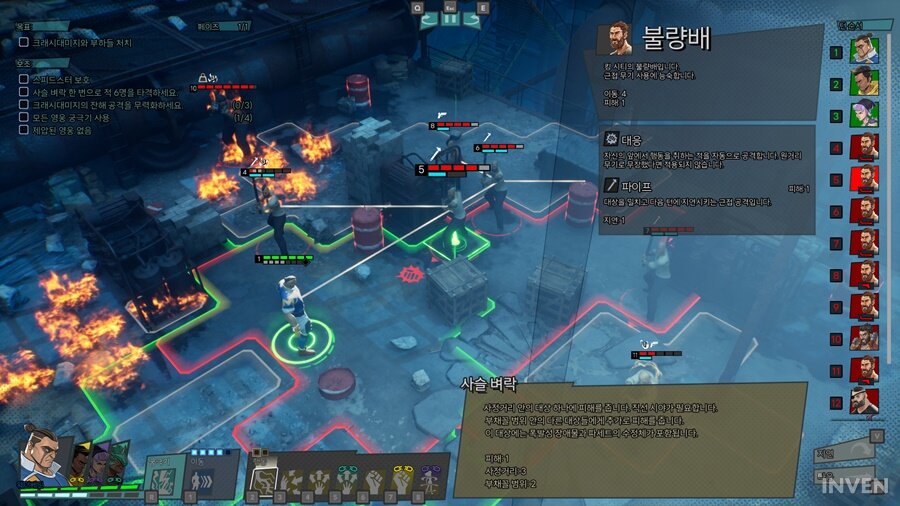
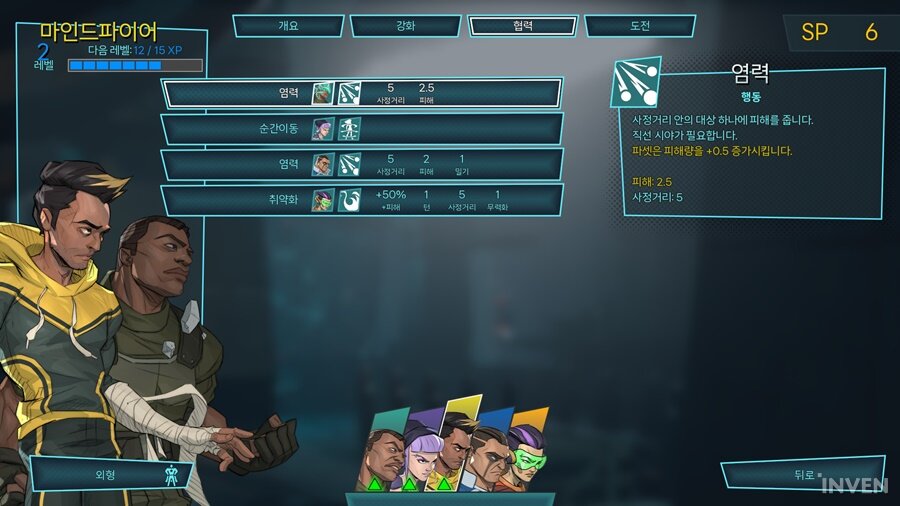
Of course, killing them all at once is not as easy as it sounds. Above all, it is necessary to form the optimal team to do so. The heroes in 'Capes' have various superpowers. Facet, a tanker who creates crystals to block the enemy's vision or uses crystals as a shield, Rebound, who roams the battlefield with teleportation abilities, and Weather Vane, who has powerful crowd control skills such as electricity and storms, etc. To reverse the numerical inferiority, you must consider each ability and the cooperation skills between heroes.
For example, if there are many fall zones in a chapter, it is advantageous to put Weather Vane on the team. Weather Vane's ability to pull and push enemies is also an ability, but it doesn't end there, but other characters can also push enemies with the help of Weather Vane as a cooperation skill.

This battle of 'Capes' gives a different impression from turn-based tactics games such as XCOM. But unfortunately, that impression and freshness did not last long. It only felt fresh for a short time in the beginning, and it quickly became boring once I got used to it. The biggest problem was that there were no probability factors or cover, so there were no variables. Since there were no variables, the battle also generally went as expected, and as that continued, the fun of the battle, which is the most important thing, also gradually decreased.
Somewhat bland story, monotonous composition is also disappointing
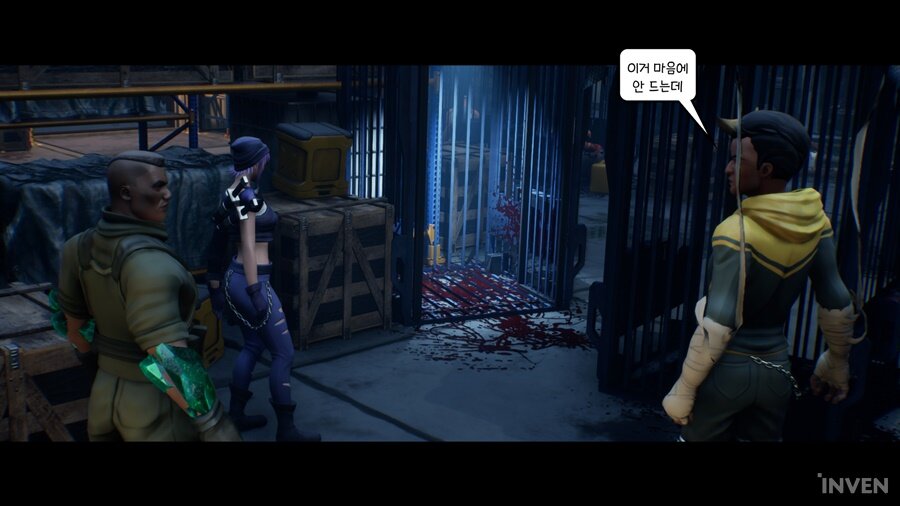
This disappointment is not just about the battle. It might have been better if it had a solid story or could have compensated for the fun of the game play and battle in other ways. But 'Capes' failed even this. In some ways, it can be said to be more serious than the battle system mentioned above.
The main story of 'Capes' is orthodox if you say it well, and bland if you say it badly. The villains have won the future, superhumans are defined as terrorists and hunted by the villains, and in the meantime, Doctrine, a former hero who survived the 'Great Clash' between heroes and villains 20 years ago and is now treated as an old general, is gathering young superhumans and drawing a journey to reclaim the city. If you are interested in Marvel or DC Comics, it is a story that you have often seen.
Of course, being orthodox does not mean that it is always bad. Even if the stories of many boy comics or JRPGs are orthodox, they are still being consumed because they have that much appeal. In the end, in order to give emotion with a familiar story, it can be said that it must be directed deliciously, but 'Capes' is bland in many ways even in this. From the cutscenes that are essential for the story development to the simple conversations between the characters, it stays at a mediocre level.
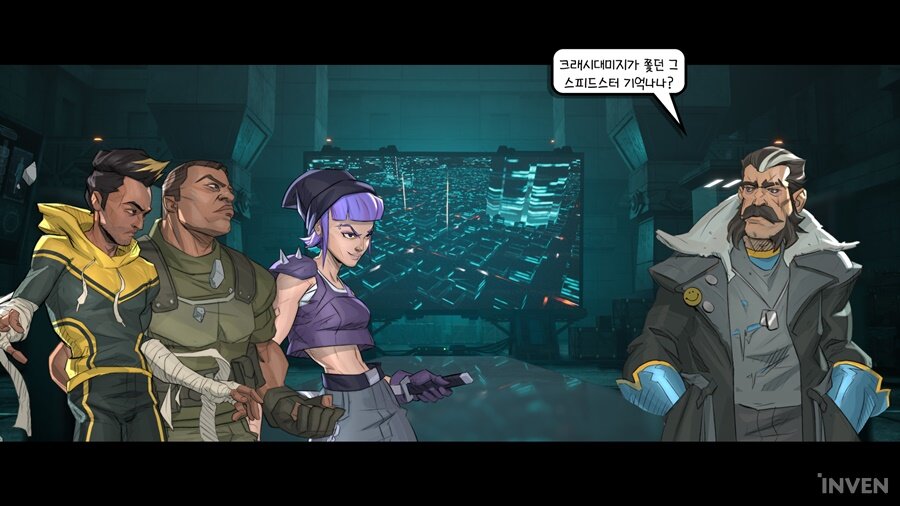
The overall content of the game is more serious. In 'Capes', there is virtually no content except for battles. You go on missions, achieve additional goals, earn SP (skill points), and after completing the mission, you spend SP to unlock or upgrade the characters' skills. There is no content to do at the headquarters before going on a mission.
It is understandable in terms of the game setting. There is no way that heroes with superpowers would research and wear weapons or armor in an empty headquarters. Moreover, unlike XCOM, which recruits and trains unspecified soldiers, 'Capes' has clear personalities, so it is true that there is no need to recruit them because they naturally join as the story progresses. But even so, it is a problem in many ways that there is too little to do.
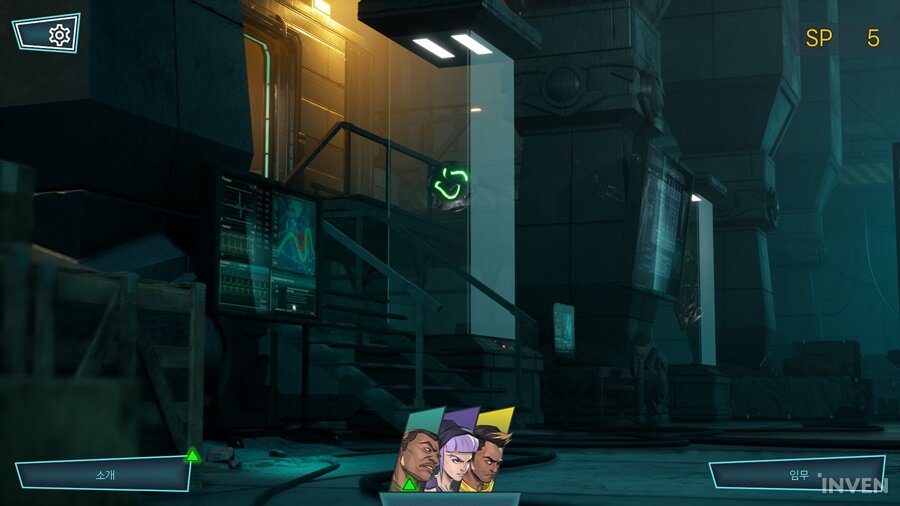
It is not for nothing that other turn-based tactics games or RPGs create a resting timing such as a base and allow you to enjoy various contents. Depending on the genre or game, if there are no such elements in turn-based tactics or RPGs, you will have no choice but to continue fighting like a hamster wheel. That's why they put in management elements other than battles, but unfortunately, 'Capes' has neglected this part.
The game play of 'Capes' is a repetition of battle - headquarters - battle, but all you can do at the headquarters, which should show various contents, is to raise skills and unlock conversations between characters as the game progresses as a kind of communication element. The problem is that not only the skills, but also the unlocking of conversations is just a simple conversation. If the story or character is attractive, it may be an element to dig into, but personally, I did not feel that much charm, so I often just skipped the unlocked conversations.
Management elements do not necessarily require researching equipment or recruiting soldiers, but various turn-based tactics games have appeared and each has various contents to enjoy during the resting timing such as bases, but the content composition of 'Capes', which failed to make good use of the headquarters element, added to the disappointment in many ways.
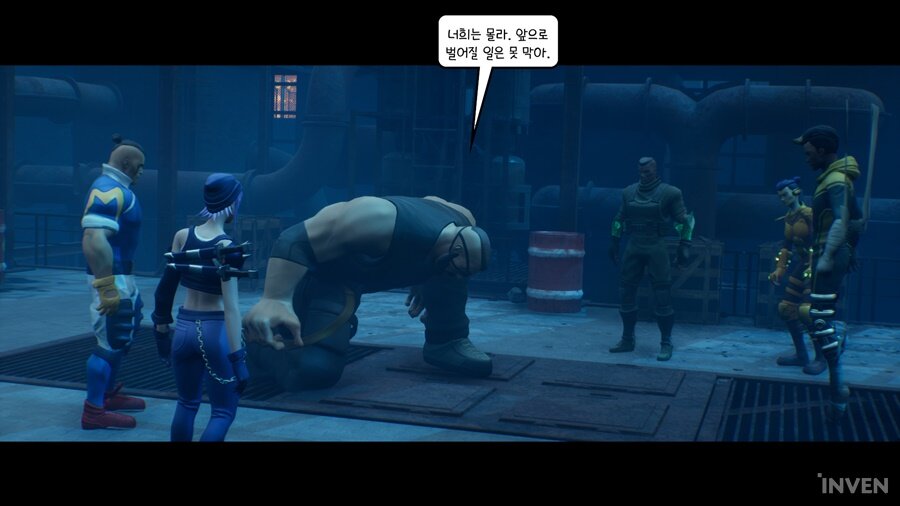
In summary, 'Capes' is a game like a negative example that shows what it means to have a big ideal but a harsh reality. It was good to exclude probability factors based on cover and have clear personalities, but the completed result was not as good as expected. The fact that it broke away from the grammar established by XCOM in order to get out of the shadow of XCOM made me think of orthodox turn-based tactics games including XCOM even more, so there is nothing more to say.
However, the fact that there are no new turn-based tactics games these days can be said to be a blessing in disguise for 'Capes'. It is difficult to give a very good score when compared with competing works in terms of 'turn-based tactics game', but the story is a little different if it is a new work.
Since Firaxis, the developer of XCOM, which established the grammar of today's turn-based tactics games, has not released a new work since 'Marvel's Midnight Suns', it is a new turn-based tactics game that has appeared, so it may be considered a welcome rain to someone.
- Teamwork creates tactical play
- Easing the entry barrier by eliminating probability and cover
- Monotonous content composition centered on battles
- Bland directing, game play, and battle
- Crude cartoon-style 2D character illustrations
웹진 인벤윤홍만 기자
2024-05-24