Post
Small, light, and pretty Android UMPC - AYA NEO Pocket S
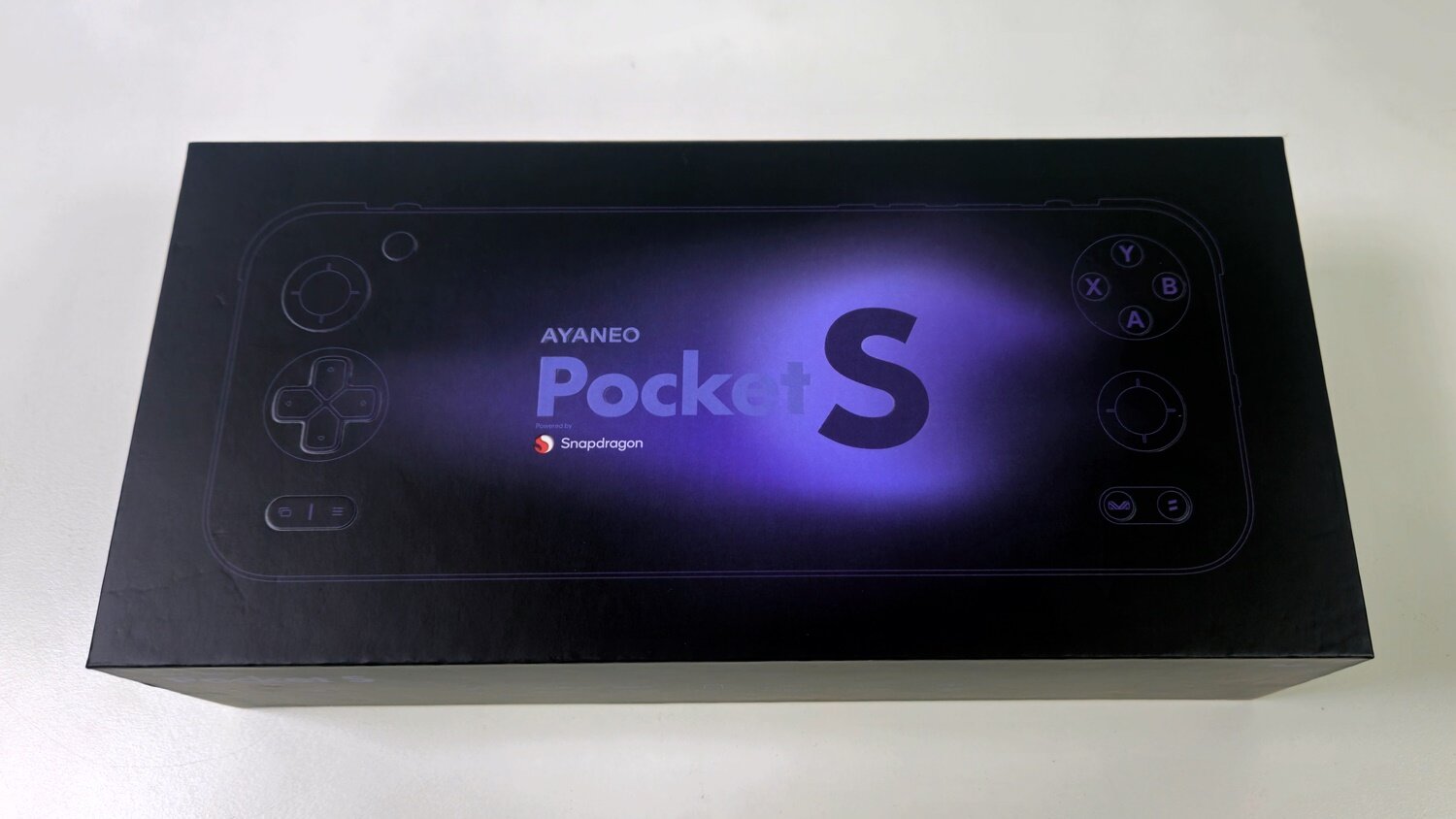
Have you heard of 'Android game consoles'? Simply put, it's a game console with a game pad that stretches your smartphone horizontally. It's a real 'game console' made purely for gaming, stripping away all the features needed for gaming from a smartphone. But this Android game console is also an ambiguous object when you think about it coldly. It lags behind Windows or dedicated OS-based UMPCs in terms of performance, and it has strong competitors like smartphones and tablets.
However, it's not just a device with only drawbacks. Compared to smartphones, it has analog sticks and buttons with clear feedback and operability. In addition, devices that also take care of cooling performance have less performance degradation than smartphones, and because they don't have many functions, they guarantee superior battery life. This means that there are aspects that can be attractive to users.
The game console I'm introducing today is an Android OS-based UMPC. It's a new Android OS-based UMPC, a handheld game console, newly introduced by 'AYANEO', which has been steadily producing UMPCs.
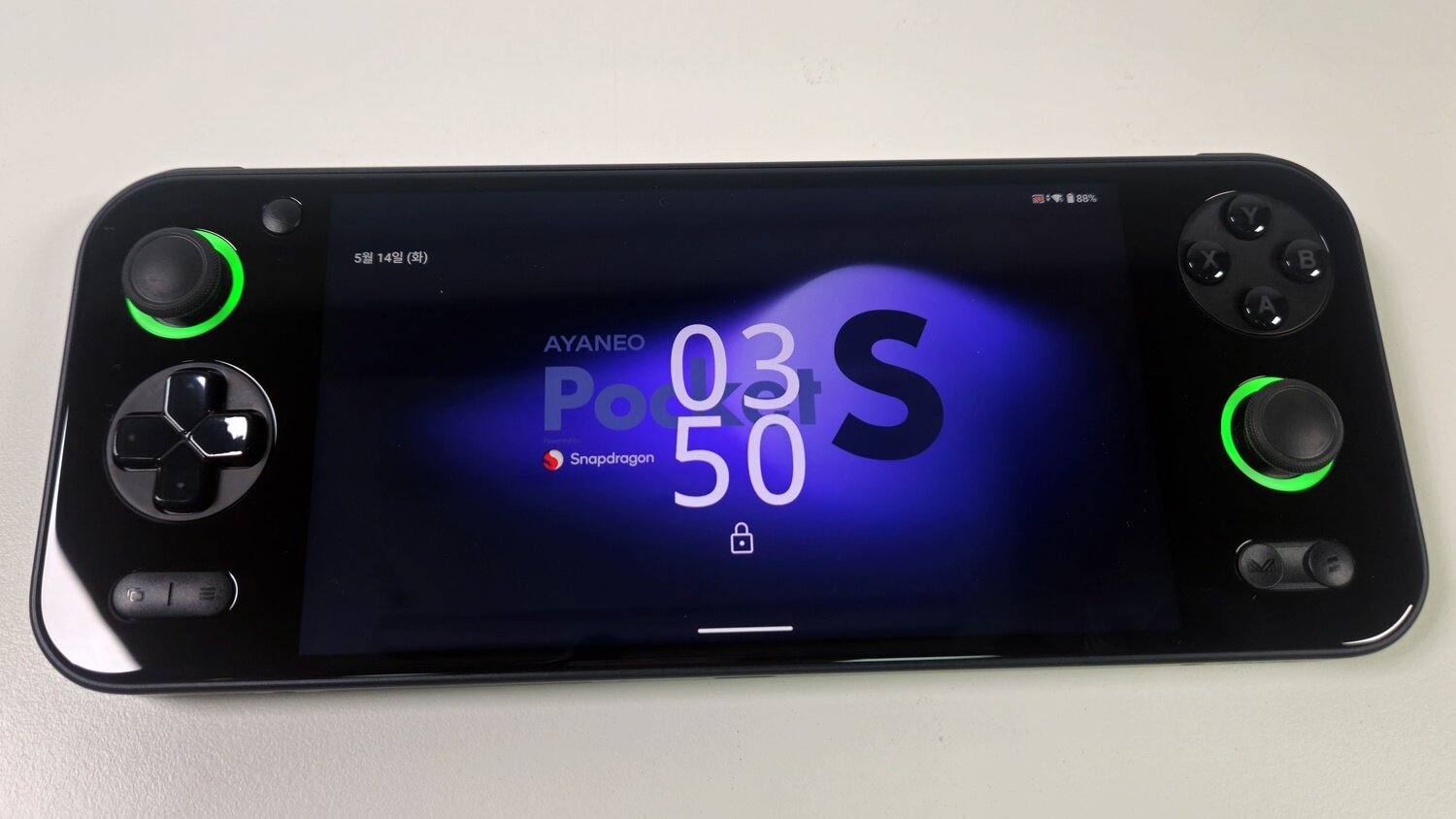
Display: 6-inch, IPS 2K(2560X1440), 490 PPI, 400 nits
CPU: Snapdragon ® G3x Gen 2 Gaming Platform
GPU: Adreno™ A32 GPU
Storage: 1TB, UFS4.0 flash memory
Memory: 16GB, LPDDR5X 8533Mbps
Battery: 6000mAh
Size and weight: 213.9 x 85 x14mm, 350g
Details: USB 3.2 Gen2 / DP 1.4 / 40W PD charging / Dual Microphone / WiFi 7 / Bluetooth 5.3 / SD 3.0 TF card slot
※ 1920*1080, 368 PPI, 400nits / 12GB + 128GB or 16GB + 512GB models are also available, and the 128GB model has UFS 3.1 storage and the same battery capacity.The model used in the review is a limited edition 2K model, and we would like to clarify that this review was written after borrowing only the device.
Appearance
Pretty. Luxurious. Light.
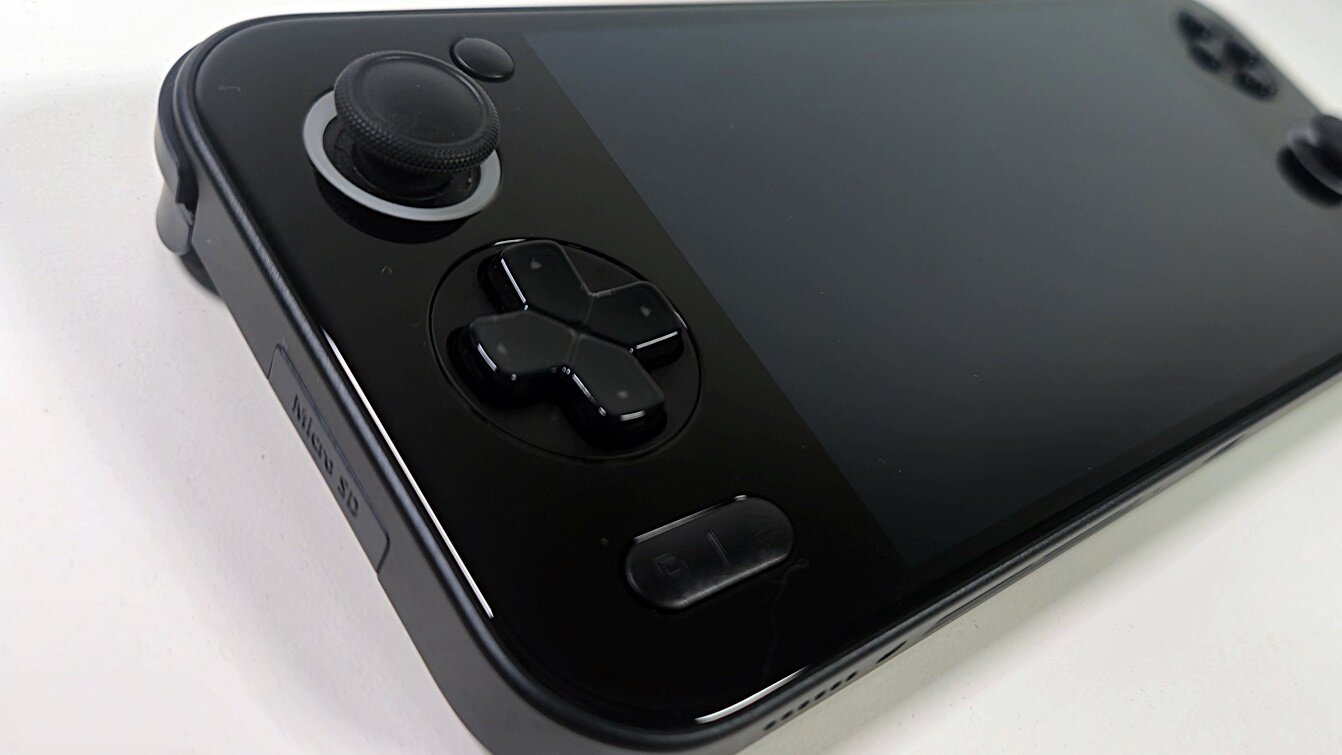
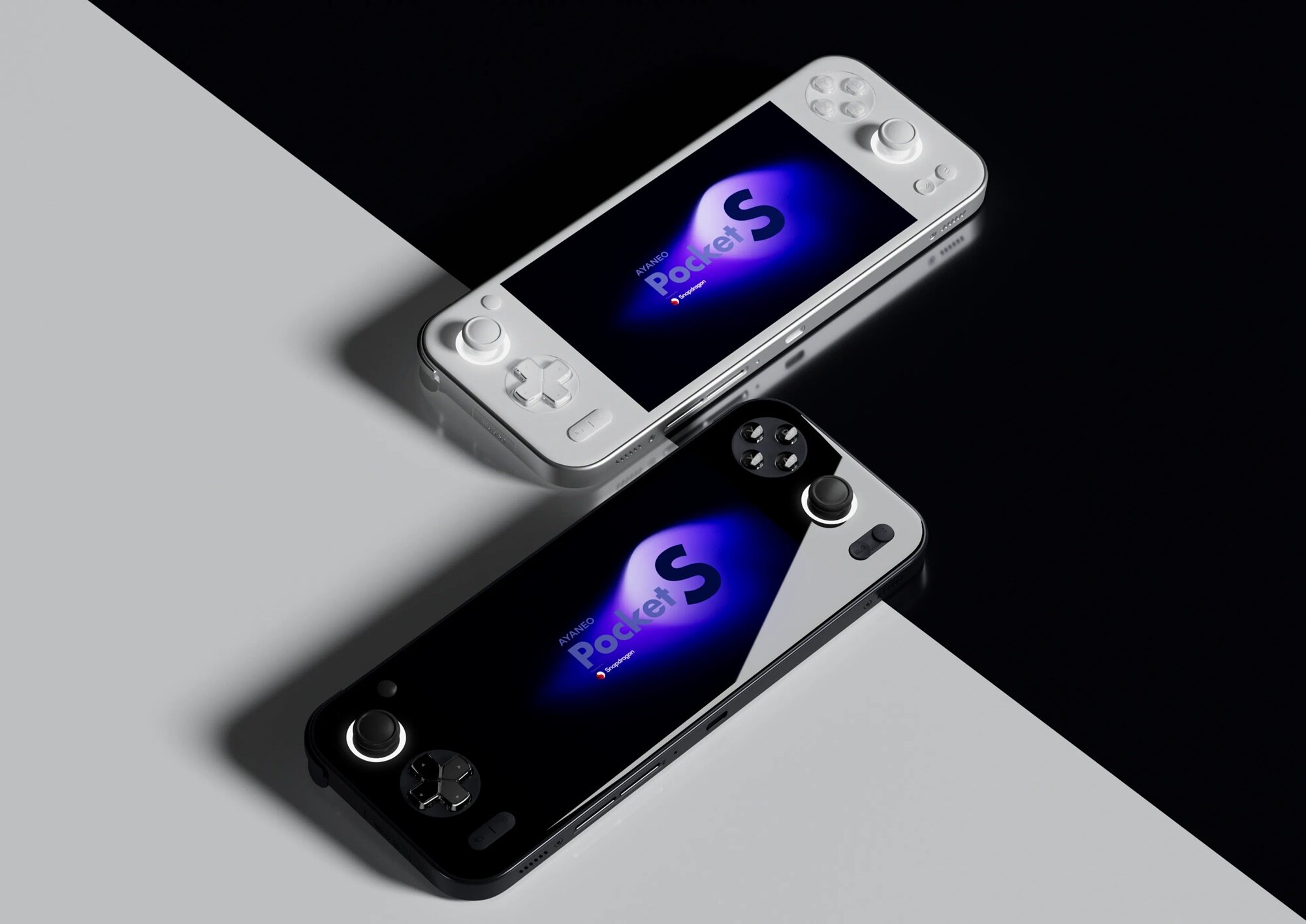
From the time of funding, and from the time when information was released to some extent, everyone said in unison, "It's pretty." AYANEO's strengths are well revealed in terms of design, and the real thing is so compact and cool that you can immediately say that the machine is really compact and cool. Even people around me were interested and asked, "What is this?"
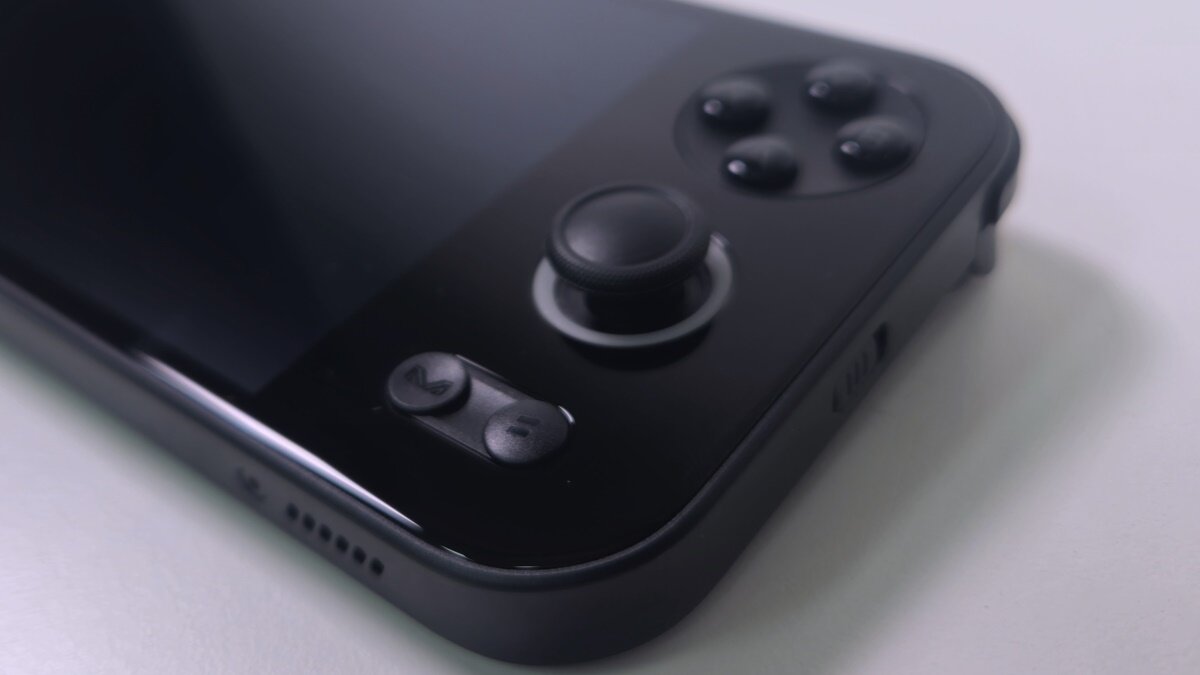
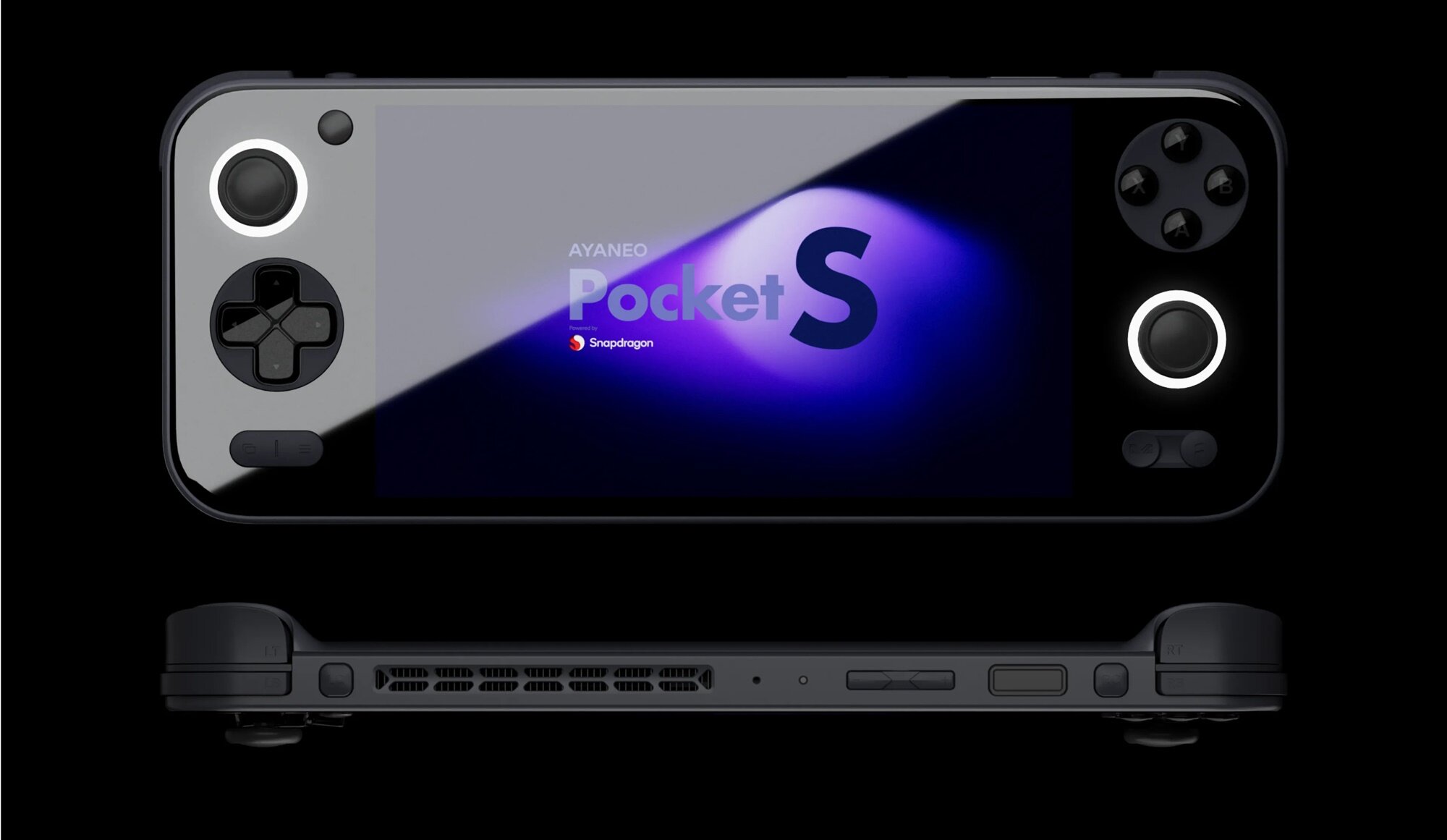
The weight is quite light at 350g, and it uniquely has an all-metal mid-frame, so the front with the display is coated with high-strength glass. The thickness is also as thin as a smartphone at 14mm at the thinnest part, but the grip design is convex where the trigger buttons are located.
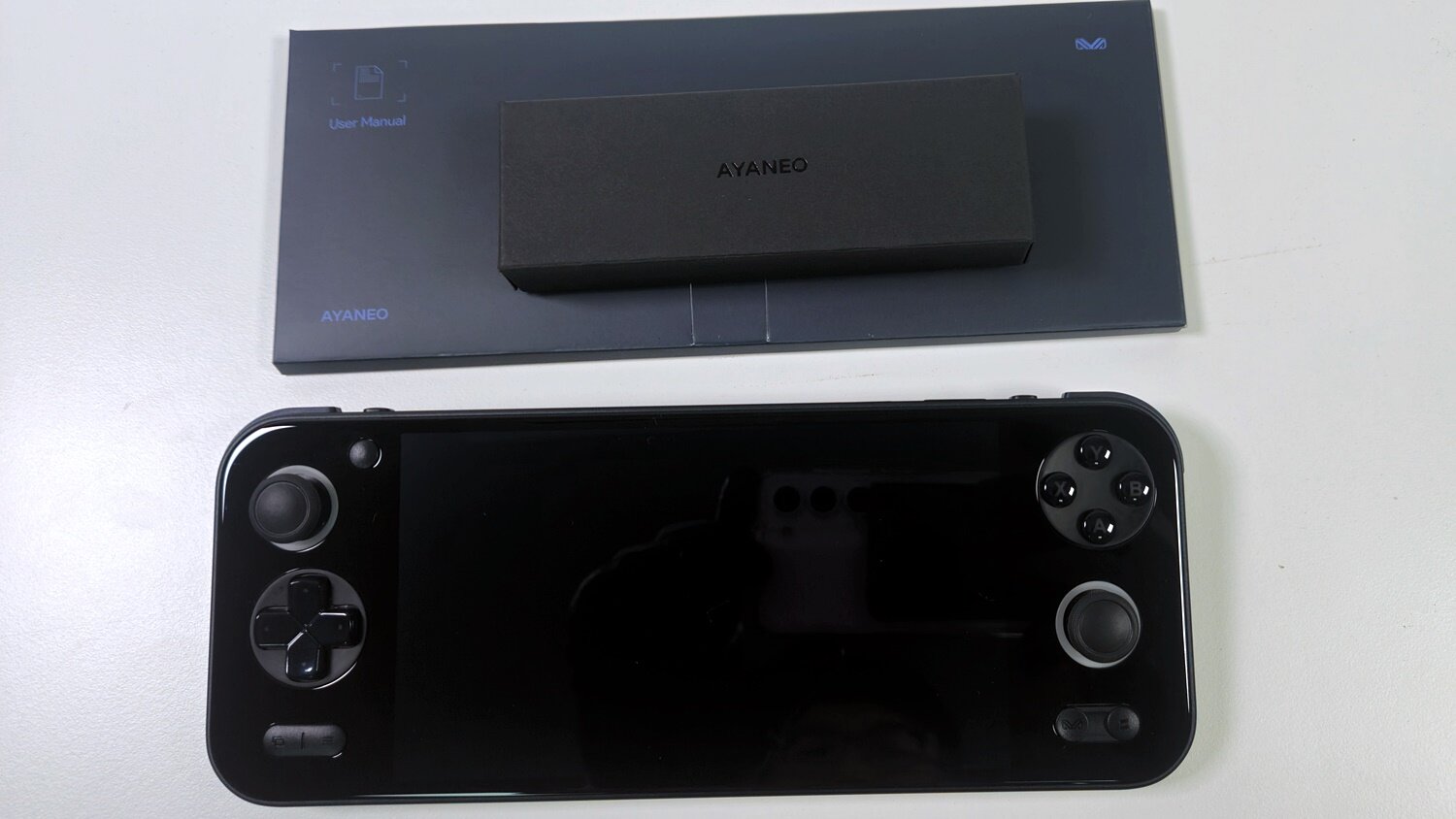
Personally, I was worried that this design would harm the grip, but rather, it wasn't bad to use it with the feeling of hooking it on my finger to prevent the device from falling. Of course, there are additional accessories that can provide a better grip, so it doesn't seem bad to install and use them according to your preference.
It is equipped with a hall sensor stick, which is one of the recent trends, and the LED can also be set. The arrangement of buttons and sticks follows XBOX's asymmetrical arrangement. In addition, there is one customizable button on the front and two on the top, but there are no rear buttons. The back of the device is finished so neatly that there is nothing more to add. There is also a function that links sound and vibration, but if you do this, it becomes a vibration machine throughout the game, so it seems that the related function needs to be tuned more.
There are speakers that provide stereo sound, an intake port, a microphone hole, and a USB-C connection port at the bottom of the device. It has a ventilation structure that exhausts air to the top through the bottom intake, so the circulation itself does not seem to be a big problem. In addition, there is an SD-TF card slot on the left and a performance setting toggle switch on the right.
To summarize the overall appearance, it feels like a high-end smartphone with a flagship feel has a joystick attached to it. However, it is integrated, so it feels like a game console, but it also has the sensibility of a smartphone. It's small, thin, and light. It will be released in two colors: Obsidian Black and Ice Soul White.
Device specifications and details
Up to 2K resolution, hall stick, and 6,000mAh battery capacity. And 350g
The model used in the review is a limited edition 1440P Advanced Edition model. It can be said that this is the first Android handheld game console with 2K resolution. The screen is 6 inches, but the fact that the borderless screen is applied and the integration with the device is considerable is a very positive factor.
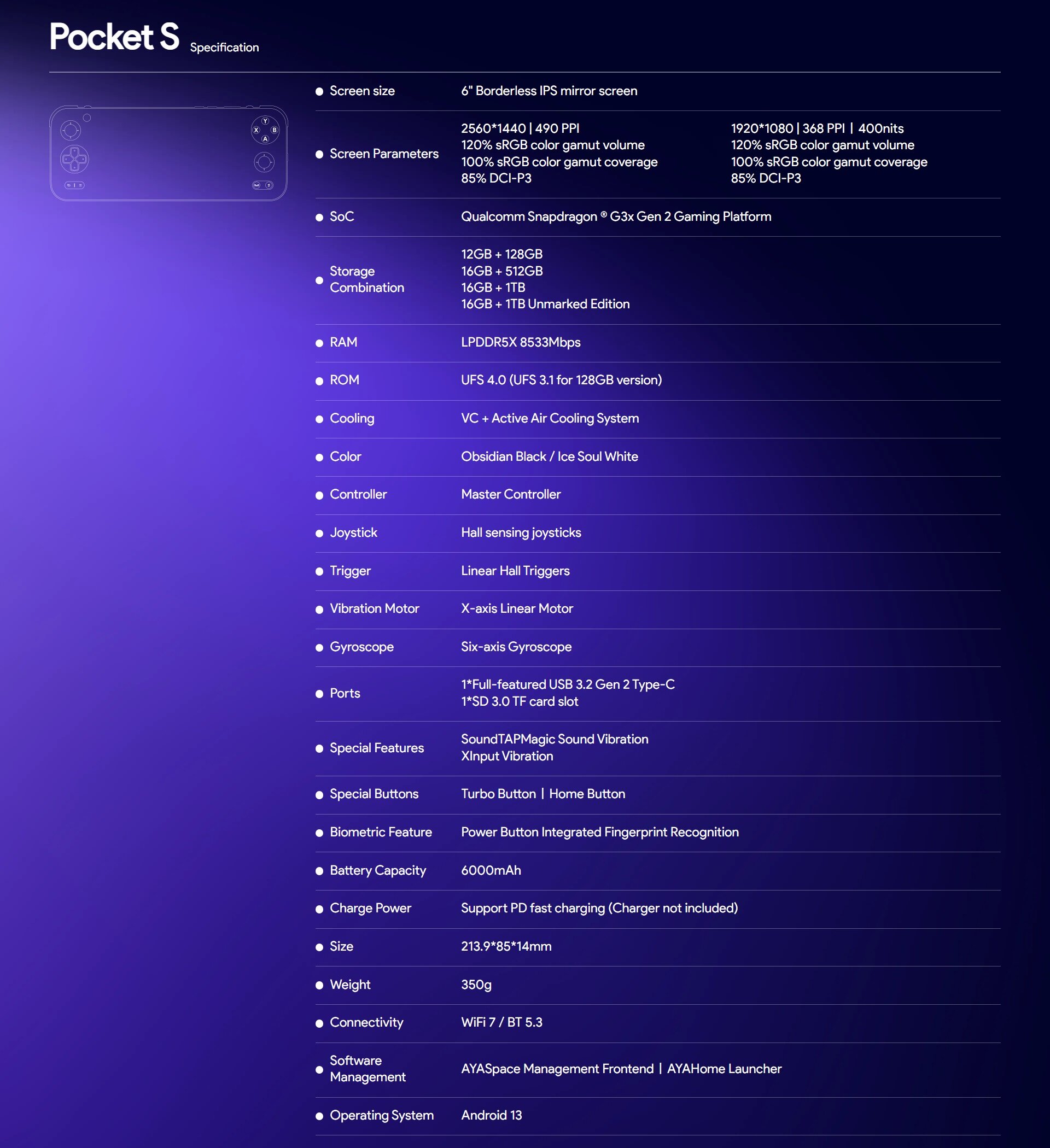
I felt that the most important thing that AYANEO Pocket S paid attention to was the weight, in addition to the appearance. The weight of 350g is absolutely light compared to other models, and the only thing that is lighter than this is the new Retroit Pocket series, but the CPU difference is fundamentally very large. The detailed specifications of the device provided on the official website are as follows.
Game benchmarks and play, battery
A little ahead of Snapdragon Gen2?
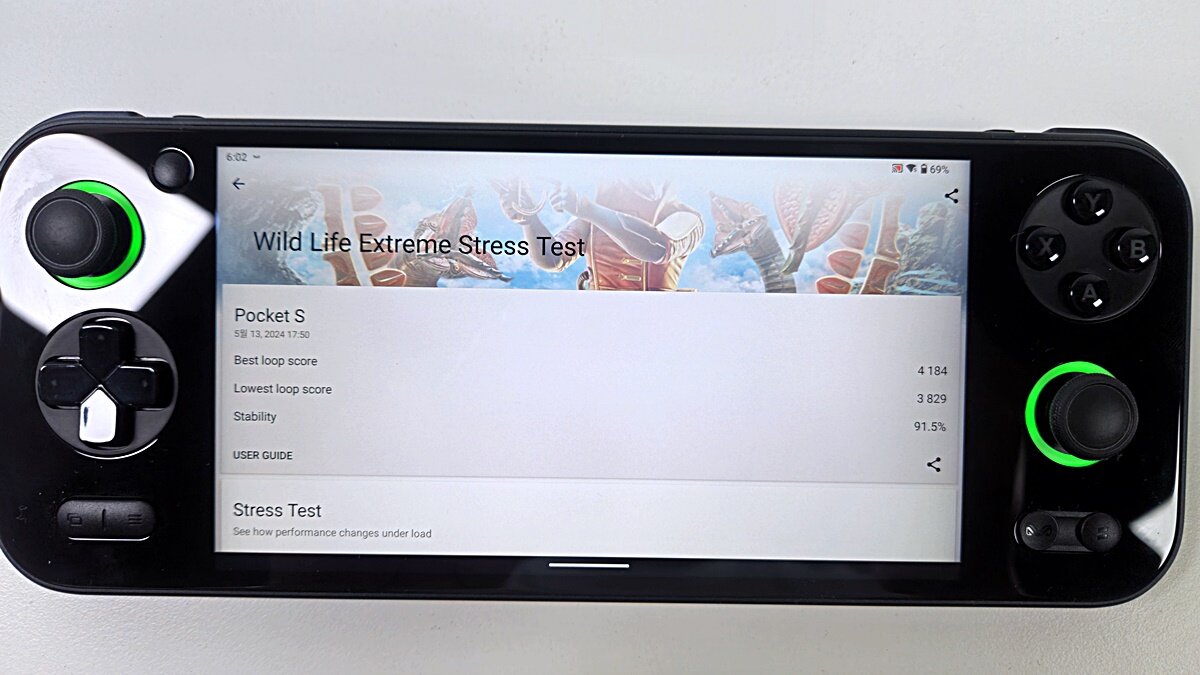
Before starting the full-fledged play, I also conducted benchmark-related tests on the device. First, I conducted the 3D MARK Wild Life Extreme Stress Test, and the cooling mode was fixed to game mode. It definitely shows about 10-12% higher scores and performance than Snapdragon 8 Gen2. However, it is a bit disappointing that the stability does not maintain 99%.
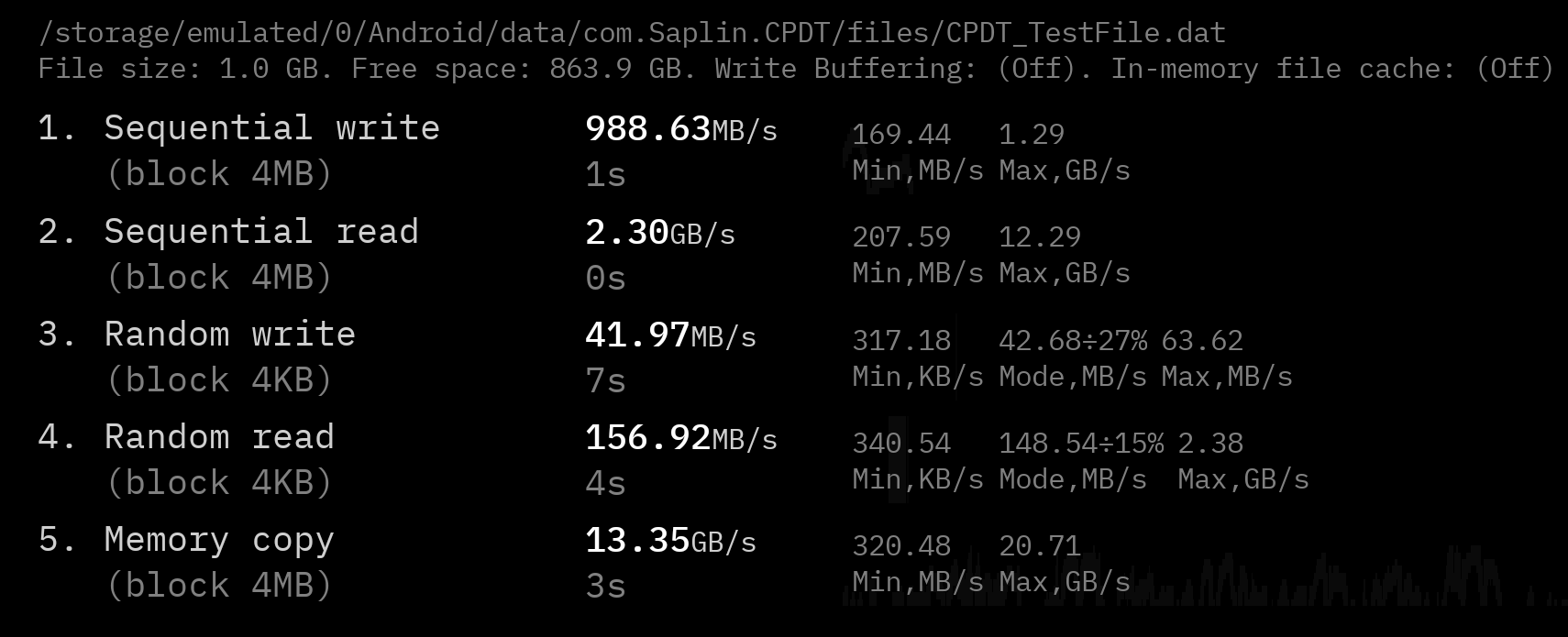
ROM and storage were also quite good. Sequential write is about 988MB/s, sequential read is 2.3GB/s, random write is about 42MB/s, and random read is about 157MB/s, so the internal storage is showing the speed of UFS4.0 well enough. In reality, I hardly do large-capacity operations that require random read/write, but it seems good to keep the possibility in mind as it is a 1TB model.
Game play
Would the frame be maintained more stably with FHD...?
Many people will be curious about battery usage. This Android game console has a significantly longer battery life by default because the modules required for calls, like in smartphones, are removed. The 6000mAh battery showed a quite satisfactory play time even based on full options.
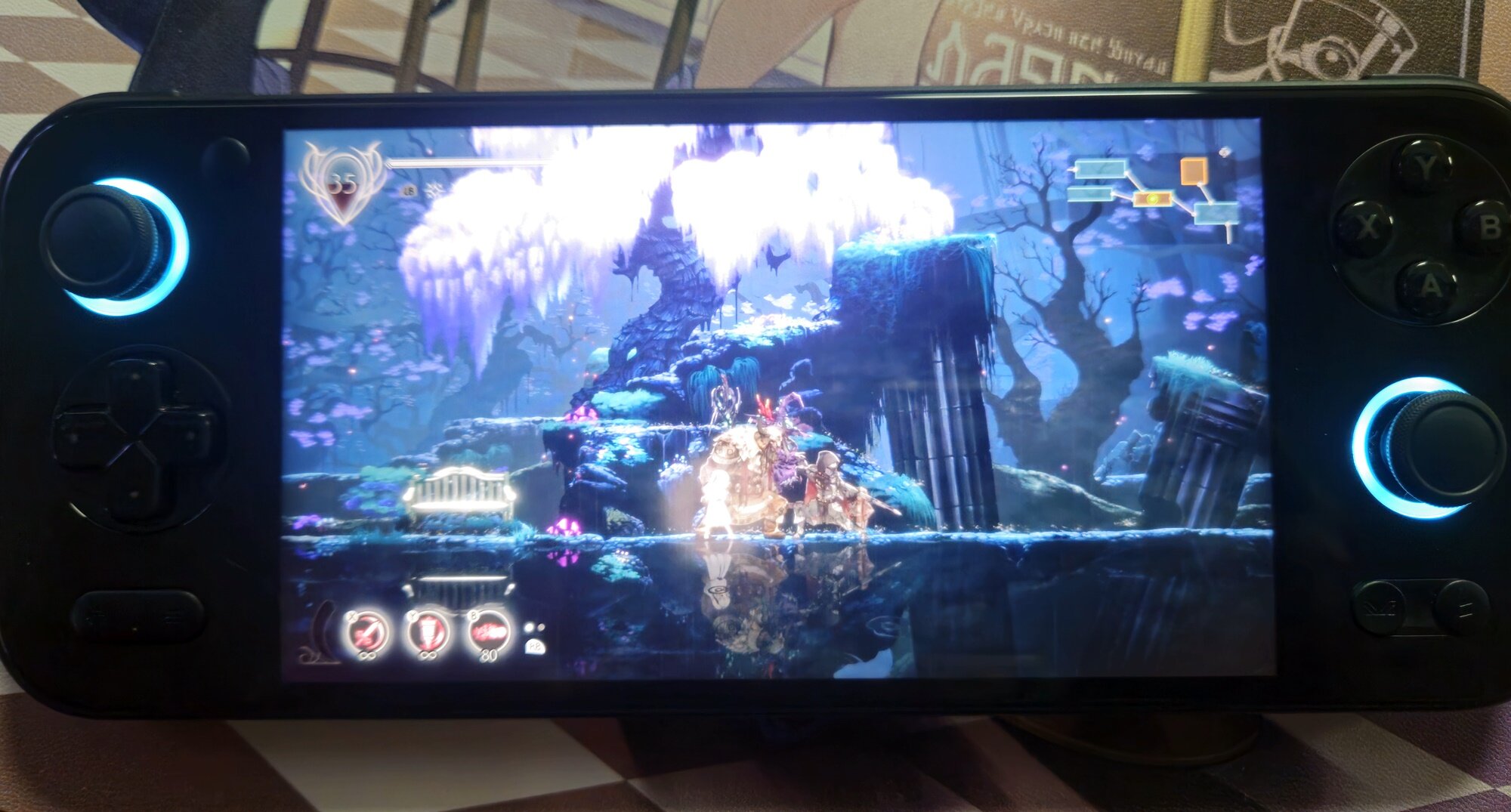
The games that I actually tested several times were 'Honkai: Star Rail' and 'Solo Leveling: Arise', which can put the most load on 3D games based on the highest options for a long time. These two games were chosen as the standard because the stick is officially supported in the game based on the Android OS, so I could play more comfortably than other games.
I will explain later why I didn't play 'Genshin Impact', which is considered a standard (?) benchmark driving game on Android smartphones. In the case of Ming Dynasty: Wuthering Waves, it was released after the device was returned, so unfortunately it was not included in this review.
In 'Solo Leveling: Arise', I played the main story and instances, etc., and in 'Honkai: Star Rail', I proceeded with after-story quests and daily/weekly homework content after the 2.2 story, so both games selected content that appropriately showed stage/battle/quest progress and production.
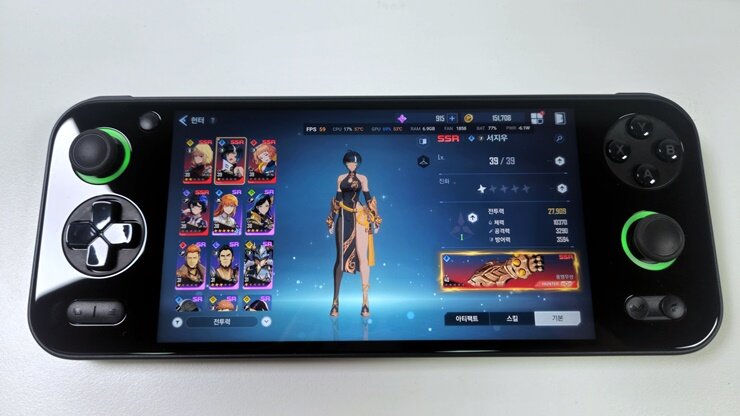
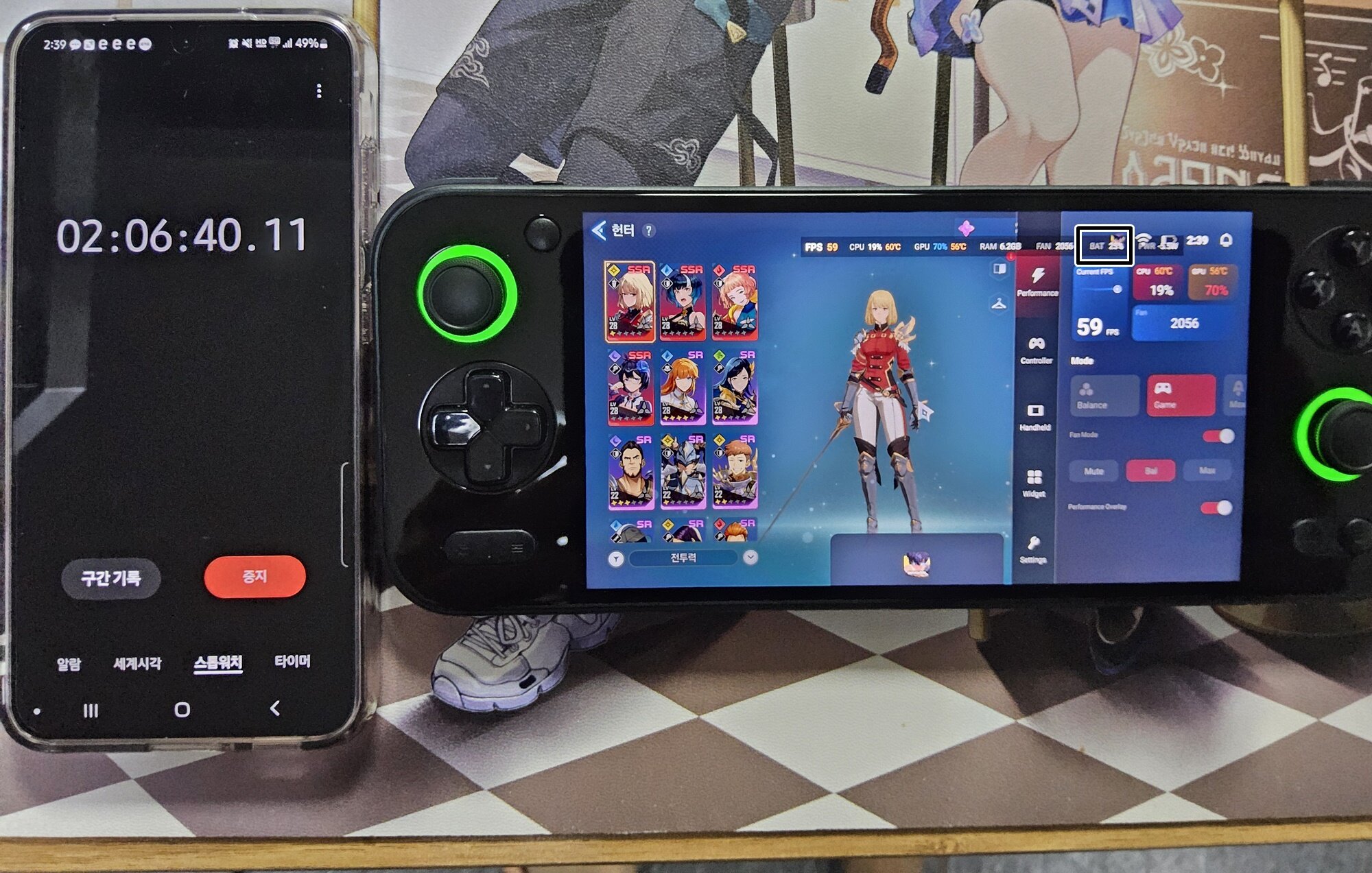

In the case of the recently released 'Solo Leveling: Arise', after playing for about 2 hours and 5 minutes using the maximum brightness, hall stick LED, highest option setting, 60 frame setting, fan speed game mode, and output using the built-in speaker, there was a slight deviation, but about 19~25% of the battery remained.
However, the frame does not perfectly maintain 60 frames, and the frame drops a lot in sections where monsters are heavily crowded or in chaotic situations where skills are rampant. Still, rather than having a big impact on the play itself, it's only at the level of feeling "Ah, this can't handle it yet", and it didn't interfere with the play much. It drops to the early 40 frames, but quickly returns to near 60 frames when the skill production disappears.
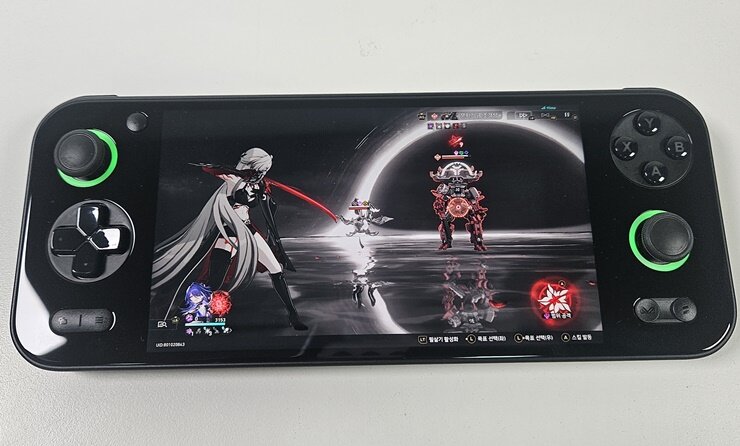
When I played 'Honkai: Star Rail', I proceeded with the same settings, changed the operation mode in the settings after the basic execution, and after playing for a total of 2 hours and 3~7 minutes, about 4~7% of the battery remained.
In Honkai: Star Rail, 55~60 frames were maintained smoothly in most cases, but there were cases where the frame dropped to about 40~45 in large skill productions. On average, it hardly dropped below 50 frames in battle, but the stability itself does not seem to be a big problem as the frame feels like it is jumping for a very short time. It was mainly found that the frame dropped randomly in the special moves of certain characters (Wanmei, Robin, Acheron), and the frame jumped when a large number of enemies appeared and when the map changed rapidly.
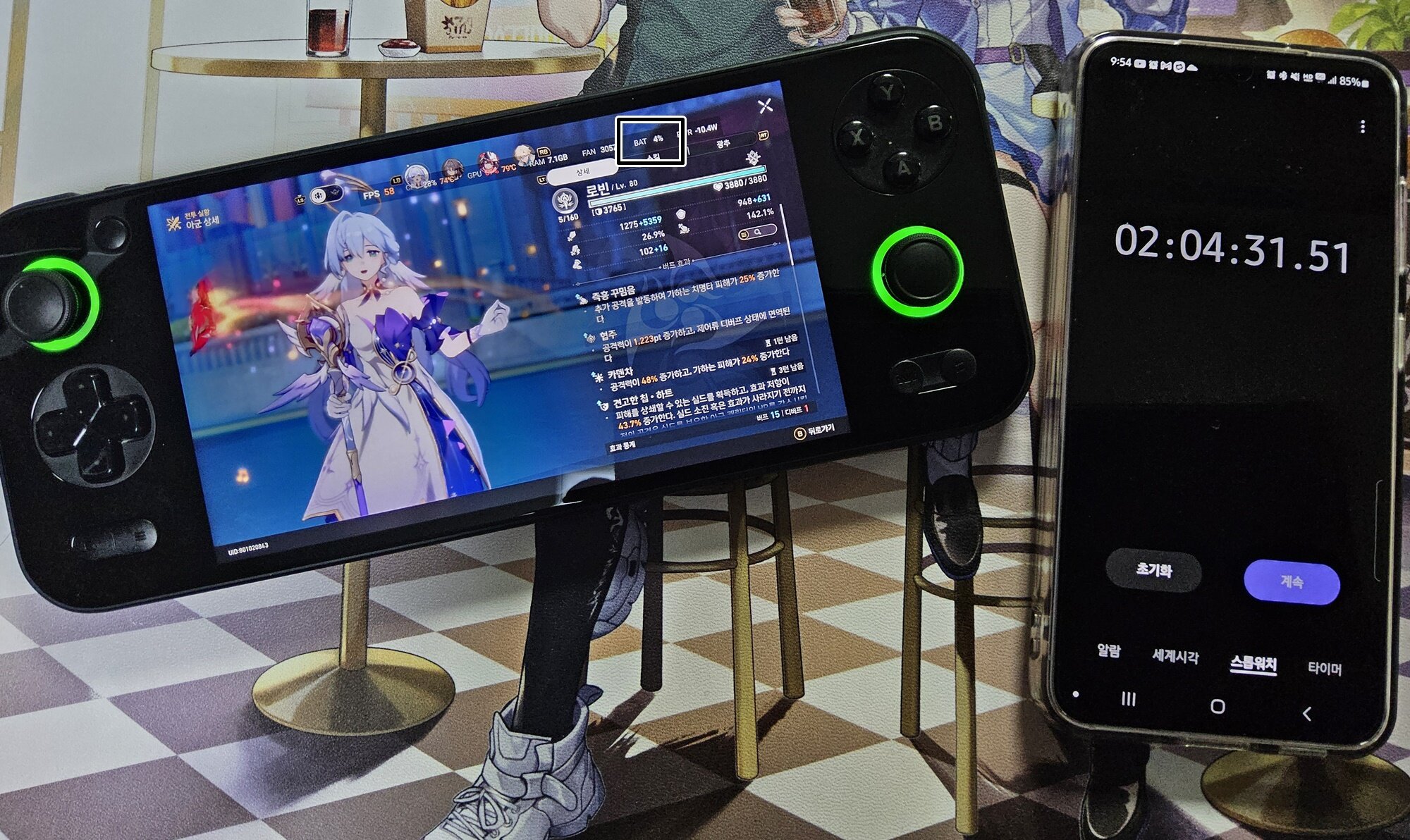

If you compromise on the options and play, you can secure more than 3 hours of play time. In addition, it should be considered that this model is a limited edition, 2K resolution model. If you think that 1080p FHD is enough on a 6-inch screen, you can have a longer battery time when using a lower model, and if additional optimization patches are made to the processor, you can show better performance.
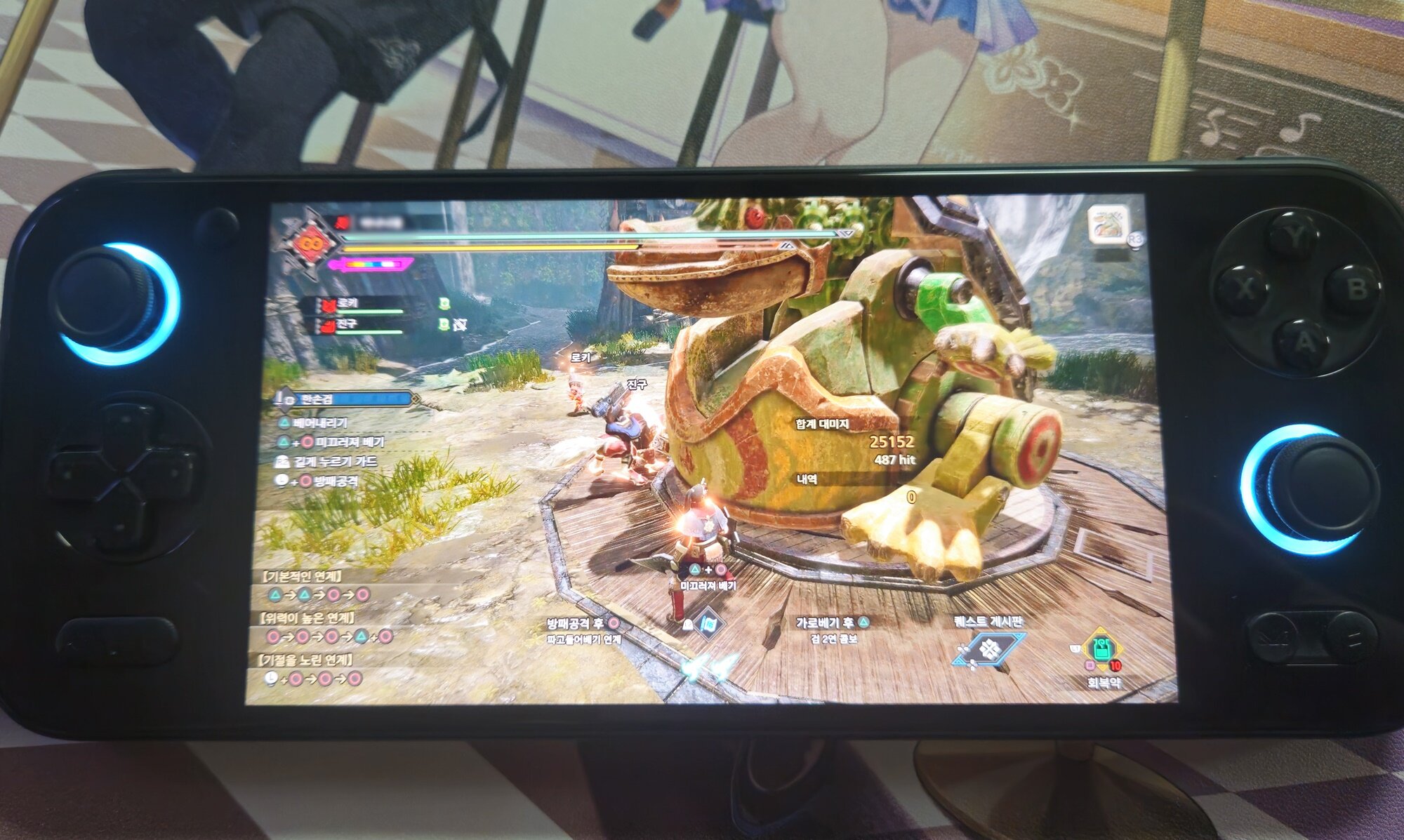
Steam Link works very well without any special issues, and the stick is immediately recognized as an XBOX game pad, so there is no problem playing. Rather, it lasts much longer than smartphone games, so you don't have to worry about battery time.
When I played for about 10 minutes with the maximum brightness and sound output, and with the LED turned on, it only consumed about 4~5%. In fact, it seems that the stability of the Wi-Fi connection has a greater impact on the battery. In the case of PS Remote, the official app does not support the pad, so it seems better to use mapping or a third-party app to play.
Things to consider
Support for various functions is disappointing and there are some bugs. Firmware updates are the only way to survive
It definitely showed excellent performance, and it is light and the image quality is quite good, so I honestly don't think there is much to criticize about the device specifications of AYANEO Pocket S itself. The fan noise is not as small as I thought, and the heat control of the CPU itself is a bit disappointing, but it is not emitted directly to the outside, so I did not feel uncomfortable holding it because it was hot. However, the CPU temperature rises to 80 degrees or higher quite often, and it is quite noticeable that it rises to 90 degrees. I tried to pay attention to cooling, but there are definitely disappointing aspects to cooling.
Personally, I really liked the D-pad and input key buttons. It doesn't feel like a cheap button clicking, and it's closer to the feel of a high-end gaming pad. The trigger buttons also don't feel like they're dangling, and the elasticity is moderate, so there's no difficulty in cutting and hitting them. The operability felt through this is not much inferior to that of a PC UMPC. However, since the hall stick size itself is small, the operability of the analog stick will be divided.
In addition, I would like to give high marks to the fact that a total of 3 custom buttons can be assigned to the top and lower right instead of the rear buttons. The existence of rear buttons is surprisingly divided in handheld devices, but if it is to be pressed for a clear purpose, it seems better to arrange them with care.
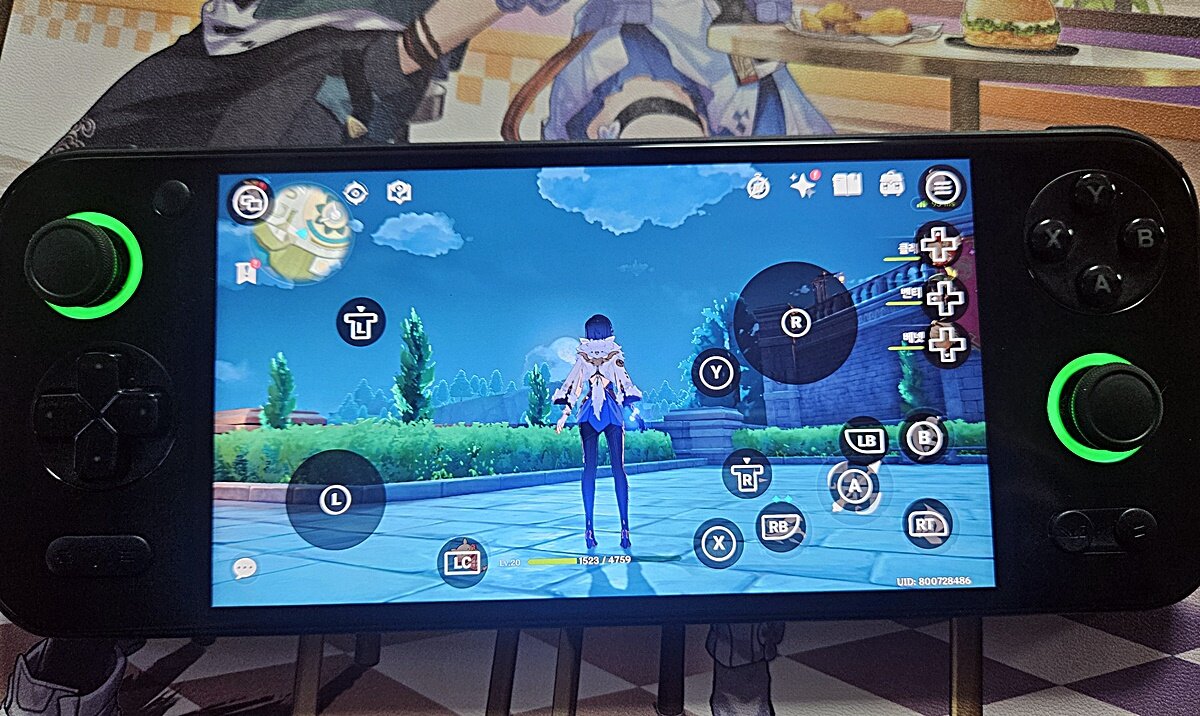

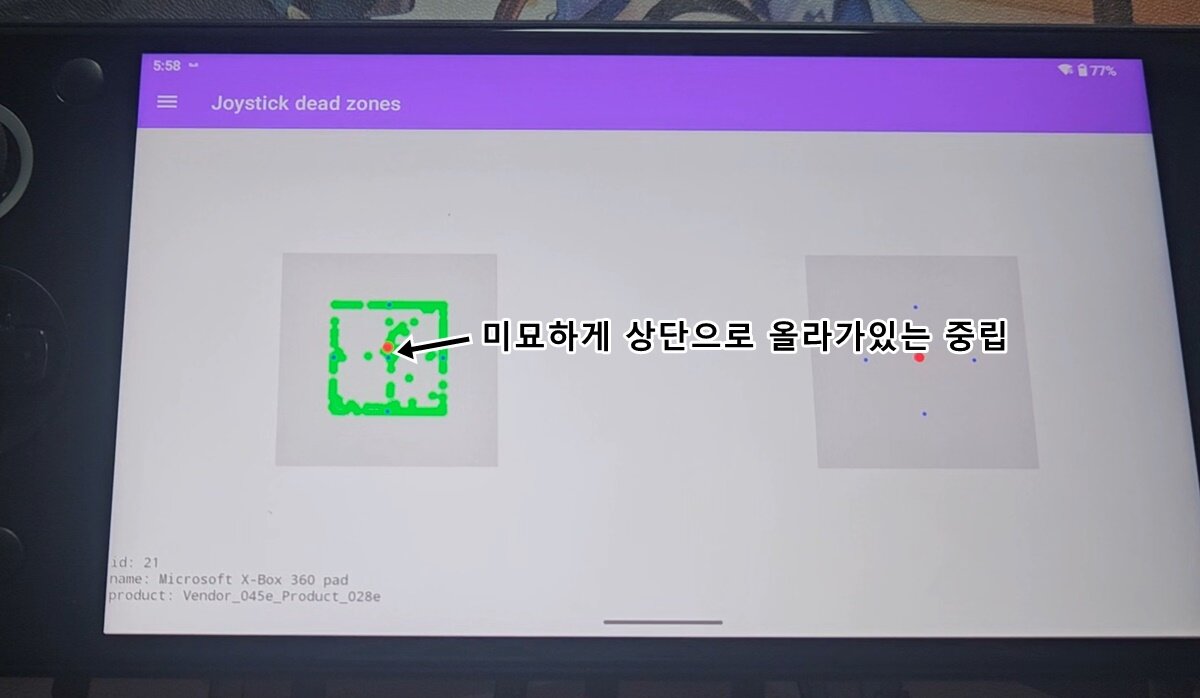
The real problem occurs in other areas. The biggest reason why I couldn't do some experiments in the game test earlier is the key mapping function of the virtual pad. This part is not perfect yet. The hall stick itself feels good, but when it operates with mapping, the stick seems to move in a different form than intended. This made it difficult to test Genshin Impact, which I was trying to play with virtual mapping.
In the touch stick recognition for movement, the direction was continuously being input even in neutral, and the screen holding stick operation to rotate the screen was often cut off or not recognized properly. I tried setting the joystick several times, but it was similar. But that disappears when you turn off the virtual pad mode. Fortunately, there were almost no flaws in the operation when the virtual pad mode was not on. I hope that these functions will be quickly improved so that they work well without errors in the official release.
I also noticed the typical disappointing aspects of early handhelds. In particular, the lack of a forced landscape screen application and bypass function for apps was a bit disappointing. In addition, it cannot be denied that the functions of AYA SPACE and its own launcher are insufficient and require additional updates.
I was wondering if it would be better to provide an option to use 2K mode when needed and 1080p mode when not needed. It is definitely possible to provide a good play time compared to smartphones, but wouldn't it be possible to provide a more satisfactory play time with 1080p?
Overall review
Small, light, pretty. Now, please give us a lot of software/firmware support.
The AYANEO Pocket S was such a well-designed and attractive device that I would have bought it without hesitation if I didn't have other devices. The potential was also fully visible, and I really liked the metallic design itself. I think they really captured the design that makes you want to have one just because it's pretty.
Personally, I value battery time and weight in handhelds. If it provides this much play time with full options and 2K, I have expectations that it will show a better appearance with 1080p. The weight is really light, not to mention it.
In that regard, it is very disappointing that software support is lacking and the OS function is also weak. Even though there is no major shortage of disk, RAM, and display, I strongly felt that I wanted users to be able to control and tune the device functions more.
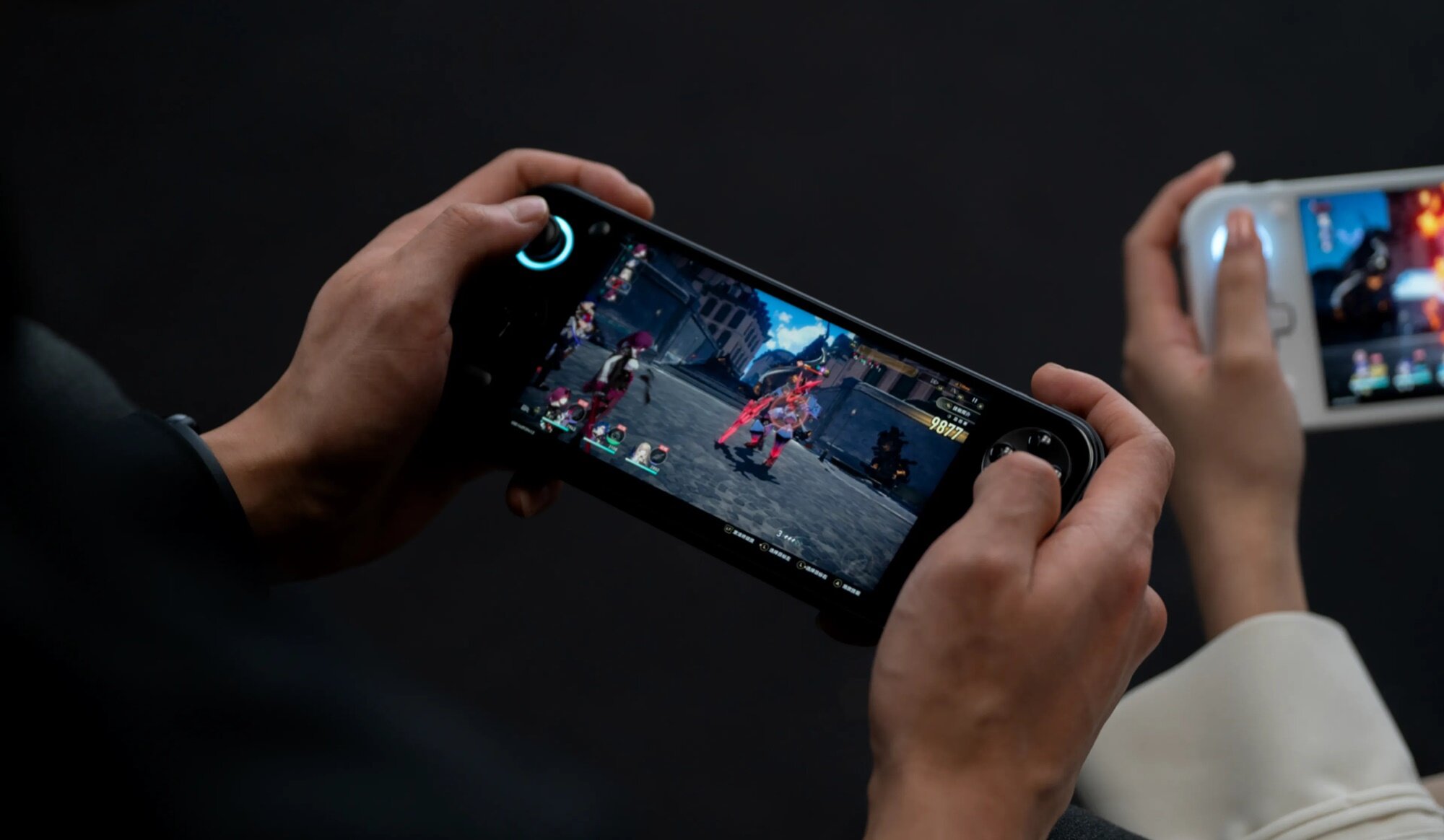
As mentioned earlier, this market is a blue ocean when viewed narrowly, and a red ocean when viewed broadly. Several Chinese manufacturers are jumping into this market, but the number of competing devices is not large. Among them, the AYANEO Pocket S has a luxurious design and excellent finish, and the fact that it is thin, light, and has excellent device performance will definitely act as a competitive advantage. Even with those advantages, I think we need to look at these 'Android game consoles' more coldly.
It cannot be a substitute for smartphones for those who want more multitasking elements, and tablets will be a better choice for those who think a large screen is good. For those who value compatibility between UMPC and games, it is inevitable to be compared with many PC UMPCs such as ROG Ally and Steam Deck. So, when viewed narrowly, it is a blue ocean, but when viewed broadly, it becomes a red ocean competing with tablets, smartphones, and UMPCs.
Android handhelds have advantages in 'smartphone games using joysticks', 'streaming games', and battery time. In other words, it can be said that it is optimized for action games or games that officially support pads on smartphones. I won't mention it in detail, but it can be said that the performance is quite good when enjoying games for other purposes.
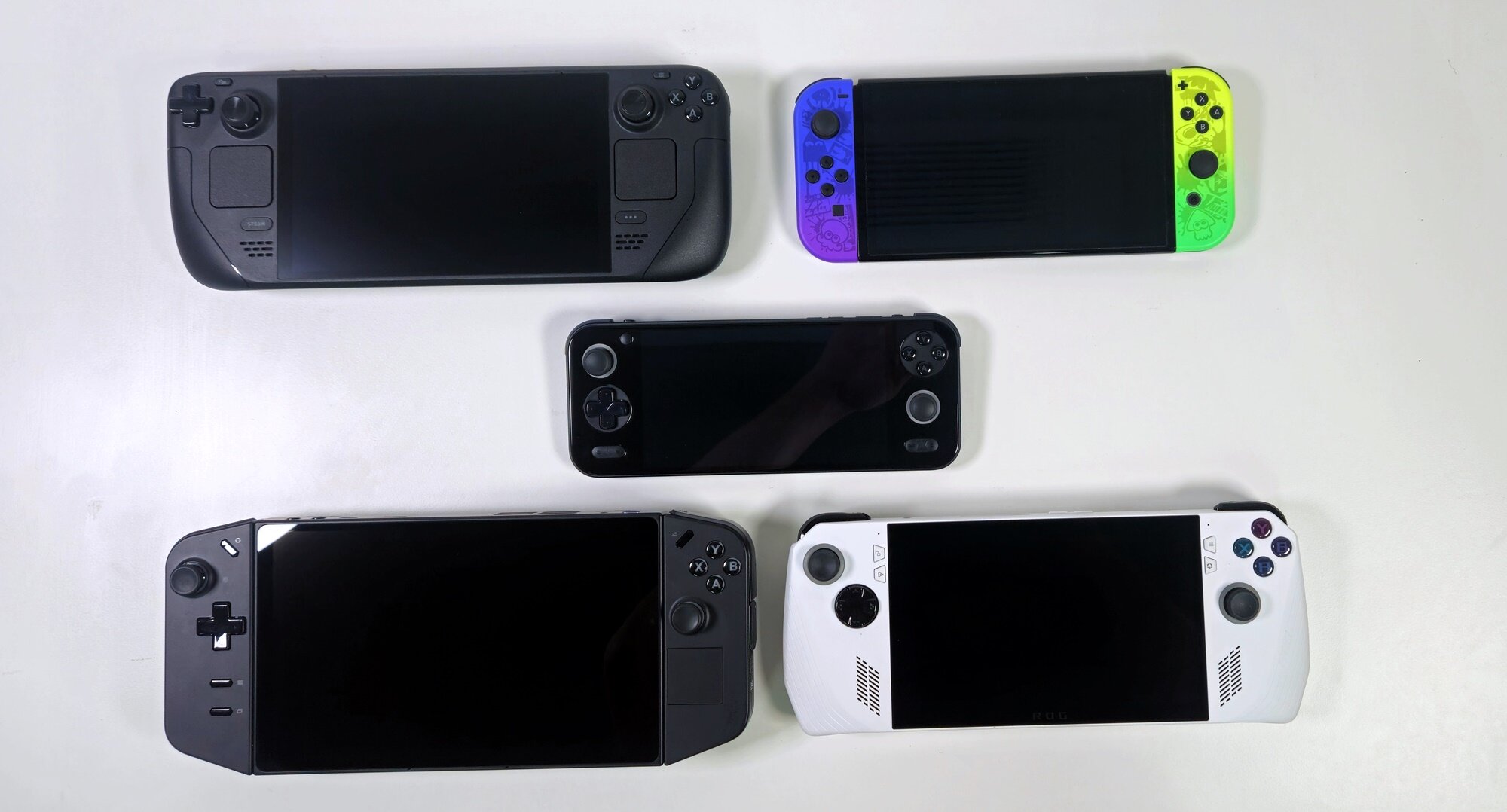
You can easily understand the actual size with this.
To summarize overall, since the utilization itself is focused on games, it is not attractive to those who are considering other uses besides games. It's not just the AYANEO Pocket S, all devices in this category are the same.
However, for those who mainly enjoy games by purchasing this one device and use their smartphone only for web surfing or watching videos and contacting people, it is also a device that creates a reason not to approach a 'flagship' smartphone unexpectedly. The cooling performance is a bit disappointing, but there is no problem with game play, and there was almost no performance degradation due to throttling during play. And the battery time is also quite good.
In that regard, I think the AYANEO Pocket S is a device with clear charm and points. It has a beautiful design, solid hardware specifications, and the operability and grip are quite good, but it is very light. If the software options become more abundant and the function errors are resolved with the manufacturer's continuous care, it can become an attractive handheld in a unique position.
The biggest concern is the price. The official price has not yet been released, but based on the Indiegogo funding, the price of the 12G RAM and 128GB 1080p basic model with a 28% discount is set at $399, 540,000 won excluding customs duties. Fortunately, the first sales price in Korea itself is lower than expected, and various accessories are included, so I felt that the distributor also paid a lot of attention.
In conclusion, I think the AYANEO Pocket S has a unique charm as a device that provides a clear operability in mobile action games while being used as a game streaming device such as Steam Link. In particular, it seems that it can receive some attention from gamers who do not like connecting a controller to their smartphone. The Snapdragon processor, which appeared exclusively for games, shows very good performance even in high-end mobile games, so in terms of performance, it is expected to show the same or higher utilization as flagship smartphones.
On the other hand, I think it is a device with a clear charm that will attract attention from the UMPC users. There may be people who use it for other purposes, and the fact that there are quite a few anticipated mobile action games such as Ming Dynasty, Zenless Zone Zero, and Goddess Order can also act as a plus factor. If you are interested, please look forward to future news.
Webzine InvenYang Young-seok Reporter
2024-05-27