Post
'Hearthstone,' 10 Years Strong: What's Next?
In the future, when game history is being written, Blizzard's CCG 'Hearthstone' will be a work that deserves significant attention. There were many CCGs before Hearthstone, and there were works with much deeper histories, but this work brought the CCG genre, which had only been enjoyed by 'niche audiences,' to the level of the general public.
A strong IP like 'Warcraft,' and a largely simplified game structure and clean UI. Upon its release, Hearthstone appealed to the general public, not just existing enthusiasts, and broke down the barriers to the CCG genre one by one. However, as a live service game, it was inevitably subject to ups and downs depending on the service period, so even Hearthstone could not always show its initial appearance. There are good times, and there are times when it is not.
Nevertheless, it's been 10 years. In a situation where countless games are released and terminated every month and every day, it has been steadily continuing for 10 years. In other words, Hearthstone has been consistently profitable for 10 years, and that means that many gamers are enjoying the game. It's not that there are few games that have been serviced for more than 10 years, but considering that tens and hundreds of times more games fail to reach this 10-year mark, it is definitely an achievement to be celebrated.
And now. The next expansion, 'Whizbang's Workshop,' has been released. The past 10 years of service, and the next 10 years of Hearthstone to come. We spoke with Game Director Tyler Bielman.
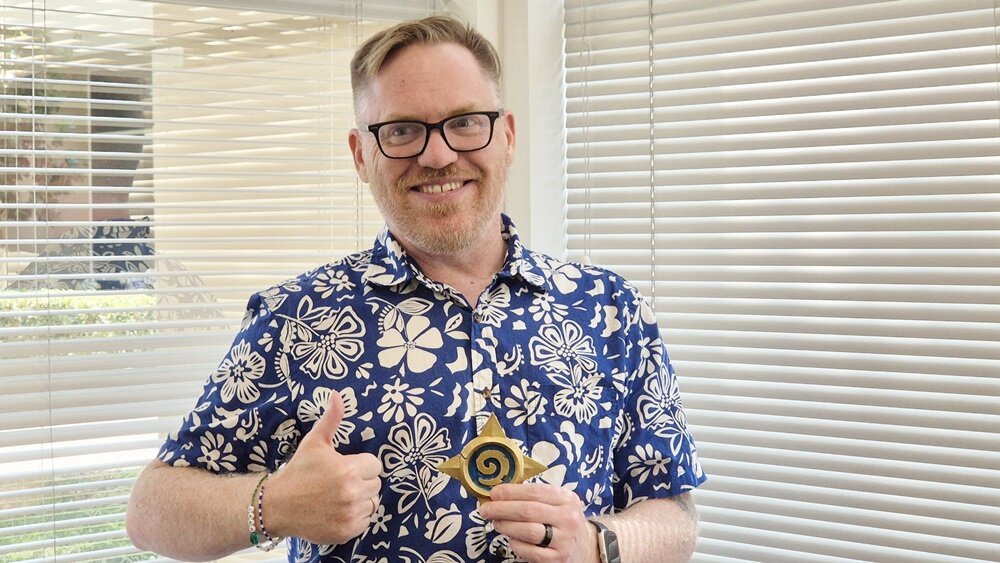
Q. First of all, congratulations. It's been a whopping 10 years. What do you think is the reason why you have been consistently loved by gamers for this long?
- When Hearthstone was first released in 2014, there were only a few digital CCGs that were trying to replicate the success of paper card-based tabletop games. At the time, Blizzard's Hearthstone development guidelines had several points, but the biggest ones were: 'The highest possible quality' and 'Mobile release'.
Looking back now, I think the early success of Hearthstone was probably due to this. At the time, the overall quality of mobile games was relatively simple compared to now, and the visuals were somewhat lacking. That early environment was the force that put Hearthstone on the path to success.
Over the next 10 years, Hearthstone has been updated in a fairly healthy and vibrant way. We knew enough about how to create interesting cards while maintaining the core gameplay. Also, during those 10 years, we tried various things. Arena, Mercenaries, and Battlegrounds, etc.
Battlegrounds has shown the best performance among them, but if all these attempts had not been made, Hearthstone would probably have declined much faster. I think that the experiments and attempts to give new experiences like this have been the driving force behind Hearthstone's continued popularity since its initial success, and I plan to continue this trend for the next 10, 20, and 30 years.
Q. Recently, it seems that the concept of expansions is composed of individual themes and narratives based on specific keywords or new game mechanics. It's quite different from the past, so how has the expansion development process changed?
- To put it briefly, the planning process for expansions involves conducting user tests on several themes that have been conceived. We present 10, or even 12, themes to players and observe their reactions. Of course, this does not directly lead to a final decision, but it is enough to refer to which theme would be the best choice.
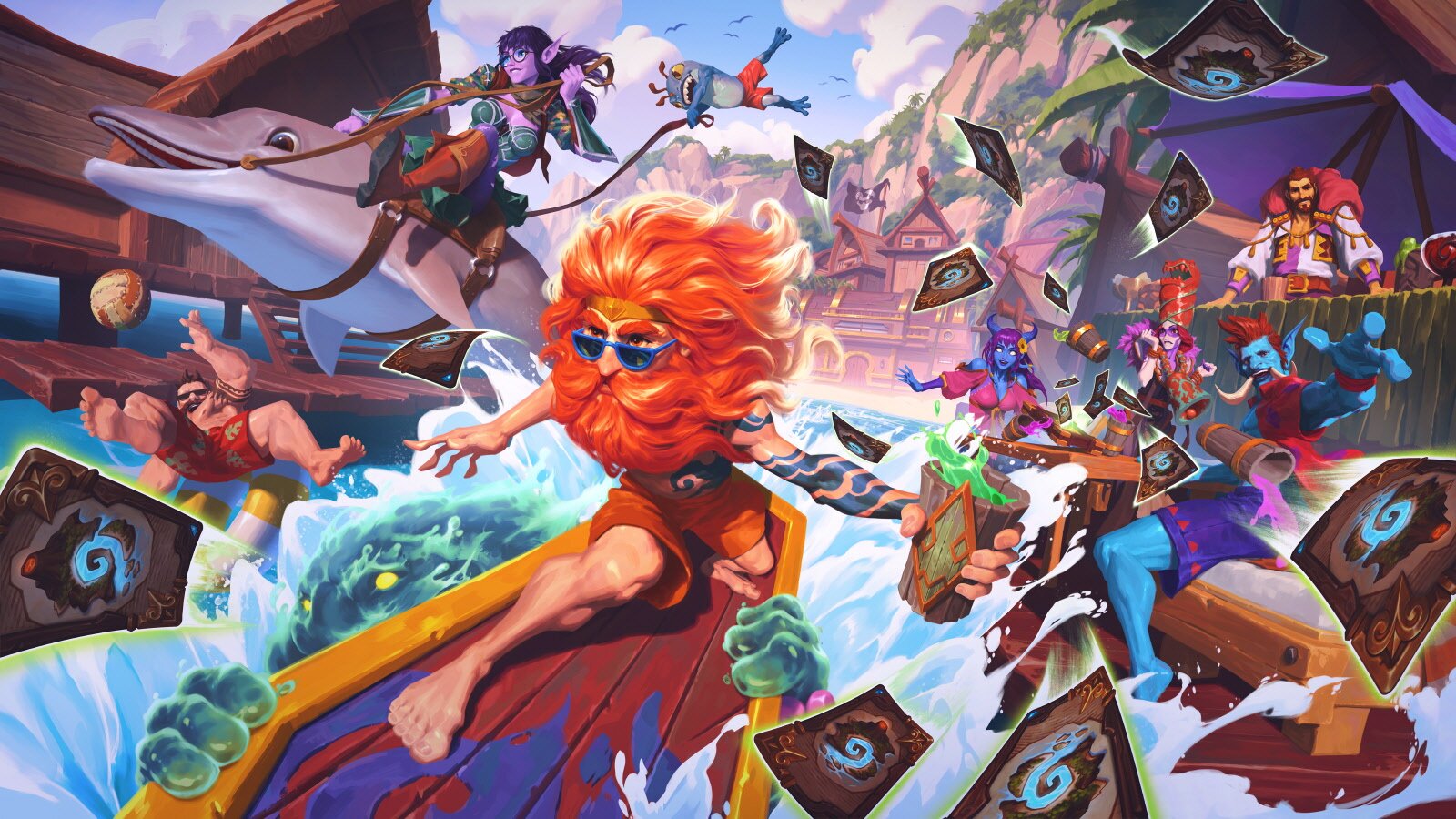
For example, 'Whizbang's Workshop' started with the theme of 'Pirates'. At first, we created and tested various cards with pirates as the subject matter, but we soon realized that this 'Pirates' theme was too narrow. Therefore, we thought about how to maintain the feeling of the sea and beach that underlies this 'Pirates' theme, while also modifying it to fit Hearthstone.
The conclusion was 'Vacation'. Imagining what would happen if the characters in Hearthstone went on vacation, we created tour guides and various drink cards, and created the image of a vacation enjoyed on a sunny beach.
As I said earlier, the development process of Hearthstone involves a lot of testing. User testing for each theme is conducted for a considerable amount of time, and the same goes for mechanism testing. Every Thursday is a play test in which the entire team participates, and we collect various feedback in the process.
This year is the Year of the Pegasus (Hearthstone's standard year), so we are dealing with brighter and more enjoyable stories, but towards the end of this year, we will be dealing with darker places, serious topics, and materials more connected to the Warcraft world. I think this year will be one of the most interesting years in Hearthstone's history.
Q. You said you'd keep it short, but it was quite long.
- Uh... so, to put it briefly, it's 'user testing'. The rest is a long answer. (laughs)
Q. Going back to the game, this expansion, 'Whizbang's Workshop,' is a very fun vacation-themed expansion. I think you put a lot of effort into the sound and background production, can you tell us about this process?
- Not just this expansion, but Hearthstone invests a lot of time in the voice and visual effects and sound effects when all legendary cards appear. To make every legend feel special. The beach and vacation theme of this expansion will also be reflected in in-game events and loading screens.
Q. Speaking of 'Hearthstone' itself, not the expansion, many horizontal updates have been made over the past 10 years, and many cards have been added, which has increased the diversity of play. At the same time, it is also true that the game has become very complex, what do you think about this?
- I think this is probably the most serious problem for returning players who have been away from the game for a while. We have invested a lot of time in creating new play experiences over the past time, and we have added new keywords and cards. Naturally, players who have been away will be embarrassed.
Last year, we created a 'Catch-Up Pack' for players who were having difficulty bridging this gap. It is a pack that provides bonus cards that supplement the cards that are lacking based on the player's owned cards. We also created a 'Loaning Deck' to reduce the barrier to entry. This 'Loaning Deck' is a deck that is given when you return to the game, and it is not the best deck, but it is a deck that you can use for a period of time to adapt to the game.
Also, there is a new method that we tried in this expansion. A representative example is the collaboration with content creators. We conducted tests with several creators during the development process and created a deck with the cards they used. If you select a new class deck in the expansion, you will see their names written on the cards.
This is a means to help gamers who have not played the game directly but have been exposed to the game through content creators, or who have a specific creator they like, to adapt to the game more easily. Content such as 'Battlegrounds' is content that you can start and enjoy right away without the need for complex pre-design. We are always waiting for new gamers, or old gamers, to come to Hearthstone.
Basically, when you first start Hearthstone, you don't need to understand everything and build a deck. Hearthstone's balance is quite well-balanced, and it is a game where you find a play style that suits you by repeating play.
Q. Every time you release an expansion, you must have the idea that you have to create cards that are stronger or more attractive than before. This soon leads to card power inflation, how are you approaching this?
- The most referenced thing is data. The decks used by Hearthstone players usually follow a certain type of 'archetype', and we look at the statistics such as the win rate and cost usage rate of these archetypes to see what percentage of cards are used and adjust them while watching. Sometimes, if the usage rate of a specific card becomes too high, it is prohibited. It's not often, but if it gets too bad, there's no choice.
And, every time we release a new expansion, we think about changes to this 'archetype'. Of course, there are many times when unexpected changes follow. Not all expansions and mini-sets have the impact we expect. Rather, in some cases, new cards do not work and the existing meta is maintained.
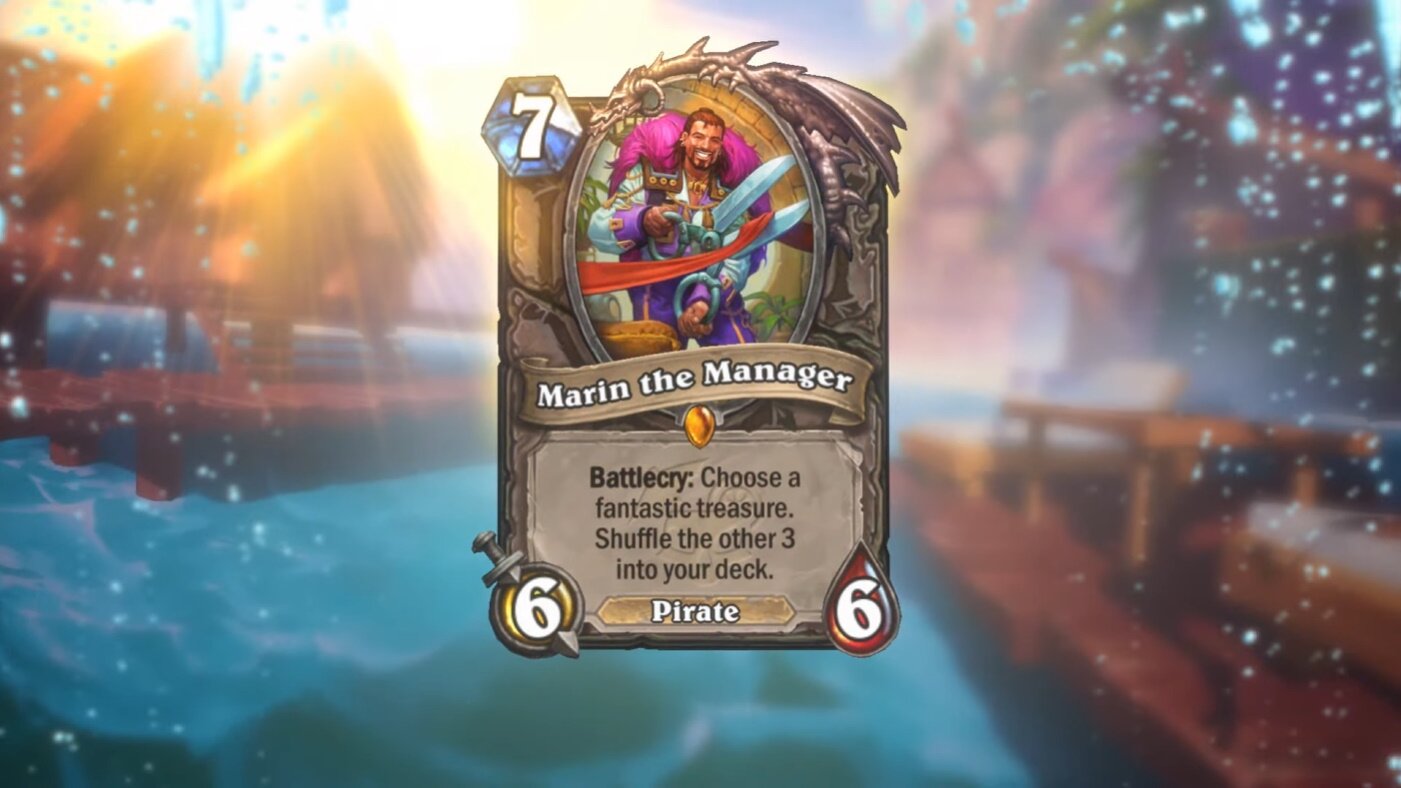
In the case of 'Whizbang's Workshop', we expect that a new archetype will be created around tourist cards, and we think that it can definitely change the meta. We can't completely predict the results, but we are expecting a significant change. We are looking at this 'Tourist Card' positively in that it has enough uses no matter what deck you design. I should say that there are more ways to beat the existing meta.
Therefore, I don't really agree with the word 'power inflation'. However, I think it is closer to providing more options to respond to the existing meta with each expansion.
Q. In Korea, 'Arena' is as popular as the regular season. Do you have any plans to change the Arena mode?
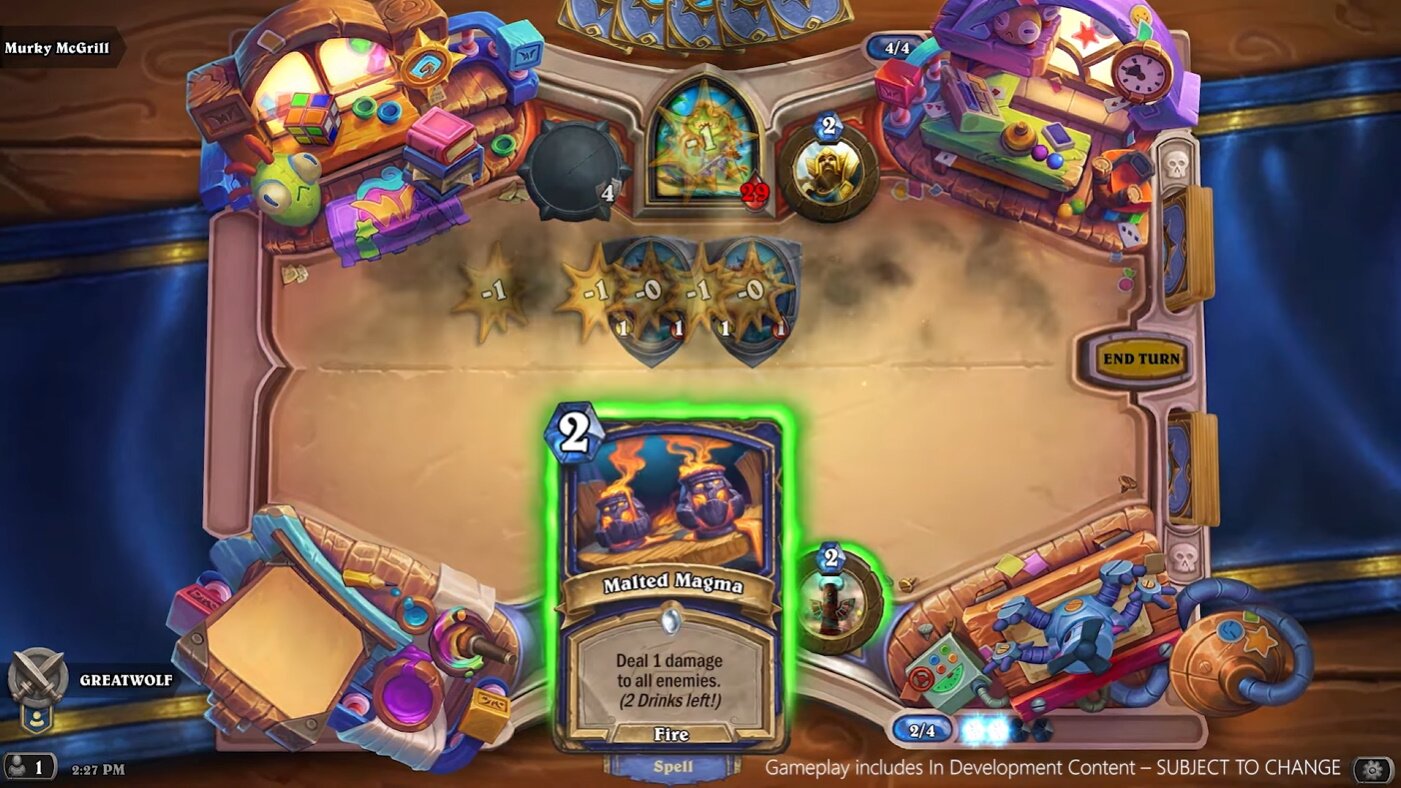
- We also like Arena content that everyone can enjoy, and we are constantly making changes to Arena. In Arena, you can play Whizbang's Workshop before the expansion is released, and we also showcase related sets. Arena is also an opportunity to experience the expansion in advance before the official release of the expansion.
Also, although I can't announce it at this point, we are making some plans related to Arena. We have a firm belief in the Arena mode, and although it is difficult to talk about it in more detail, I would like to say that we are preparing something big.
Q. In the case of Hearthstone, random elements play a role in many parts compared to existing CCGs. This is also the charm of Hearthstone, but it also gives the feeling that the victory or defeat is determined by luck rather than skill, what do you think about this?
- What I explain to the new designers on our team for a very long time is the relationship between skill and randomness. The point is this. Skill and random elements seem to be opposing concepts, but the result is not. In the end, skill is needed to prepare for and overcome these random contingencies. Therefore, the important thing is to find the 'right balance'.
To change the term slightly, 'uncertainty' would be more appropriate than randomness. A game with a moderate level of uncertainty is an environment where the gamer's skills can be maximized. Uncertainty does not only apply to one player, and taking or using it is skill. The game must be unpredictable, but the outcome must never be decided by a coin toss.
A certain amount of uncertainty should be an environment where the best players can be at the top, and these two concepts must maintain a healthy relationship. Our goal is also to service the game so that this harmony is maintained.
Q. There is an opinion that the popularity of existing CCGs has decreased as the number of deck-building roguelike games such as 'Slay the Spire' has increased. What do you think about this?
- I personally like those games very much. The core idea of all these games, that is, the root, is derived from CCG, and fundamentally, they are games that are like the children of TCGs that were played on the table.
Several years ago, we introduced the characteristics of the auto battler genre while planning Battlegrounds. Game designers thought that they could create new fun with this technology, and the player response was so good that it is still popular.
Also, before I joined the team, 'Mercenaries', a deck-building solo content, was added. Although it did not receive as much response as expected.
In the future, we plan to introduce various genre devices that we think we can do well in Hearthstone. While constantly observing the various genres that have sprung from the root of CCG, if we get enough inspiration, we can continue to experiment with Hearthstone.
Q. Before joining the Hearthstone team, you created the card game genre for more than 20 years, including the development of Magic: The Gathering. Can you tell us about any memorable moments in this process?
- To talk about my career, I should probably start with Magic: The Gathering. At the time, making sets like 'Mirrodin' or 'Ravnica' was a very good experience. Both the theme and the mechanism satisfied the player's fantasy. I don't know how to explain this well.
For example, it's like this. The moment when the theme of the card and the game mechanics satisfy the player's fantasy, and the gamer naturally realizes what they can do. I call this an 'Aha Moment', which is like creating a moment when you realize the game as if a light bulb is turned on above your head.
To make another analogy, most game developers develop 'impressive moments' for players, but CCG developers must develop 'tools that players can create impressive moments for themselves'. What I ask of designers is also this type of 'emotional experience in the play process'.
Therefore, I personally think that the 'Battlegrounds' content has conveyed this emotional message very well. The gamers' reaction at BlizzCon when we revealed the Battlegrounds system was very satisfactory.
Q. Looking back on the past 10 years of Hearthstone, how do you feel?
- I haven't been on the team for very long compared to others. However, our team includes people who have been developing Hearthstone from the beginning, and people who have worked at Blizzard for 20 years. I have not experienced the same period as others up to these important moments, such as the 30th anniversary of Warcraft, the 20th anniversary of WOW, the 10th anniversary of Hearthstone, and the 5th anniversary of Battlegrounds.
Rather, that's why I feel honored to be able to spend the 10th anniversary with other people. The Hearthstone development team is a very special team, and the way they treat players and the development culture were also better than I expected.
Therefore, we will continue to be brave, focus on players, experiment with new things, and strive to provide 'Aha Moments'.
Q. Finally, do you have anything you would like to say to the Hearthstone community in Korea?
- First of all, thank you. (In Korean) Is this pronunciation correct? I want to say thank you. I want to tell you that we are always listening to your opinions and paying attention to the reactions of all communities. Thank you for taking the time and focusing on everything we make, and I promise that we will continue to listen to you in the future.
Webzine InvenJung Jae-hoon Reporter
2024-07-24