Post
Kunitsu-Gami: Path of the Goddess, a path carved with action and strategy ⭐8.0
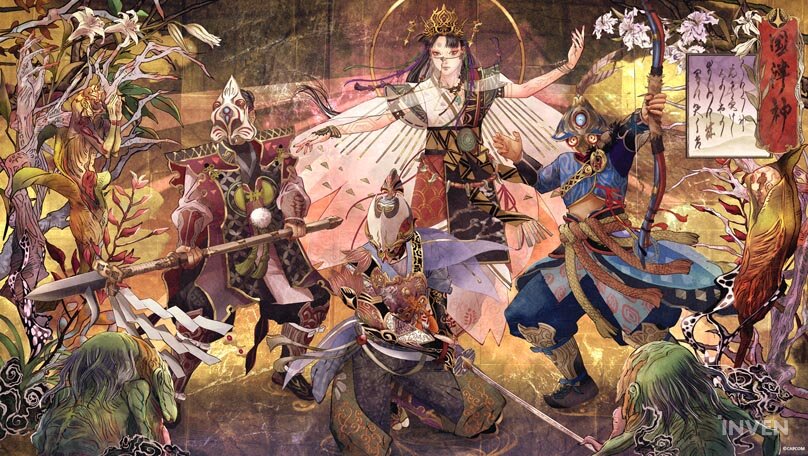
Colorful and bizarre images unfold before your eyes. The village is polluted, and at night, a horde of grotesque creatures pours out from the pillar gate connected to another world. The bodyguard rescues the villagers during the day and protects the shrine maiden with them throughout the night. After a fierce night, day comes, and soon night approaches again.
Prepare during the day, survive at night. Kunitsu-Gami: Path of the Goddess is a strategy game that utilizes the distinct elements of night and day. But it's not predictable. Following the standard flow of a defense game, it combines new strategies for each stage and a directly controlled playable character to create an engaging strategic action experience.
Genre: Kagura Action Strategy
Release Date: 2024.7.19
Review Version: Launch Build
Service: 캡콤
Platform: PC, PS, Xbox, Switch
Played On: PS5
Following the Basics, Highlighting Unique Features in Each Stage
Usually, when defense elements are included, the game's progression is similar, except for the uniqueness of objects or the map. Most turning points involve increasing the number of usable objects with new abilities and strengthening the waves of enemies as the stage progresses. However, Kunitsu-Gami shows more than that.
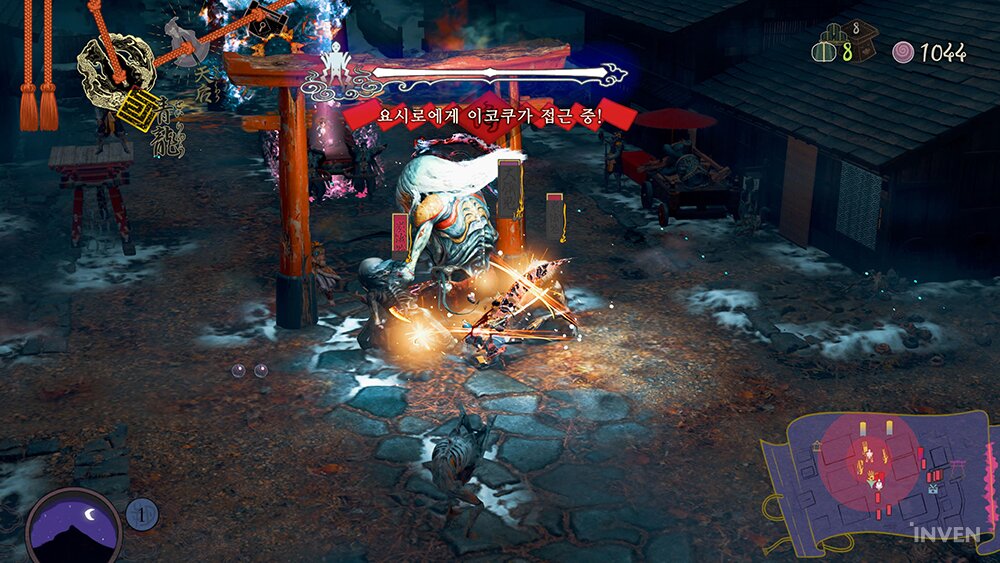
It doesn't completely abandon the defense game formula itself. Units, here are villagers. It follows the standard flow of a defense game, strengthening the villagers' abilities by profession, arranging them according to their attack range and occupation, and proceeding with the battle.
However, that's not all. Kunitsu-Gami highlights the unique features of each stage. It requires different strategies for each stage, presenting a slightly different gameplay style from typical defense games. It provides a new feeling of combat in each game not only through the increasing difficulty of each stage but also through more diverse strategies.
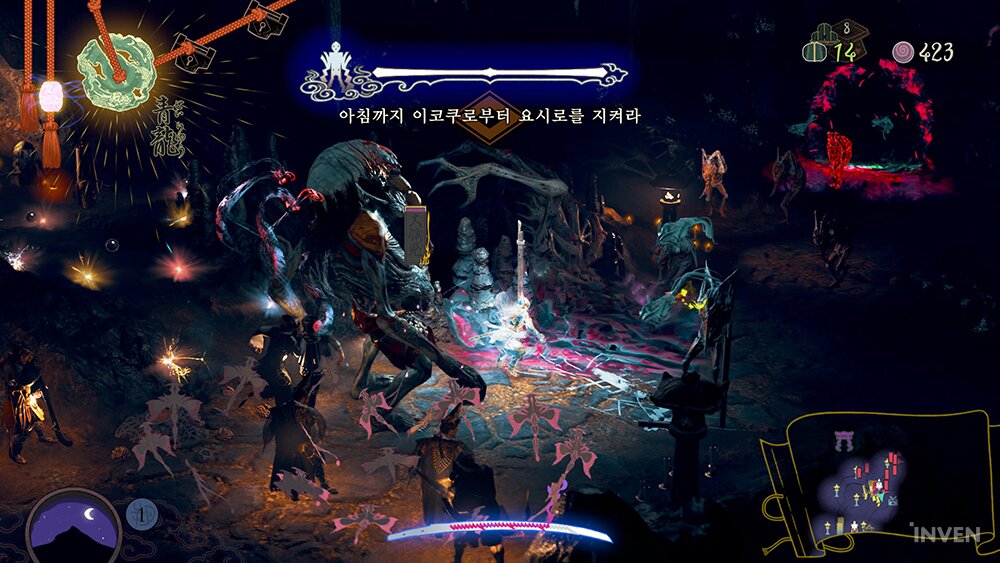
For example, in certain stages, you must use only the playable character Sou to conquer the map, and in other stages, you must clear waves only with the villagers, not Sou. In addition, you can clearly point out characteristic aspects for each stage, such as lighting scattered lamps in a dark map or going out on a boat to defeat the approaching Ikoku.
These new elements encountered in each stage are sometimes combined with other elements in later stages. However, it was a bit disappointing that as the end approached, the game flowed into the difficulty of a standard defense game with strong enemies constantly rushing in.
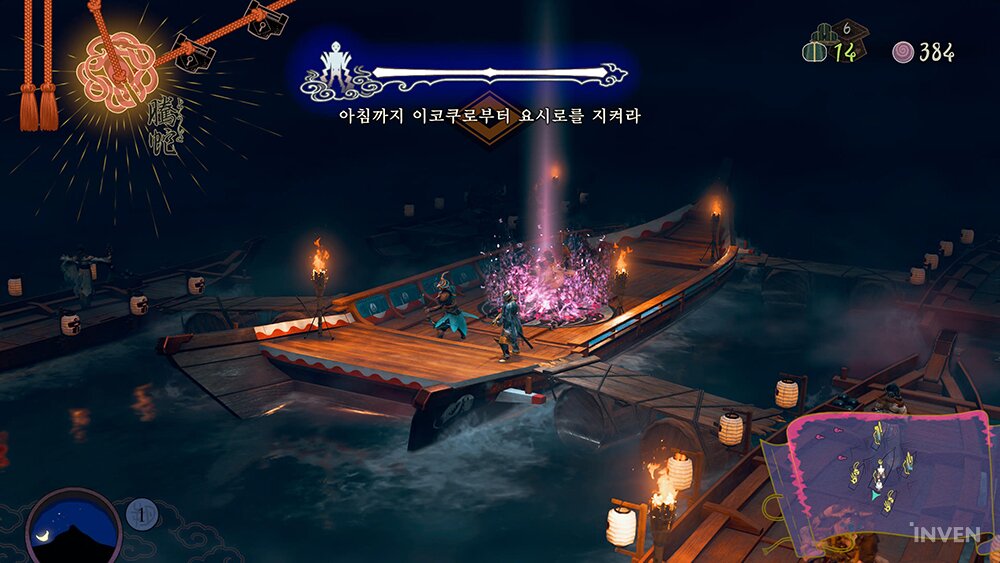
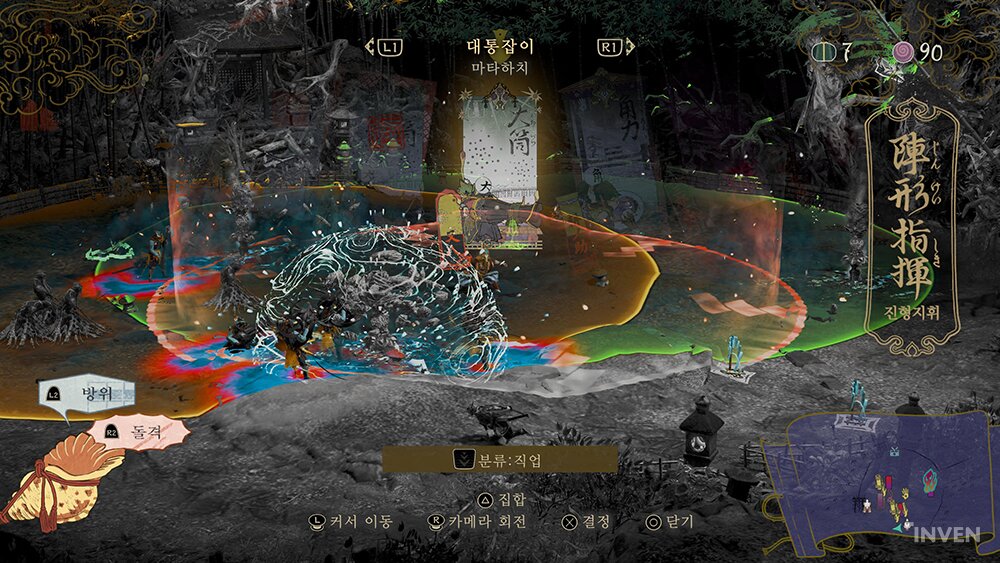
The game's characteristics and strategy elements are best highlighted in the boss battles. Kunitsu-Gami's boss battles are quite full-fledged. It doesn't just stop at simply placing villagers and attacking the boss. It strategically places special elements from the previous village stage as a strategy to approach each boss more strategically.
In addition, you can control the villagers more quickly and easily through the collective defense and rush buttons that can only be used in boss battles, allowing for much more agile and tense gameplay than in normal stages.
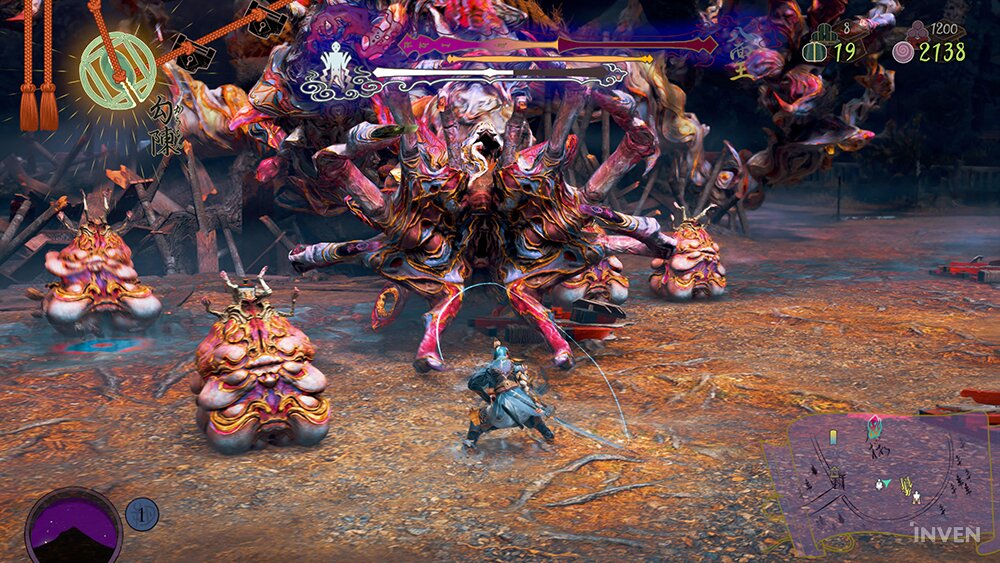
Kunitsu-Gami's defensive turning point doesn't stop there. Without a largely complex system, it allows players to directly consider and choose all the processes leading to stage clear by varying key elements such as resources, goals, and maps. Because of this, even if it is the same stage, everyone experiences a different clearing process.
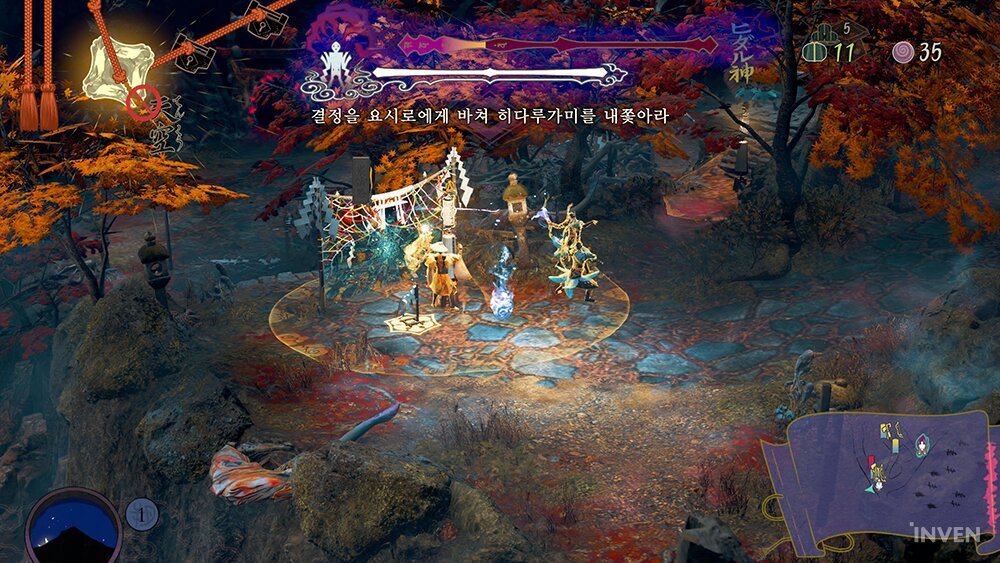
The core resources for play, crystals and food, are shared from the previous stage, and the location of the shrine maiden, which is the element to protect and the key to clearing the stage, can be directly specified. This sharing of resources and the location designation of the defense target are combined with the automatically flowing night and day phases to elicit strategic considerations for each individual.
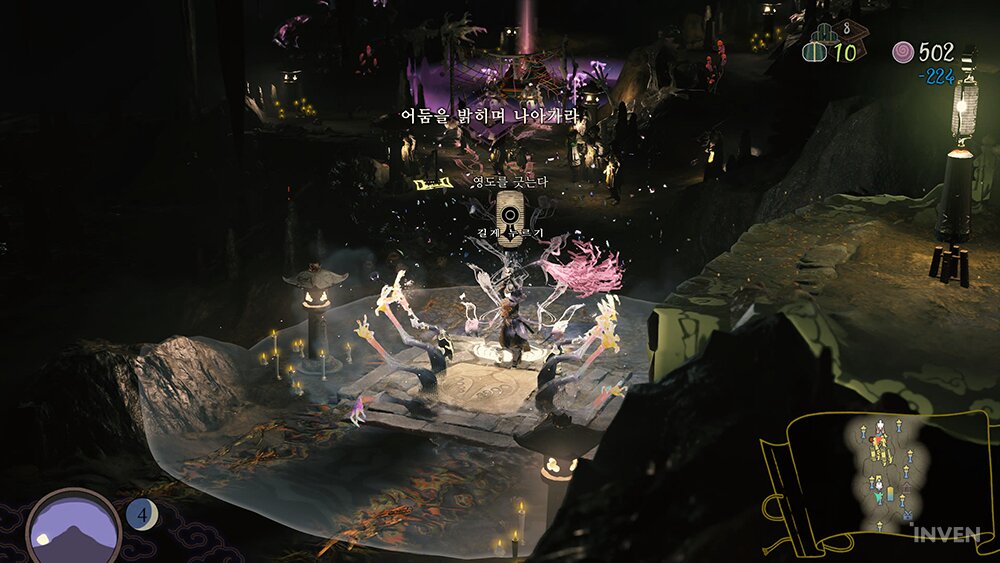
In particular, specifying the location of the shrine maiden before night comes is very important. Depending on the location of the shrine maiden, the strategy and preparation process during the limited daytime can all be different.
Since the movement speed is very slow and it uses crystals needed to promote villagers, you need to stop at a suitable location to safely spend the night. Even in the case of the same stage, even if you move the map by purifying the gate, the time zone continues as it is, so you need to prepare more than just the immediate wave.
It is up to the individual to decide whether to use defensive structures and move little by little to spend several nights, or to take risks and move boldly.
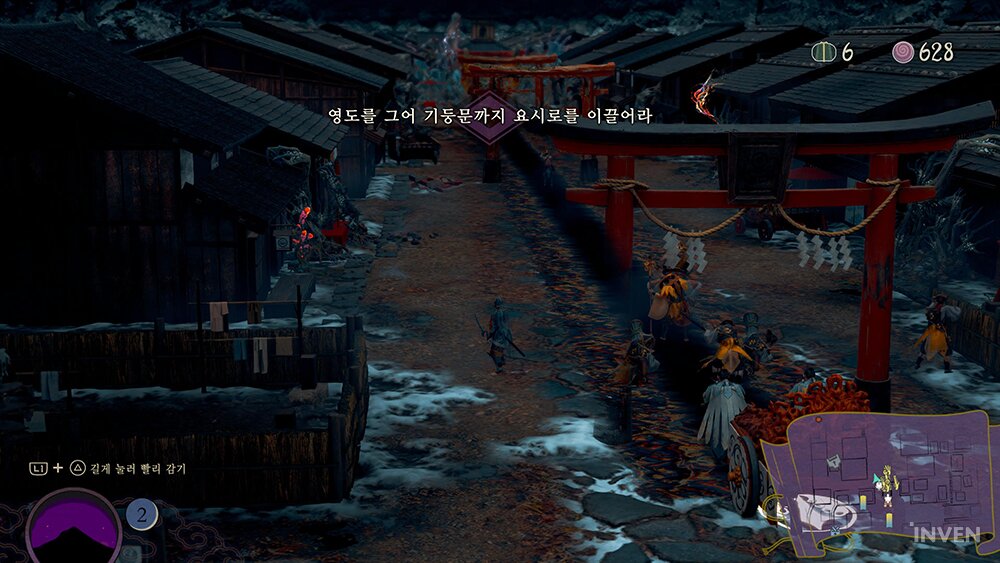
Action That Exploits the Gaps in Strategy
Of course, even if it only slightly twisted the formula, Kunitsu-Gami would have just remained a slightly unique defense game. But Kunitsu-Gami twisted it a bit more. It included a handful, or rather, quite a lot, of action that players can directly control in strategic considerations.
When we start the game, we have to control the bodyguard Sou ourselves and do many things. We have to work hard to move around and purify the village's pollution, rescue people who have become cocoons, call carpenters here and there, draw spirit paths for the shrine maiden to move, and finish promoting and deploying people before night comes. Oh, of course, promotion and deployment can be done even after night comes.
Anyway, in a typical defense game, there is actually very little to do at this point when waves start to come in earnest. Watching the approaching enemies and moving villagers who are not in the right position, or changing their jobs, that's about it. There is even less to do thanks to the system that makes additional purification or repair of defensive buildings impossible at night.
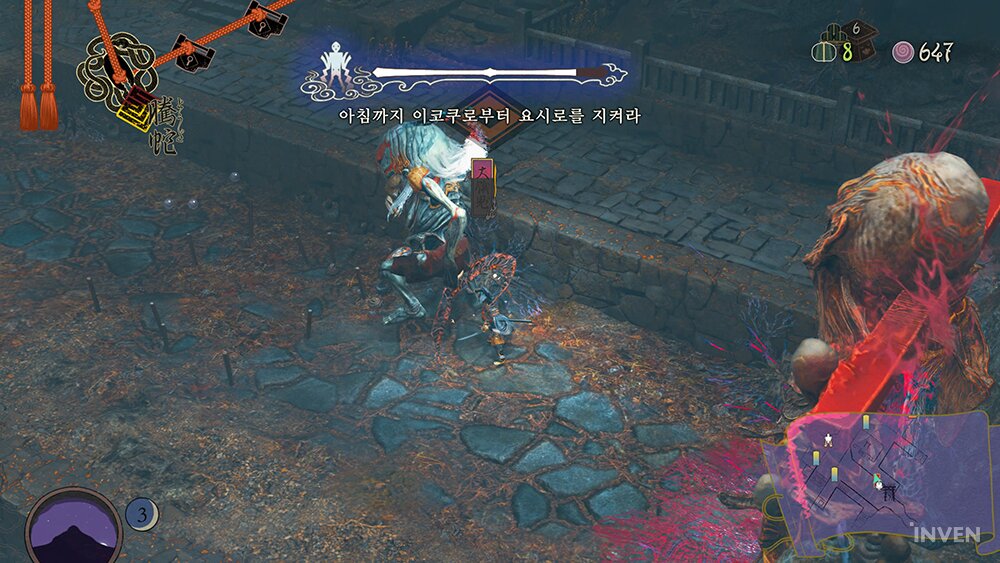
However, Kunitsu-Gami allows you to use Sou in this resting gap. It included quite a full-fledged action operation so that you can follow the waves coming from here and there and attack the enemies directly, and sometimes even take on the role of a one-man army without the villagers.
Although it's not as fancy as games focused on action, it has enough necessary elements such as attacks and strong attacks according to key input, skills, defense, parrying, counterattacks, and evasion. In particular, these action elements strongly come to the fore in boss battles that show powerful and challenging attack routines. It requires almost the same operation as a general action game, focusing on watching the enemy's attack motions and avoiding them while dealing damage.
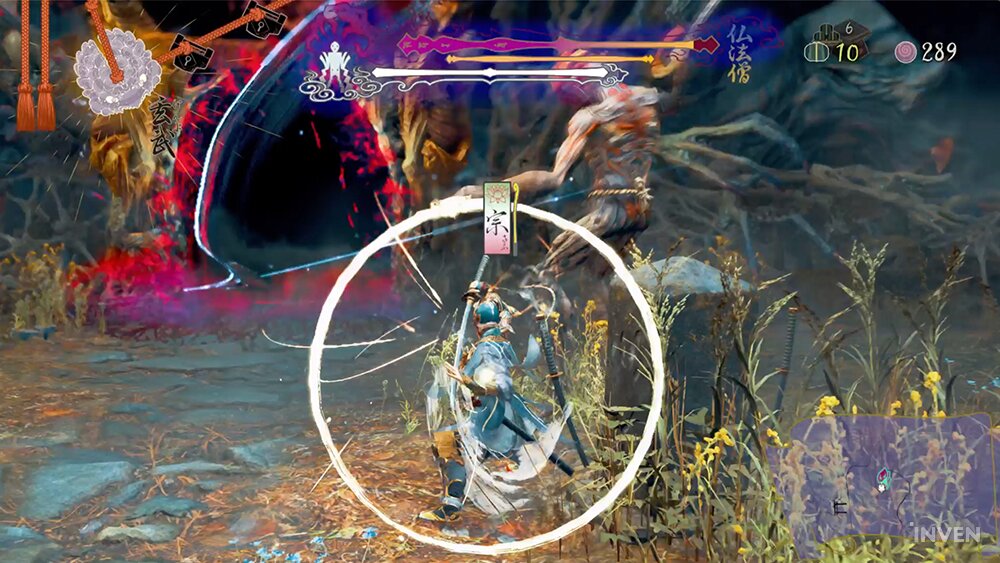
Not only that. Even in normal stages, as you progress to the later stages, very powerful special enemies pour out from all directions, so the action element of directly using Sou to deal with enemies takes up a significant portion. There is a limit to the number of villagers that can be used as defense elements, and the horde of enemies approaching the shrine maiden is enormous. In the end, the places where the villagers are missing or lacking are naturally filled by using Sou to deal with the enemies.
If the operational process felt strongly auxiliary, it would have been difficult to call it an action element. It would have just ended up being a defense game that requires a little more operation. But the moments of using Sou are closer to that of an action game, even if it's a bit clumsy. It definitely includes operations such as parrying the enemy's attack in time, accumulating stagger stats to knock down the enemy, evading unavoidable strong attacks, and cramming in skills in the gaps.
The interesting thing is the game's design. Kunitsu-Gami doesn't miss strategy even in moments where action is needed. Conversely, action is needed even in parts where strategy is the focus. In other words, this game is designed to utilize both strategy and action elements.
Basically, in order to clear the stage smoothly, all parts, including Sou's operation, the existence of villagers and defensive buildings, and the location of the shrine maiden, must be strategically configured. No matter how well you operate Sou, you cannot block all the enemies pouring out from multiple places at the same time, so the overall placement configuration is very important, and in the process, you must also find a strategy that matches the characteristics of the stage.
Of course, special stages such as action stages where you only operate Sou to clear, and defense stages where you only deploy villagers to protect the shrine maiden are exceptions.
Boss strategies, which can be seen as the main element of Kunitsu-Gami, cannot be achieved by Sou alone. You need to deploy villagers, and even while operating Sou, you need to move the villagers according to the boss's patterns, and sometimes rush them in. It's like a game that requires multitasking.
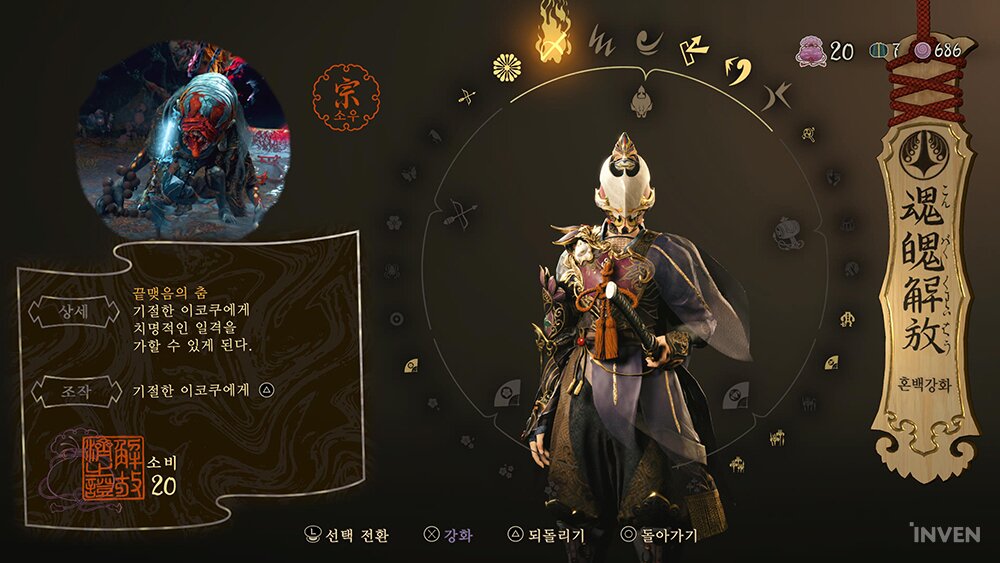
That's not to say that the proportions of strategy and action are completely the same. No, it seems like the game doesn't lock the proportions systemically. The game allows you to adjust the two elements to some extent through the skill and equipment system.
The materials used to strengthen the jobs that villagers can promote to and to learn Sou's skills are shared. Therefore, players can choose whether to focus on the action they directly operate, or focus on the villagers, or use both elements in a balanced way.
In the case of equipment, it requires a more direct choice. The handguards, which are equipped with skills, are divided into attack skills that Sou directly uses and buff skills that strengthen the villagers, and the treasures, which are passive skills, are also clearly divided into whether to strengthen Sou, strengthen the villagers, or strengthen auxiliary aspects.
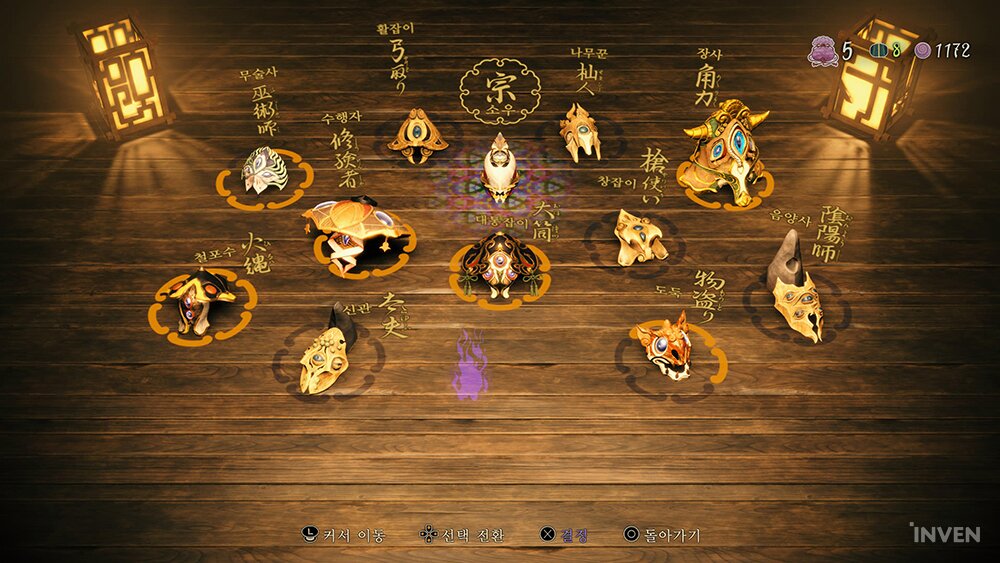
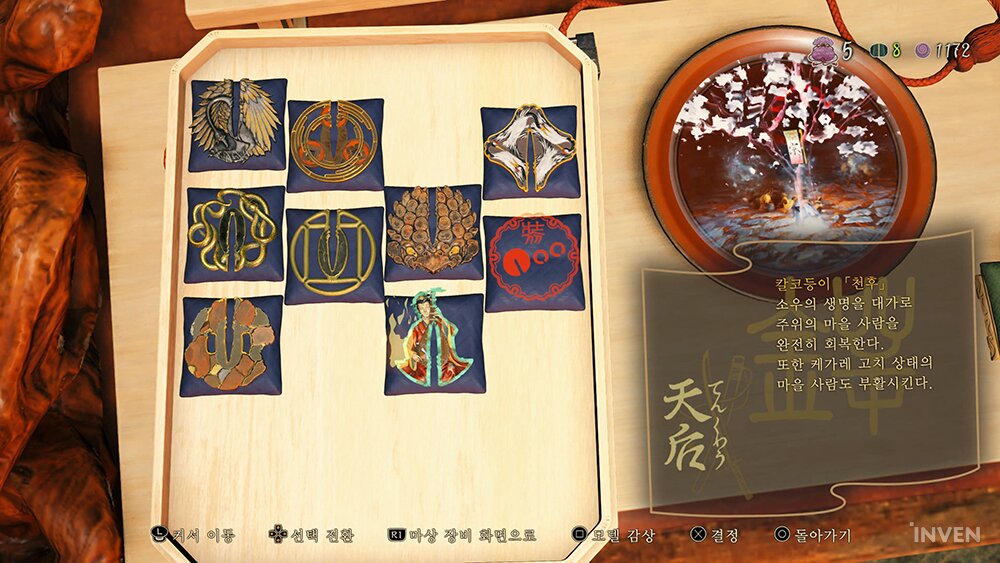
In this way, the game provides players with various choices, allowing them to enjoy the two elements of action and strategy in a direction that is more familiar to them. It can be said that the balance is well-captured. Providing a change in the field of view, although there is no big difference, also helps to enjoy the two elements appropriately.
However, it is disappointing that the action aspect is somewhat 허술한. The field of view does not move quickly, there are many skills that input the same key, so the activation skill is not executed immediately, and it is said that a powerful archery skill is used when you press and hold the L2 key, but it is completely ignored. The completeness of the action operation is a bit lacking.
Colorful Colors, Lack of Visibility, Disappointing Convenience
The Kunitsu-Gami trailer, which was first unveiled at Summer Game Fest 2023, received a good response at the event despite being a new IP. It's not easy to capture attention with the first public trailer in a showcase where countless trailers are pouring out.
High-saturation colors swirl, and grotesque Imyo-Mangryang pour out with intense sound. And the visuals in the actual game are as colorful as that trailer. Of course, Kunitsu-Gami's graphics are not incredibly good, or the background is dazzling.
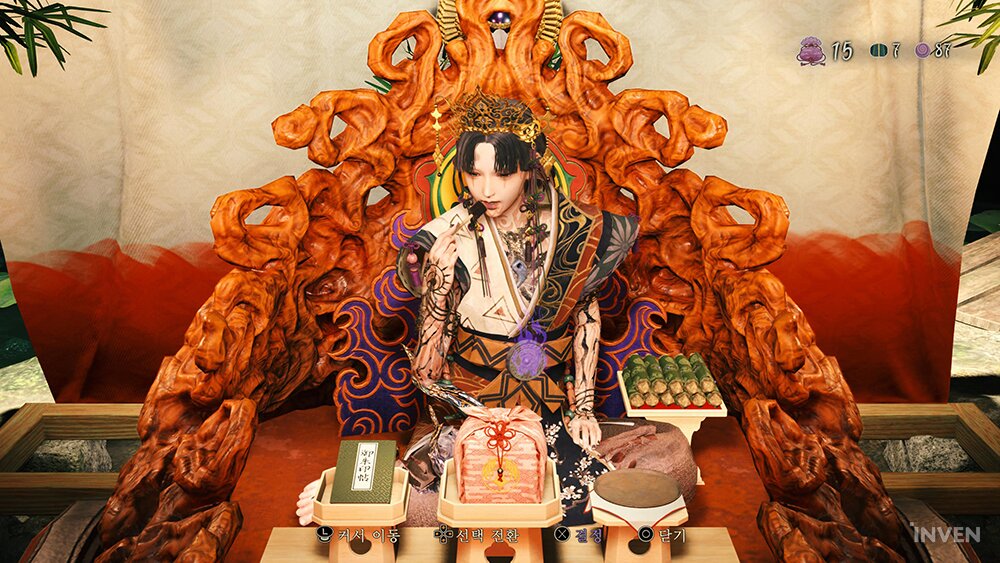
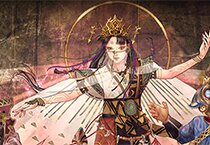
However, the pollution that combines purple and various colors, the red color that is strongly expressed in the middle, the dance of the shrine maiden and villagers drawn each time the stage is cleared, and the appearance of Ikoku that gives a strong feeling of being from another world, etc., played a role in making the game's impression intense.
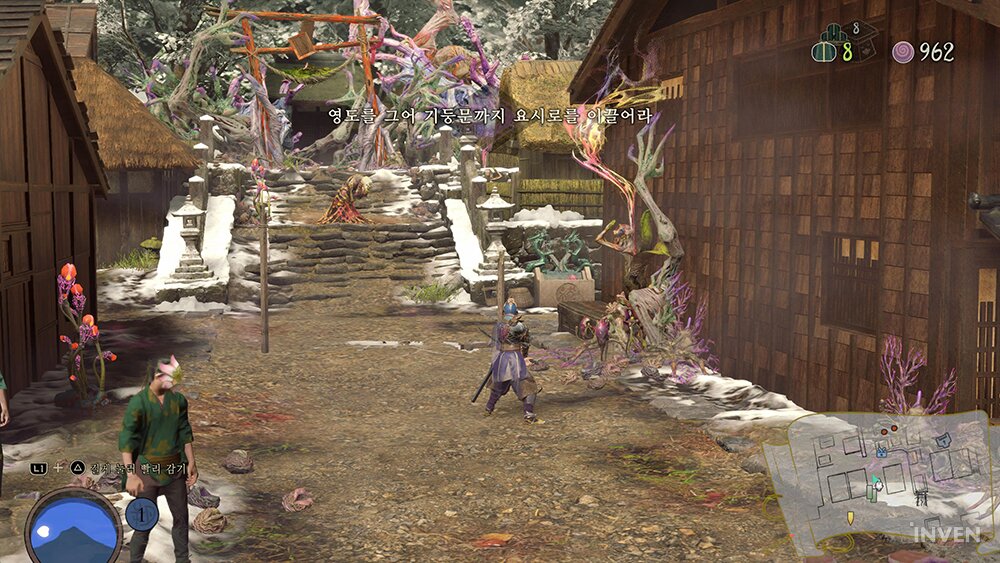
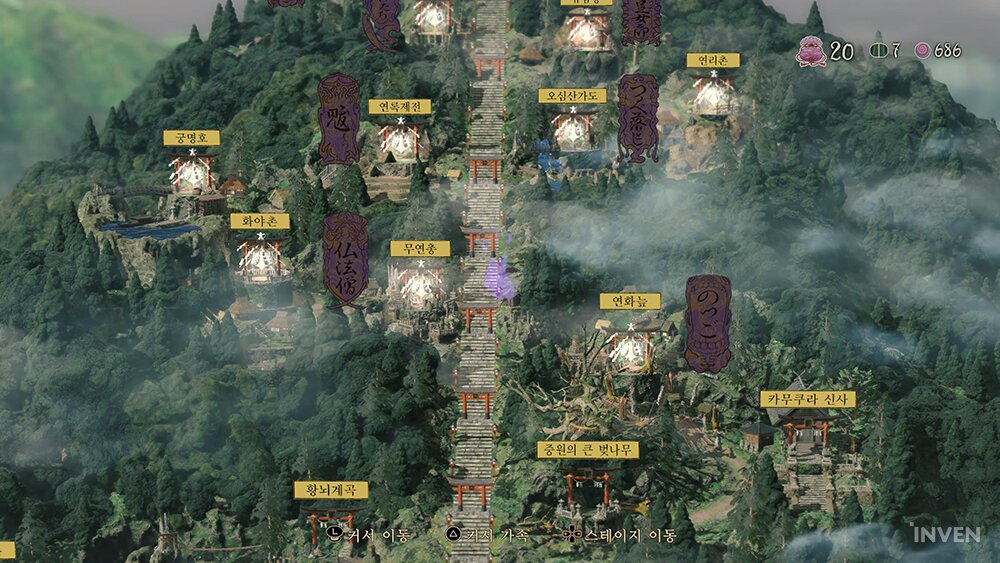
However, this also resulted in reducing the overall visibility in bright maps. Within a limited time, you have to purify pollution, save villagers, break 항아리, and catch wild animals, but all of this does not come into view clearly while moving quickly. The background spread throughout the village and the color of the overall pollution are colorful, and the entire map is bright, so the most important objects are not easily visible.
The most important thing during the daytime is not actually purifying 케가레. This simply acts as a secondary element to obtain the material crystals, but it eats up the already limited time due to the lack of visibility. The most important thing in clearing the stage, the most important thing in the game play, is ultimately setting up a defense strategy. But because the materials are not visible, you don't have enough time to think about that strategic part because you're looking for them.
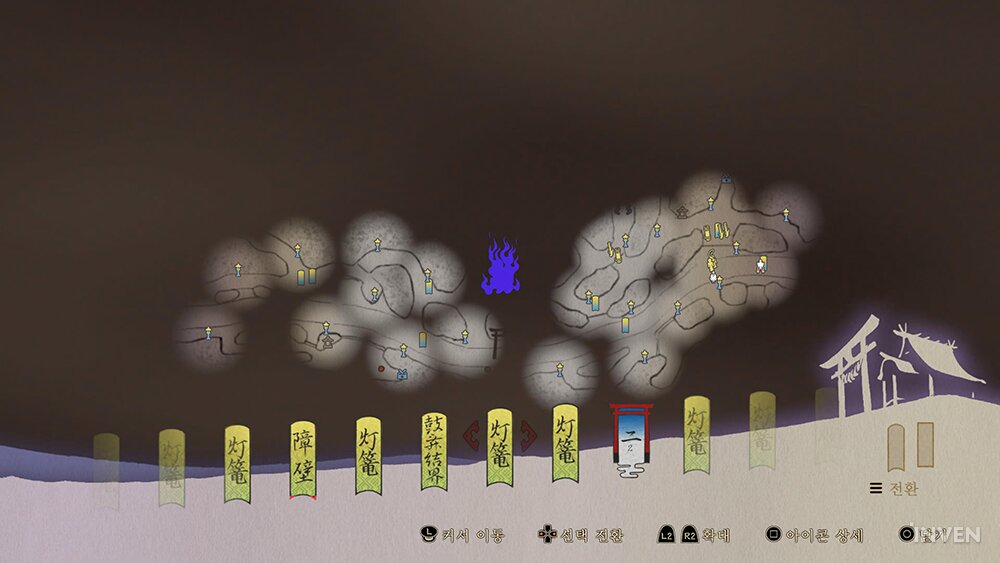
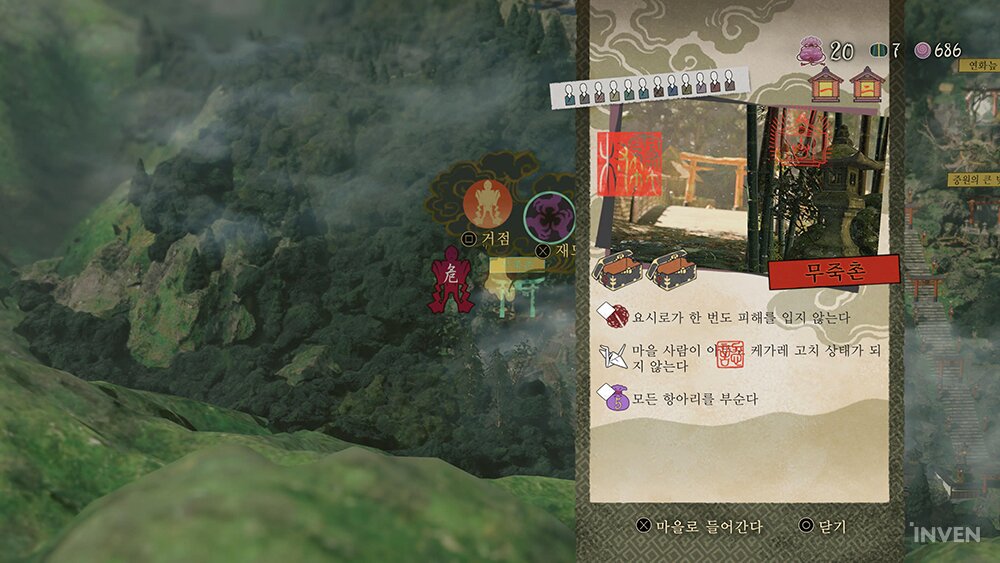
There are other disappointments related to the game system. In the case of crystals, which are essential for stage play, if there are not enough crystals left over from the previous stage, you have to collect them by going around each base, but these bases are only one or two in the early stages, but in the mid-to-late stages, there are more than ten. Nevertheless, in order to collect the insufficient crystals, you have to directly enter all the bases, press the tent where the shrine maiden is, and repeat the process of coming out to the entire map through the door again. Even there is loading in the process of entering and exiting the base.
Once the restoration is completed, there is no need or reason to enter the base. You can replace equipment and strengthen skills and villagers using only one base. However, since there is no way to collect the crystals from all the bases at once, if there are not many crystals left after the stage is over, you have to sigh and visit various places. The concept of offering to the shrine maiden is really good and understandable, but I wonder if it was necessary to adopt such a cumbersome method.
It's Fun Enough If You Endure the Early Part Well
Kunitsu-Gami, I really enjoyed playing it without knowing how time was passing because I really like defense games. The unique characteristics of each stage that are not obvious, the combination of action elements that do not allow you to rest your hands for a moment, the colorful colors and the beautiful appearance of the shrine maiden, the appropriately inserted sound, all the elements were appropriately combined to greatly increase the game's appeal.
As a result, the game itself is more focused on defense, which protects the goal from the enemy's waves. It would be good to see that action elements are added as secondary materials. Still, it's not bad to enjoy both elements appropriately, and the game's immersion is also quite good from the middle.
The replay elements are not special, but they are not bad. There are challenge goals that can be checked after clearing a stage, treasures hidden on the map, and boss battle time attacks, so it is made to be able to play at least one stage two or three times.
However, the overall flow of the game is slow and the strategic considerations are not deep, so the early part can be quite boring. In the early stages, there are not many units or objects that can be used, and the enemies are ordinary, but the time required to clear the stage increases rapidly, making it even more so.
However, as much as defense and action are appropriately combined, it is also a game that you can play without knowing how time is passing once you pass the adaptation section. As you progress, the map gets bigger, there are more units and objects, there are more strong enemies, and boss strategies become more difficult. Thanks to this, your hands become more and more busy, and the time spent on the stage becomes longer and longer.
The strategic depth is not added. The strategy is just defense, that's it. Nevertheless, the fun of the appropriately appearing boss battles and the increasingly full-fledged stages is certain. In particular, in the case of boss battles, you can experience a completely different way of playing than in normal stages, giving you a different kind of fun.

- Balanced combination of strategy and action genres
- Unique visuals and intense color art style
- Different strategies appearing in each stage
- An experience beyond ordinary defense, boss battles
- Relatively poor visibility on bright maps
- 재화 that must be acquired separately for each base
- Action operation that is a little 허술한 compared to defense
웹진 인벤김수진 기자
2024-07-25