Post
Korean Mythology Game, it will be #3 Disturbance and Tragedy's Place 'Gyeonggi Gwangju'

Many games deal with myths from countries and continents with long histories. Korea may be small, but it also has many myths, folktales, and legends. They may not be as grand in scale as the Chinese Romance of the Three Kingdoms, Norse, or Greek mythology, but there are many folktales and legends with charming flavors. Inven has prepared a corner to introduce local legends, hoping that many games based on Korean mythology will be released.
Region :광주시(Gwangju-Si) Status :Area: 430.99㎢ / Population: Total 170,414 households / 402,527 people Description :It is under the influence of the Gwangju Mountain Range, one of the mountain ranges extending like a comb from the Taebaek Mountains in the east to the west, and shows a valley-type terrain surrounded by mountains. The Gwangju Mountain Range, centered on Namhansan Mountain, has many hills and is very uneven, and the cultivated area (22.16㎢) is only 5% of the total city area. In addition, the slope of the mountains is steep, so weathering and erosion are active in the process of terrain development, and sedimentation is relatively narrowly developed, mainly around some rivers.
[Gyeonggi Gwangju Local Legends]#전라도 광주가 상대적으로 더 유명하기에 구별을 위해 '경기'를 붙여 '경기광주'라는 이름으로 불리는 이 도시는 현재 성남과 서울 강남지역으로의 접근 용이성 덕분에 직장인들의 베드타운, 그리고 물류의 중심이 되었지만, 병자호란의 최종 방어선이 되면서 한반도 역사의 수많은 지면에 등장한 유적 도시이기도 합니다. 본 기사의 일부 삽화는 그림 AI(Midjourney)를 통해 만들었습니다.
●One of the 8 shrines of Joseon that honored the sages of the former dynasty
●Location: Sanseong-ri, Namhansanseong-myeon
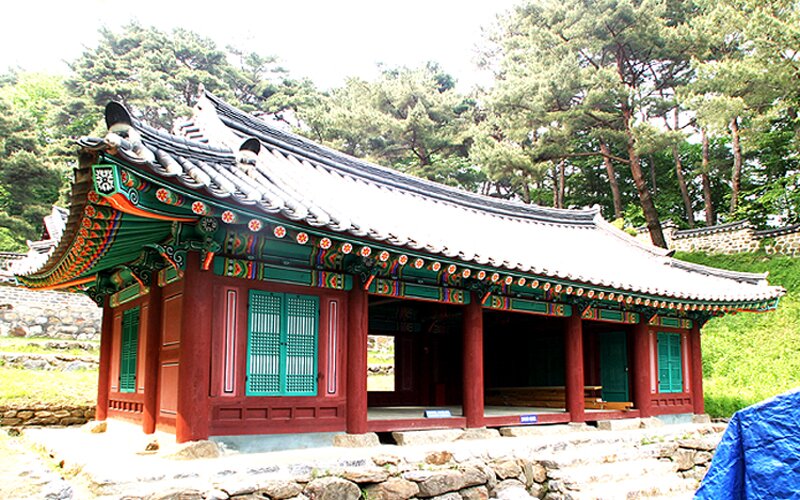
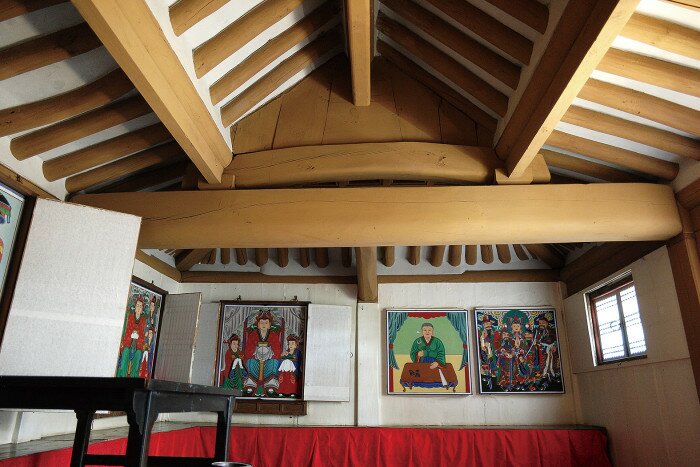
Sungryeoljeon is the most mythical building among the many buildings in Namhansanseong Fortress. During the Joseon Dynasty, there were 8 ritual areas that held ancestral rites for the kings of the Korean people who settled on the Korean Peninsula, not just the figures of Joseon. Sungryeoljeon, one of these eight shrines of Joseon, was originally built under the name 'Onjo Wangsa (溫祚王祠)', and King Onjo is the one who founded Baekje with his brother Biryu 2,000 years ago.
There is a behind-the-scenes story here. In 1636 (the Byeongja Horan broke out in December 1636 in the lunar calendar), King Injo, who was sleeping in the Haenggung Palace in Namhansanseong Fortress, met a person in his dream. He"The enemy is climbing Bongam (蜂巖) on the northern wall with a high ladder, why don't you stop them?"He rebuked, and when Injo, surprised, asked who he was, he said,"I am Seongju King Onjo."And suddenly disappeared. Injo, who was completely awake, immediately examined the north of the fortress and discovered the Qing army secretly climbing Bongam, and successfully repelled them. Not forgetting this, Injo built this 'Onjo Wangsa' in the fortress after the war and held ceremonies in spring and autumn.
And in August 1779, King Jeongjo, who is considered the last great monarch of Joseon, visited Namhansanseong Fortress, listened to this legend, and had a formal ceremony held, and in 1795, at the request of Gwangju Magistrate Lee Si-won, he bestowed the plaque 'Sungryeoljeon'.
Regarding the origin of Namhansanseong Fortress, there are two theories: that it started as the capital of Baekje King Onjo and has reached its present state, and that it started as the Jujangseong Fortress of Silla. Although relics related to Silla have been found, relics related to Baekje have not been found, so the latter opinion is leaning towards the latter, but it seems that the former was a more likely guess during the Joseon Dynasty.
●The tragic site of the Byeongja Horan
●Location: Dopyeong-ri, Ssangnyeong-dong, Gwangju-si
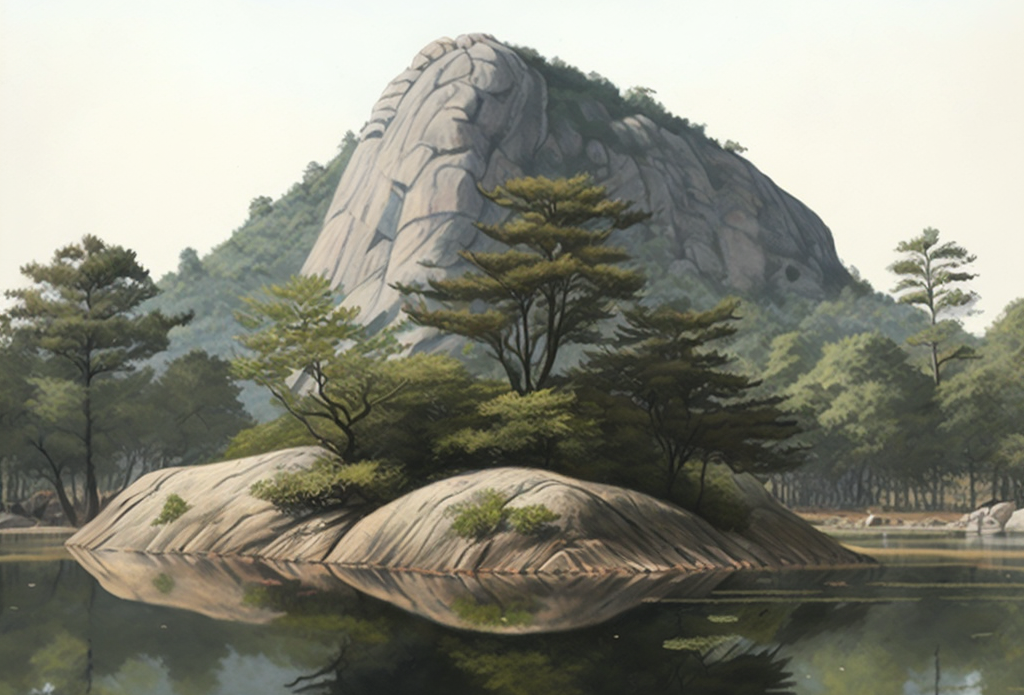
If you cross the bridge from Gyeongan-dong, the central downtown area of Gyeonggi Gwangju, you will come to Ssangnyeong-dong. 'Ssangnyeong' refers to two hills, and this is an old place name that is also recorded in the Dongguk Yeoji Seungram. If you cross the big hill, you will go to 'Dopyeong-ri', where 'Nakhwaam' was located.
The origin of Nakhwaam is as follows. During the Byeongja Horan, King Injo summoned Geunwang soldiers from all over the country and ordered them to gather at Namhansanseong Fortress, and Gyeongsang Jwabyungsa Heo Wan and Ubyeongsa Min Young, who were in charge of the military affairs of Gyeongsang Province, also gathered troops from Ulsan and headed to Gwangju. At this time, countless refugees flocked to them, and they, along with the refugees, settled on a mountain in Ssangnyeong-ri and fought against the rushing Qing army.
Heo Wan and Min Young fought with all their might, but when Heo Wan was killed in battle, the defeat became clear. At this time, the remaining refugee women, seeing the approaching Qing army, said, "Now the battle is lost. However, it would be right for us women to give up our lives rather than be caught by these barbarians and suffer dirty humiliation." They threw themselves off the cliff behind the mountain and chose to commit suicide, and Ubyeongsa Min Young also saw this and fought in anger, but eventually died in battle. At this time, the rock where they threw themselves is 'Nakhwaam'.
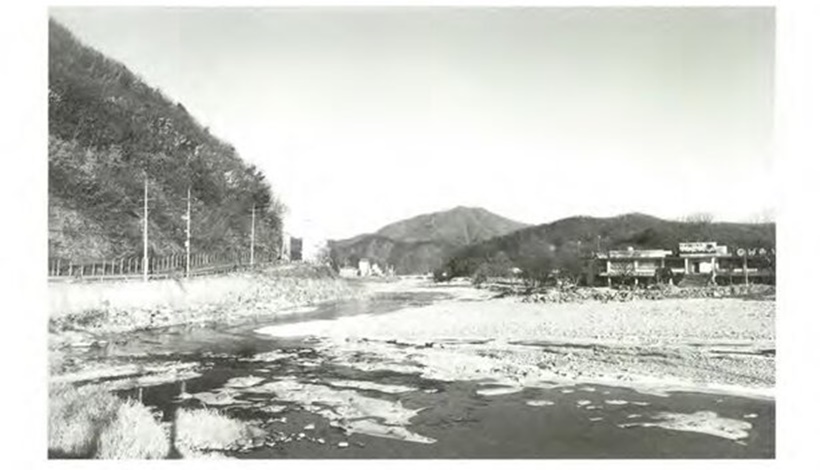
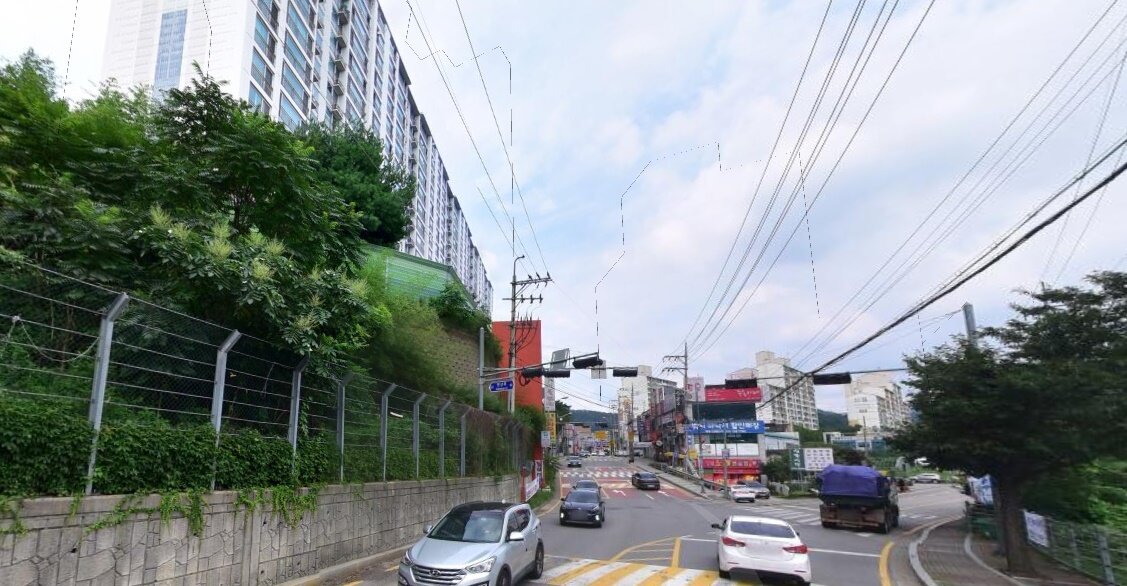
Today, Nakhwaam cannot be found. The site was developed into an apartment complex, and the road had to be expanded, and Nakhwaam disappeared as the road was expanded. The water level of the Gonjiamcheon River, which faced it, has also lowered, and the old appearance has disappeared.
●A legend about a large rock with a hawk's footprint
●Location: Near Cheongnyangsan Mountain, Namhansanseong-myeon
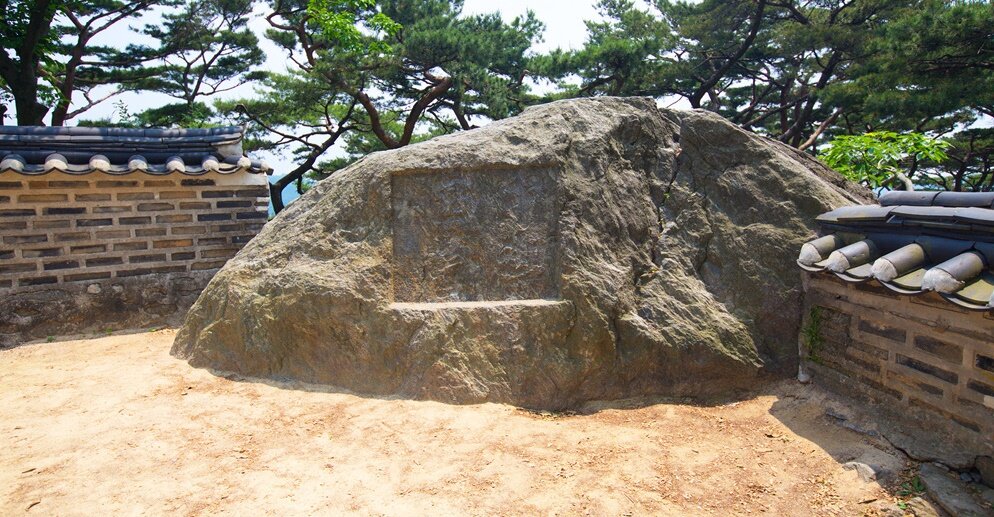
Near the Seojangdae (Sueojangdae) in Namhansanseong Fortress, there is a large rock called 'Mae Rock'. There is a large groove on the top of the rock, as if a hawk had scratched it with its claws. This rock has a legend related to the reconstruction of Namhansanseong Fortress.
Before the Byeongja Horan, Injo ordered Lee Seo (who would later be enshrined with King Onjo in Sungryeoljeon at the top) who was then the magistrate of Gwangju, to reconstruct Namhansanseong Fortress, and Lee Seo entrusted this to a monk named Byeogam and Lee In-go (Lee Hwi). At this time, Monk Byeogam proceeded with the work by building the fortress as usual, but Lee In-go stacked each stone with care according to the perfect FM in order to build a stronger fortress, and as a result, progress was delayed.
This news reached Injo's ears, and Injo, who was furious, unleashed a barrage of anger, and Lee Seo, the magistrate of Gwangju, who was angry, arrested Lee In-go and interrogated him. Lee In-go replied that it was delayed because he was building the fortress sturdily, but Lee Seo judged this to be a lie, and Lee In-go was beheaded at Sueojangdae. At this time, Lee In-go claimed that he would die because it was an order, but that he was innocent, and after the execution, a hawk came out of his neck, circled a few times, sat on Mae Rock, scanned the surroundings, and then suddenly flew away. At this time, people were surprised to look at the rock and saw that the hawk's footprints were clearly left behind.
Later, his innocence was revealed, and the court built 'Cheongnyangdang' on the slopes of Cheongnyangsan Mountain to comfort Lee In-go, who died innocently, and his wife and concubine, who committed suicide after hearing the news of his death, after helping him raise funds for the construction. At this time, the fortress wall built by Lee In-go still remains.
●A tragic legend of Joseon people taken as prisoners of war
●Location: Current Wirye New Town area (estimated)
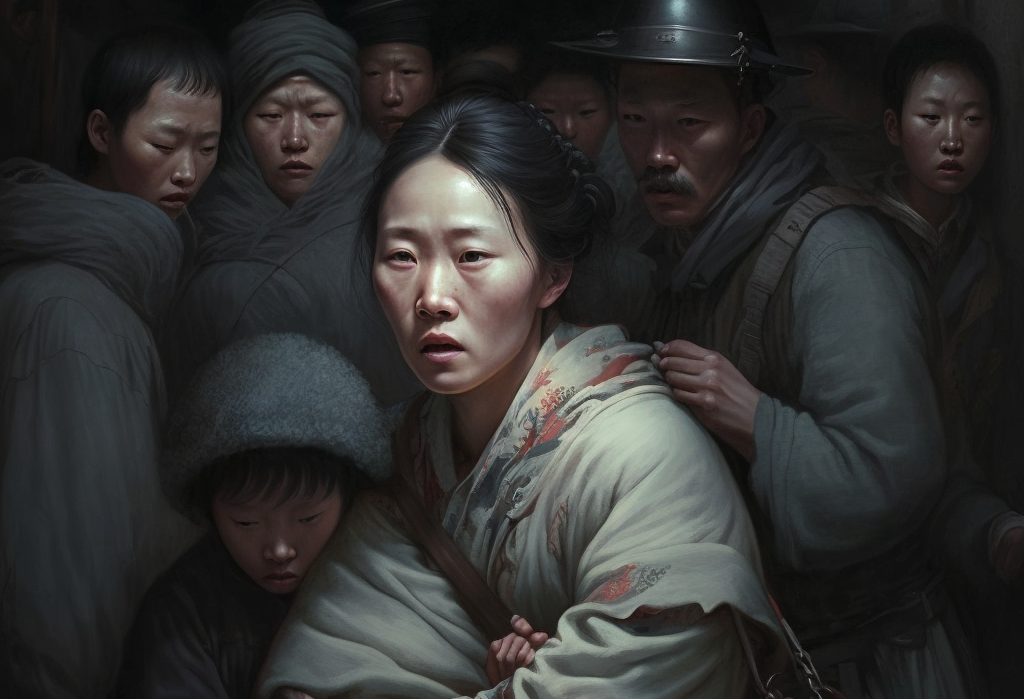
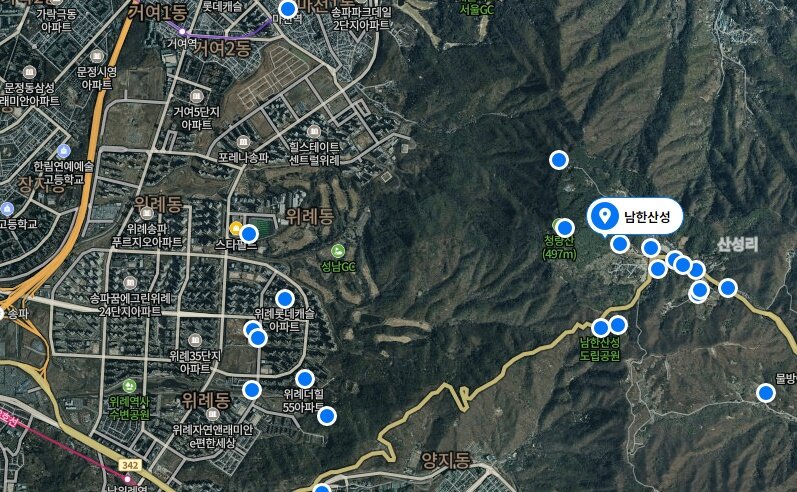
It is an area formerly called 'Jinteobeol', a plain facing Gwangnaru from Namhansanseong Fortress. Today, it is the site of Wirye New Town, which used to belong to the Gwangju area (in the past, Songpa-gu in Seoul also belonged to Gwangju), but is no longer. There is a legend about 'Kim Seung-ji's wife' in this area, which is a legend that is too terrible and sad to describe.
In the spring of 1636, when the symptoms of the Byeongja Horan were in full swing, the wives of the court officials all gathered together to celebrate the birthday of the wife of Yeonguijeong 'Kim Yu'. Since the heat of the war was approaching, the wives naturally discussed what would happen if a war broke out. At this time, most of the wives said that they would choose death rather than be captured, and Lee Champan's wife insisted on this more strongly, but Kim Seung-ji's wife said that she would judge when the time came, which drew the disapproval of many people.
At the end of that year, the war began, and the wives of high-ranking officials were all captured by the soldiers of Qing General Yongoldae on their way to escape. At this time, Kim Seung-ji's wife moderately matched her mood, drank alcohol, and acted, and succeeded in stabbing the neck of Yongoldae's most cherished subordinate general with a silver knife. Then she was also hit by a sword and died.
Yongoldae was furious and ordered Kim Seung-ji's body to be given to the crows, and the Qing army cut Kim Seung-ji's body into pieces and scattered it in Jinteobeol. Lee Champan's wife, who had insisted on chastity at the previous birthday party, became Yongoldae's concubine and went to Qing Dynasty, flattering him in every way when she was captured.
To add a historical fact, about 600,000 Joseon people were taken to Qing Dynasty at this time. 500,000 of them were women, and Joseon had to pay a huge amount of property to return them. Those who returned were called 'Hwanhyangnyeo (還鄕女, later became the curse 'Hwanyeonnyeon')' because they had defiled their bodies, and the children born to those who were pregnant among them were called 'Horo (胡虜, barbarian prisoner)' because they were the children of barbarians, and the name was used as a curse 'Horosaekki'. The legend of Jinnopeong comes from the sadness of the women who were unwillingly dragged away and had a hard time returning to their hometown but were eventually despised.
●The legend of Hwang Jin-i, who became a Buddhist from a courtesan
●Location: Near the East Gate of Namhansanseong Fortress
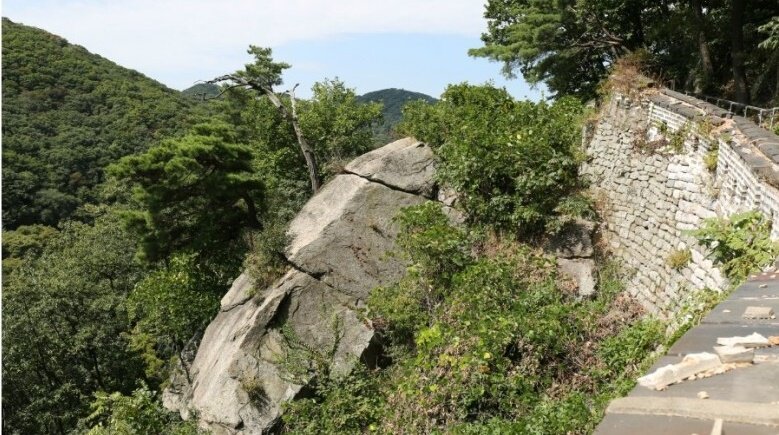
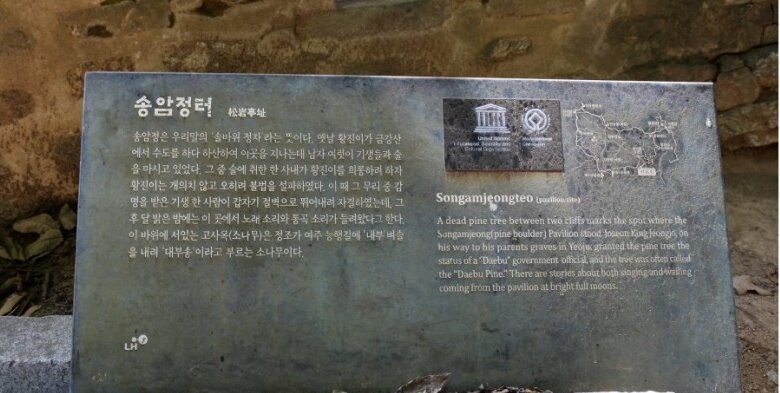
If you walk along the fortress wall of Namhansanseong Fortress towards the East Gate, you will see a rock protruding from the cliff. Currently, only the rock protruding outside the fortress remains, but in the past, there was a pavilion called 'Songamjeong' in this place. In modern Korean, it can be called 'Pine Rock Pavilion'. There is a legend related to the courtesan 'Hwang Jin-i', who was famous as Songdo Samjeol, in this Songamjeong.
The story is like this. Hwang Jin-i, who had buried her past as a courtesan and converted to Buddhism, was passing by Songamjeong after completing three years of training and descending the mountain, when some libertines who were enjoying entertainment with courtesans at Songamjeong saw Hwang Jin-i. Hwang Jin-i had shaved her head and registered her name as a monk, but her previous face had not gone anywhere, so the libertines teased Hwang Jin-i and forcibly invited her to their drinking party. Hwang Jin-i politely refused, but the libertines teased Hwang Jin-i relentlessly.
Unable to bear it any longer, Hwang Jin-i chanted Buddhist scriptures and admonished them, saying that she was also a courtesan, but she was doing asceticism to wash away her past sins, so she should live without accumulating karma. At this, everyone in the audience stared blankly, and one of the courtesans who was playing the janggu and pouring alcohol said, "After listening to the monk's words, I have become too ashamed to live in this world," and threw herself off the cliff.
After that, a strange rumor spread. Every night when the moon was bright and quiet, there was a rumor that the sound of men and women singing and the sound of a woman crying could be heard somewhere near Songamjeong. Today, Songamjeong has disappeared and only its site remains, but this oral tradition has been passed down to this day.
●The story of a well that rewarded a filial son
●Location: Inside Namhansanseong Fortress
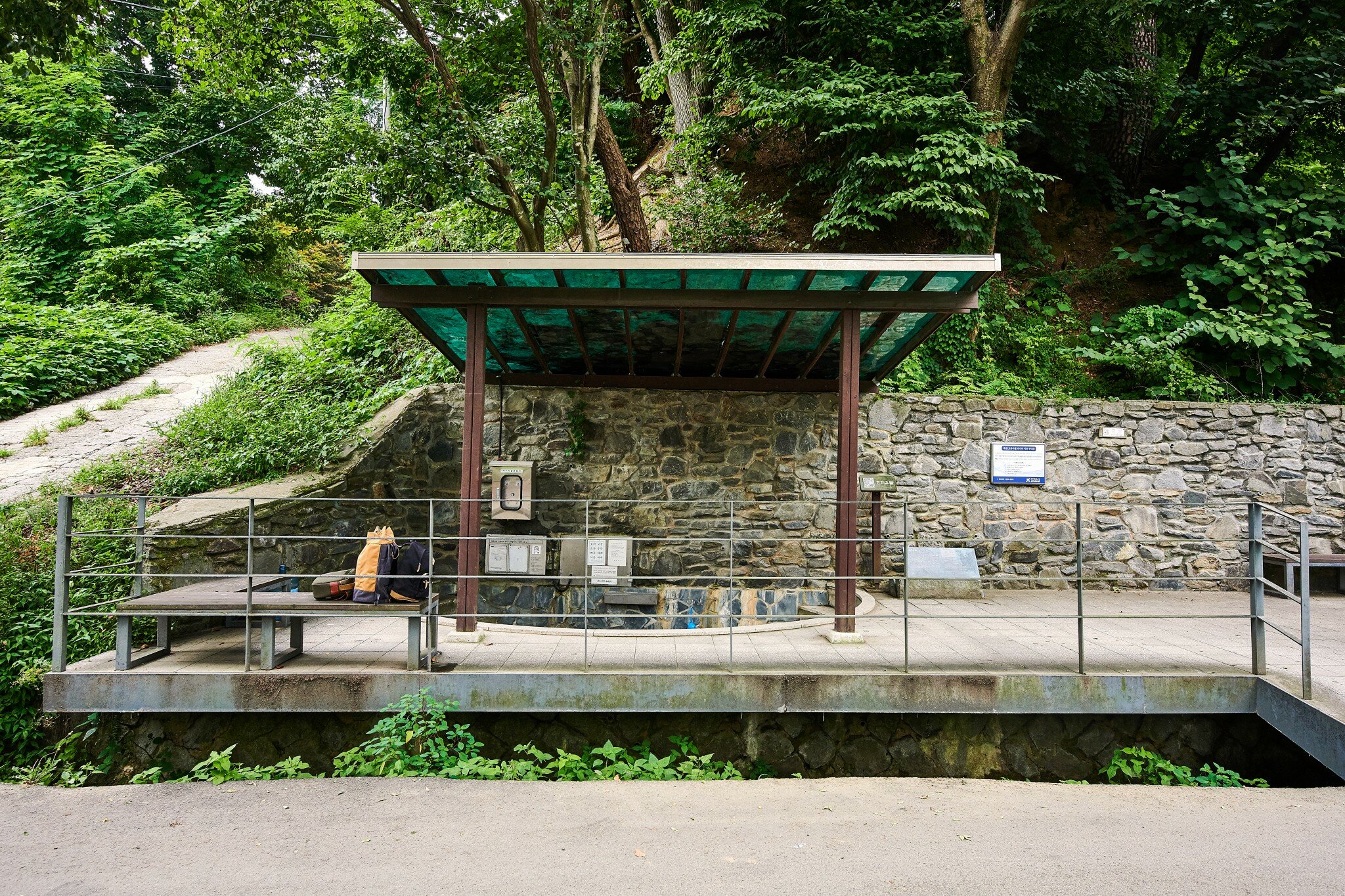
In the past, there were about 80 wells in Namhansanseong Fortress, and Hyojajeong Well (Hyojajeong) is one of them. Hyojajeong Well is located on the way to Sungryeoljeon and Gukcheongsa Temple, and is still a spring where water flows constantly, and it is also a place where people walking the Namhansanseong Fortress Trail fetch water to drink.
The following legend is passed down in 'Hyojajeong Well'.
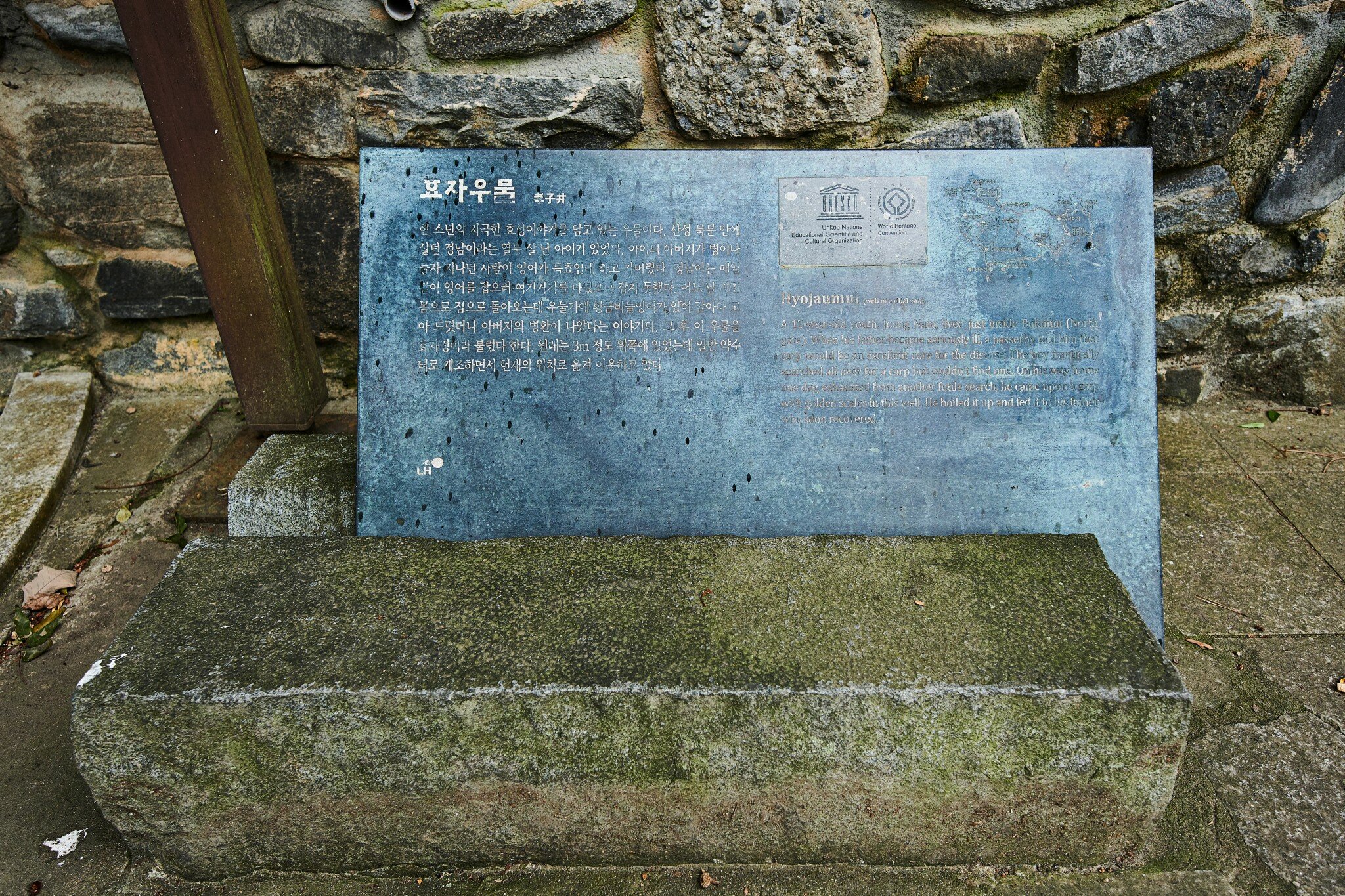
In a small village inside the North Gate of Namhansanseong Fortress, there lived a 12-year-old boy named 'Jeongnam'. Jeongnam's family was a poor family whose father earned a living by working as a day laborer, but one year his father fell ill and lay down, and even the grain to cook rice ran out, so Jeongnam eventually took a gourd and went out to beg. Then, a passerby stopped by Jeongnam's house, examined his father, and said, "Boy, your father's illness does not require any other medicine. Just get a large carp and boil it thoroughly, and he will be completely cured." He left.
Jeongnam left home to find a carp, but there was no way to find a carp in the mountains in winter. Jeongnam wandered around the village and asked around, but after failing to find a carp, he stopped in front of a well where there were no traces of people and looked into the well water, praying with all his heart to be able to find a carp.
After looking into the well again, Jeongnam was surprised to find a large carp in the well, and he managed to pull it out and boil it thoroughly to cure his father's illness. As this rumor spread, the villagers praised Jeongnam in unison, and the well on the hillside where Jeongnam prayed was called 'Hyojajeong Well'.
●General Shin Rip
●Location: Gonjiam-eup
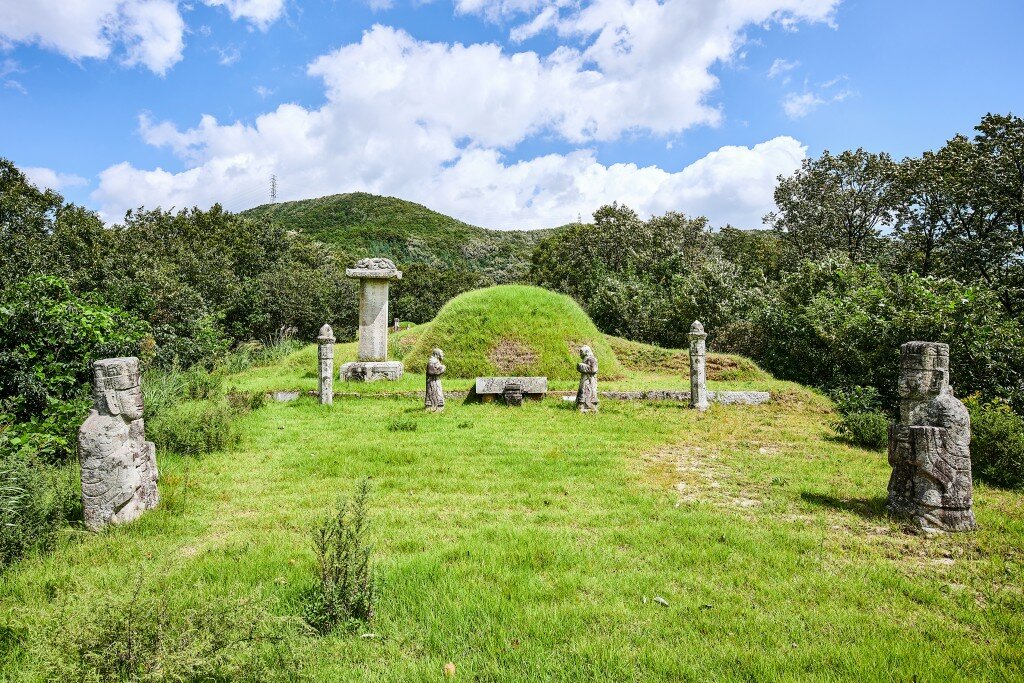
In the south of Gyeonggi Gwangju, near the border with Icheon, there is 'Gonjiam (昆池岩) eup'. The town has a rather gruesome image due to the influence of the movie Gonjiam, but in reality, it is a resort with several resorts and is also famous for its ox head soup. The name of this Gonjiam-eup was decided because of an episode of 'General Shin Rip (申砬)', one of the heroes of the Imjin War, which is still a topic of debate.
As those who have studied the history of the war know, General Shin Rip's last stand took place not in Gwangju but a little further south, at Tanggeumdae in Chungju. At that time, General Shin Rip set up a defensive line at Tanggeumdae against the invading Japanese army, and after being defeated in battle, he committed suicide by jumping off Guchodae. The story of Gonjiam begins after that.
Some soldiers who barely survived the battle with the Japanese army succeeded in recovering the remains of General Shin Rip, who had died with his eyes wide open and his fists clenched in the Namhan River. Afterwards, the soldiers buried the remains in a coffin and brought them up to Hanseong, and even in the meantime, when the soldiers called him 'General', the answer 'Okay' was heard from inside the coffin. While they were coming up like that, Shin Rip's response disappeared from the moment they passed Neokgogae on the border of Gwangju, and when they reached Sindaeri, the current tomb site, the coffin stuck to the ground and did not move. In the end, the soldiers had no choice but to write Shin Rip's tomb in that place.
After that, something strange began to happen. There was a large cat-shaped rock not far from General Shin Rip's tomb, and whenever anyone rode a horse past this place, the horse's hooves would stick to the ground as if they were stuck, and in the end, they had no choice but to get off the horse and walk.
Then, a general of later generations passed in front of this rock, and when the horse stopped, the general got off the horse and shouted at Shin Rip's tomb on the mountainside, "Why are you bothering passersby!" Then suddenly lightning struck and heavy rain poured down, and the top of the cat rock that was struck by lightning fell off, and a large pond was created next to the rock. This is the origin of the name 'Big Rock Pond', 'Gonjiam'. Since then, the legend has been passed down that you can pass the road without any problems even if you ride a horse.
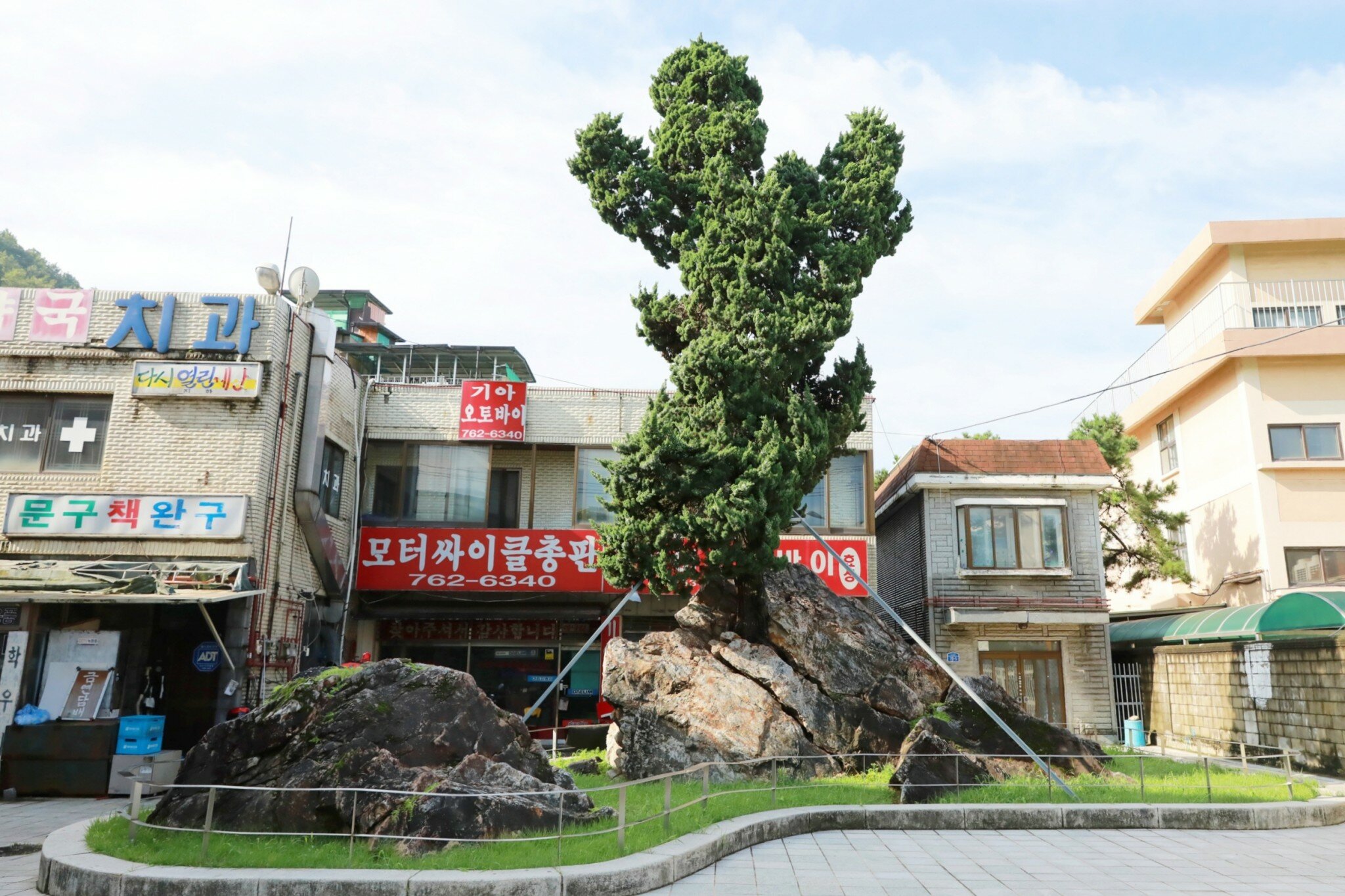
●Namhansanseong Haenggung Palace
●Namhansanseong-myeon
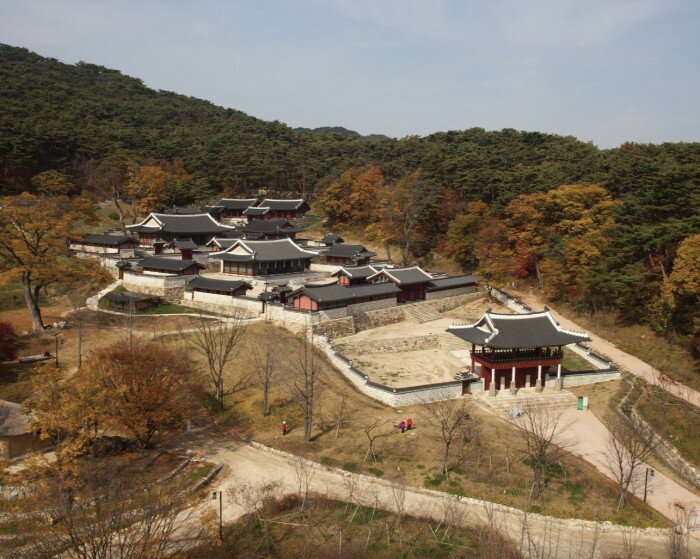
'Haenggung' means a palace to go and stay in, using the characters 'haeng' for going and 'gung' for house. In modern language, it would be like a villa. During the Joseon Dynasty, the place where the king was located had to be a palace, so there were such Haenggung palaces in various places. Namhansanseong Haenggung Palace was completed in 1626, just 11 years before the Byeongja Horan. It existed intact until the Japanese colonial period, but was destroyed by Japanese arson and restored in 2011 (not all of it was restored).
Namhansanseong Haenggung Palace is not very large to be considered a palace, but it has the minimum devices to function as a palace anyway. It means that both Jongmyo and Sajik, which are essential for a palace where the king walks, are preserved. In addition, there are eupchi facilities such as 'Inhwagwan (人和館)' near the Haenggung Palace, which suggests that it was possible to play a central role in the regime even temporarily.
●Namhansanseong Sueojangdae
●Namhansanseong-myeon
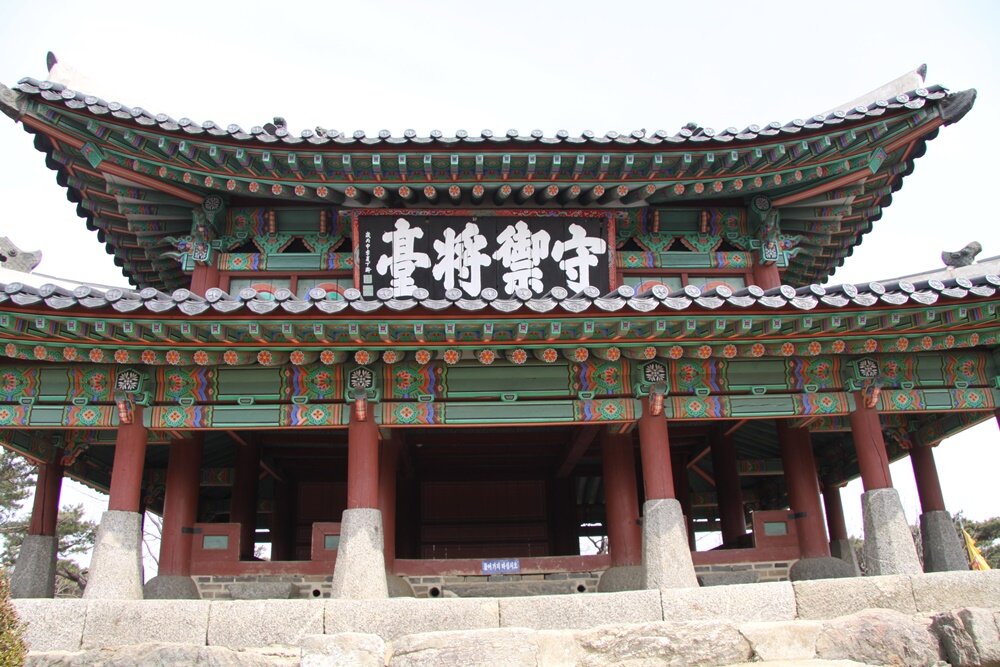
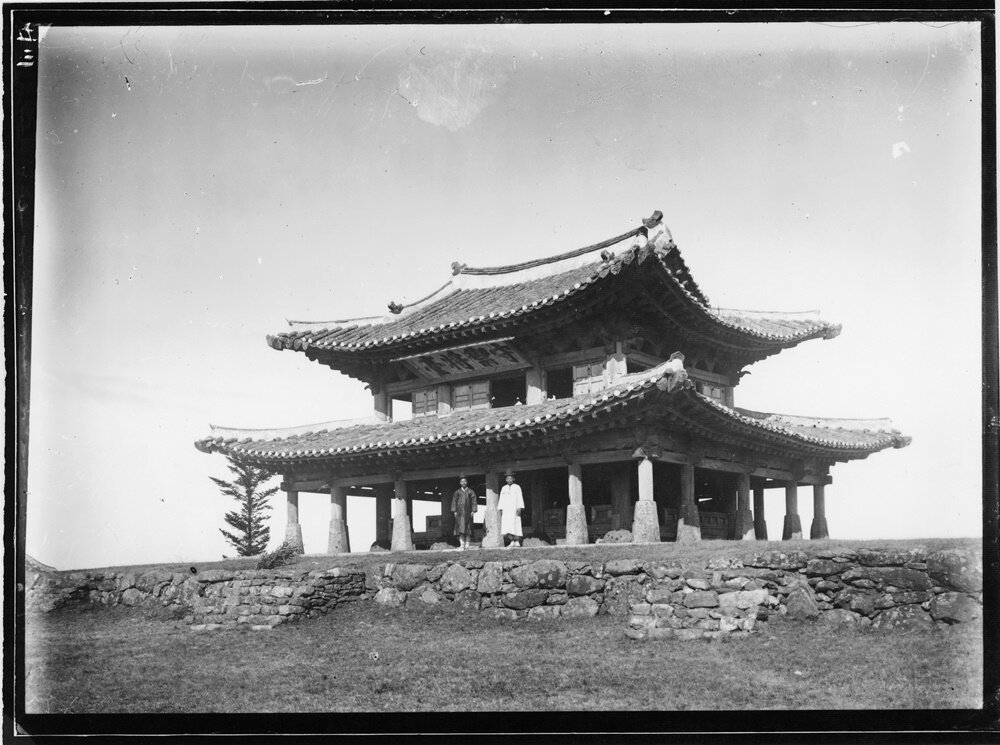
'Sueojangdae' is the only one remaining of the five Jangdae (將臺) built in Namhansanseong Fortress, and it is the Seojangdae located in the west. It is a two-story pavilion-shaped building built on Cheongnyangsan Mountain, the main peak of the west of Namhansanseong Fortress, and is a military building built for the purpose of observing and commanding the battlefield, befitting the name Jangdae (General Jang, Dondae Dae). Sueojangdae is the most splendidly built building in Namhansanseong Fortress except for the Haenggung Palace, and it is also a building in excellent condition. It has been repaired compared to the past, but if you look at the photos of Sueojangdae taken during the Japanese colonial period, you can see that it has not changed much.
●Namhansan Protected Tree
●Namhansanseong-myeon
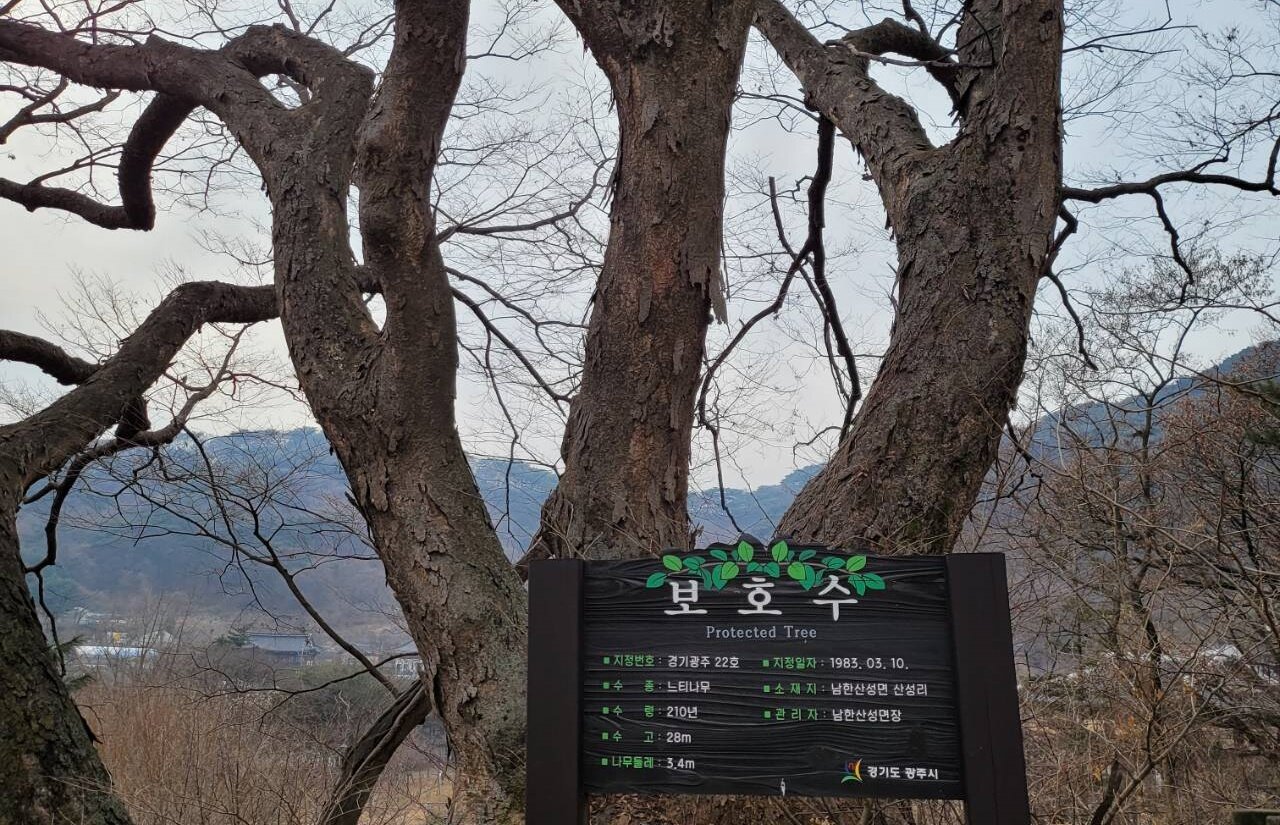
Apart from the relics, there are many protected trees around Namhansanseong Fortress that are about 300 to 200 years old. You can see countless of these protected trees just by walking around the Haenggung Palace, and among them, there are trees that have been struck by lightning and blackened but are still alive, and trees that are so thick that they can be treated as 'beautiful trees'. It's just a tree, but it's quite strange to think that these trees have existed since the time of King Jeongjo at the latest, and that King Jeongjo, who visited Namhansanseong Fortress, saw those trees.
●Saniri Dolmen
●Saniri, Chowol-eup
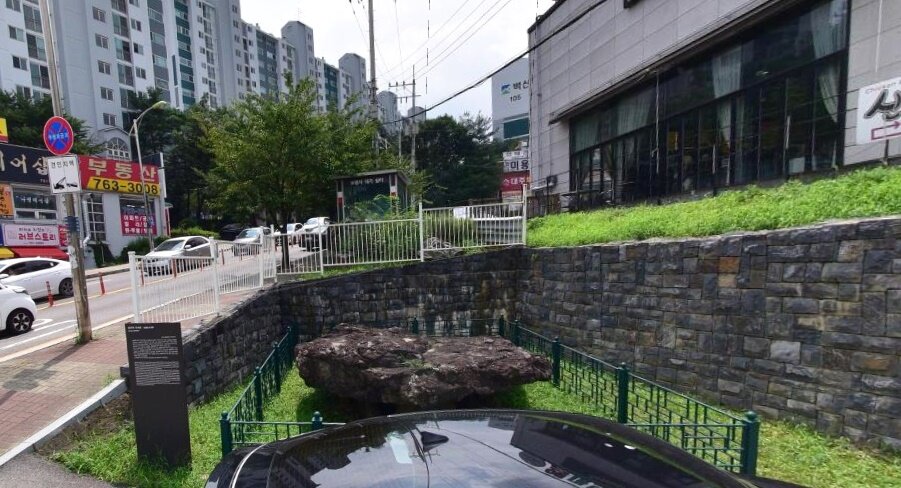
The Gyeonggi Gwangju area has been historically recorded for a very long time. The cultural relics of the Gwangju area go back to the prehistoric era, and there are even dolmens. It is a dolmen located in Saniri, Chowol-eup, and unlike dolmens in other regions, it is located right in front of an apartment complex, showing a rather strange appearance.
Saniri Dolmen is Gwangju City's Local Cultural Heritage No. 1, and it is a large dolmen overall, and it can be confirmed that there are Seonghyeol on one corner. The lower flagstone support forms the lower structure, and the side walls are composed of two sheets. The current location is about 10m away from the original location where it was discovered, and it was relocated for the construction of Hapart and is a table-style dolmen that is quite well preserved.
●Myobeop Yeonhwa Gyeong
●Daebopsa Temple, Chowol-eup
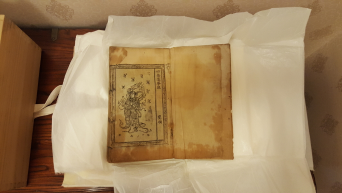
It is Myobeop Yeonhwa Gyeong, designated as National Designated Cultural Property Treasure No. 766-2. It is kept at Daebopsa Temple in Chowol-eup, Gwangju-si. This 'Myobeop Yeonhwa Gyeong' is not just here. As those who are interested in cultural heritage know, Myobeop Yeonhwa Gyeong exists in many forms in various places. It is not an extremely rare Buddhist scripture, but rather a well-known scripture.
This scripture, commonly called 'Beophwagyeong' for short, is also the fundamental scripture of 'Cheontaejong', one of the two major pillars of Korean Buddhism. The interesting fact is that Daebopsa Temple, where this scripture is kept, is not an ancient temple that we commonly think of, but a small temple made up of modern buildings. It is also a Jogyejong temple.
●Gwangju Kiln Site
●Sindaeri, Bunwonri, Beoncheonri, etc., Gwangju-si
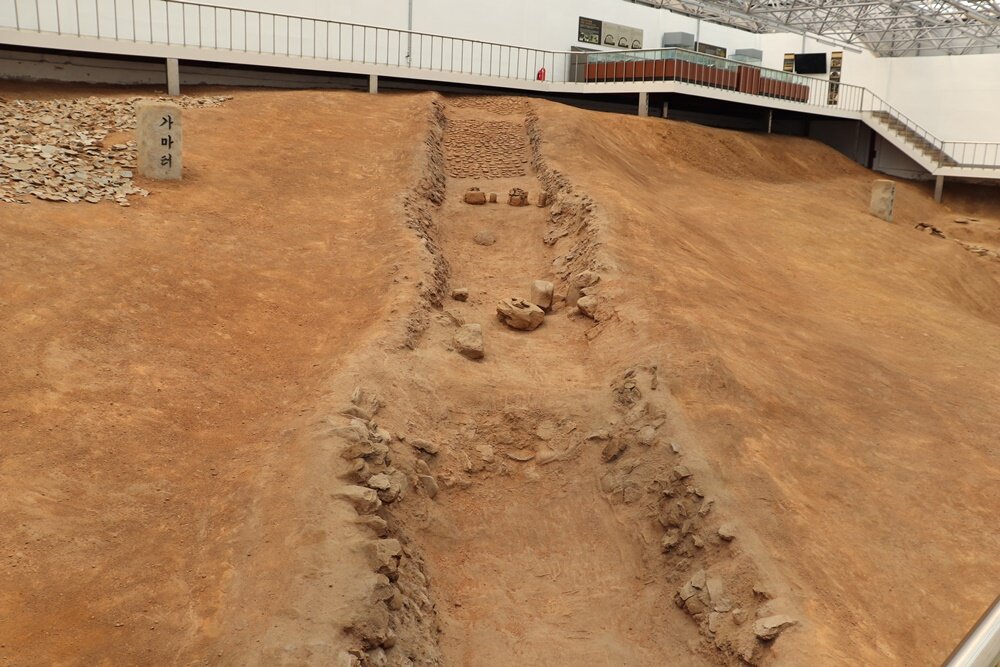
If there is anything as famous as Namhansanseong Fortress in Gyeonggi Gwangju, it would be 'ceramics'. The Gwangju area has had good soil, wood, and water since the past, so there were many kilns for baking ceramics, which were major consumables. Gonjiam also has a huge ceramic theme park called 'Ceramic Park', which is perfect for a weekend trip. It's spacious, quiet, and you can see ceramics.
Anyway, there are these 'Yoji (窯地, kiln meaning kiln for baking tiles)' everywhere in Gwangju. Ceramics were not baked in one place, but the entire Gwangju served as the center of ceramics, so there are a lot of them in Sindaeri, Bunwonri, Beoncheonri, etc.
Webzine InvenReporter Jung Jae-hoon
2023-06-30