Post
The pirate's dream, a side story worthy of being called a side story, 'Like a Dragon: Infinite Wealth Side Story' Review ⭐8.0
When talking about a new installment of a long-running series, it's usually necessary to divide the audience into two groups: fans who have enjoyed the series for a long time, or at least tried the recent installments, and gamers who have heard of the series but only know the title and the protagonist, and have never actually played it.
That's exactly the case with Like a Dragon. It has become a title that represents Sega, and its legacy is clear. Of course, it has been popular enough to build such a history. However, Like a Dragon is now releasing its eighth numbered title's spin-off, 'Like a Dragon 8: Pirates in Hawaii'. There will be many users who don't know where to start with this ongoing story.
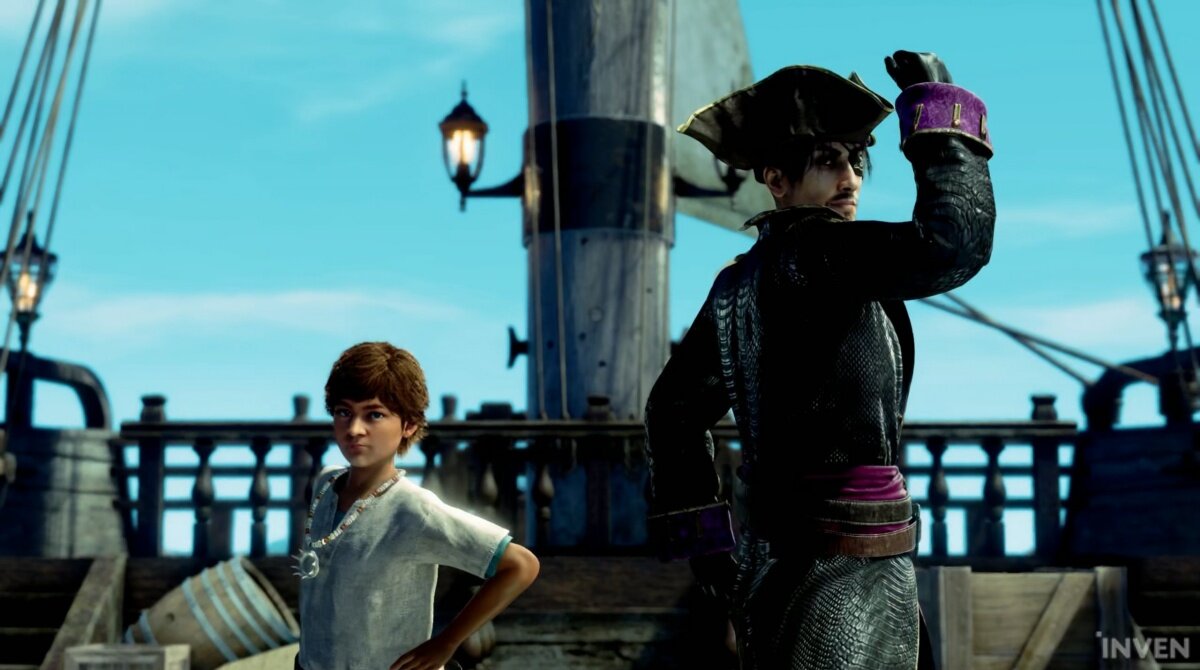
The developers are aware of this and have introduced new protagonists. In addition to tutorials and changes in game genre, they have also attempted to break the big framework of the game, which is the Yakuza, in terms of the story. However, in the end, those were just the beginnings of new events rather than completely new stories.
So, before getting into the main text, I want to start by stating the conclusion. 'Like a Dragon 8 is the most spin-off-like game and the most suitable work to start the series with'.
* This review contains spoilers.

게임명: Like a Dragon 8: Pirates in Hawaii
장르명: Action/Adventure
출시일: 2025.2.21.
리뷰판: Release Build
개발사: Ryu Ga Gotoku Studio
서비스: Sega
플랫폼: PC, PS, Xbox
플레이: PC
Majima, an Insight into His True Nature
Majima, Why Only Now as the Protagonist?
The protagonist of Like a Dragon 8 is Goro Majima. Starting with his first appearance in the first game, he was even promoted to a double protagonist in the prequel Like a Dragon Zero, making him a popular character. Naturally, there were many requests for him to be the protagonist, but he is only taking on the role of a solo protagonist for the first time at the age of sixty in the game.
Majima is a character with his own story in the long series. He is also a person with a unique character, so much so that he is called the Mad Dog. That personality is also the reason why the developers couldn't easily make Majima the protagonist. Toshihiro Nagoshi, the head of Ryu Ga Gotoku Studio, has consistently stated that 'the protagonist of the game should be a neutral character and someone that the player can immerse themselves in'.
Majima, who shows aspects that the player does not expect, is a cool person from an objective point of view. If we were to make such a Majima the protagonist, it would have been difficult to fully empathize with him as a character who represents me, as Nagoshi said.
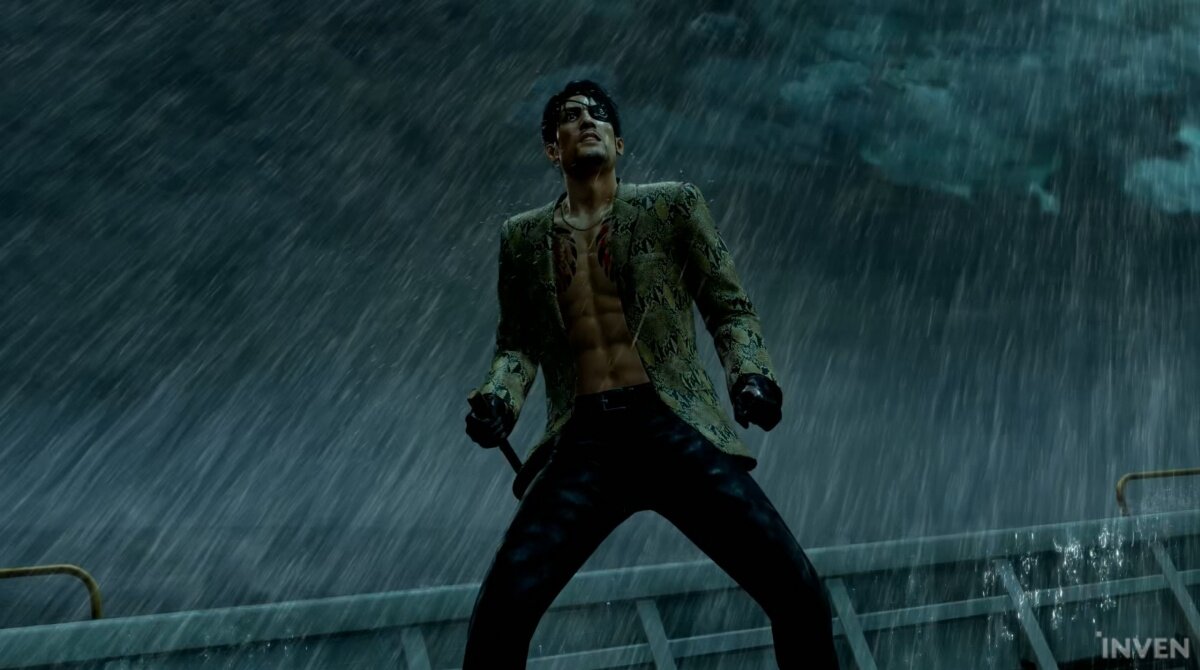
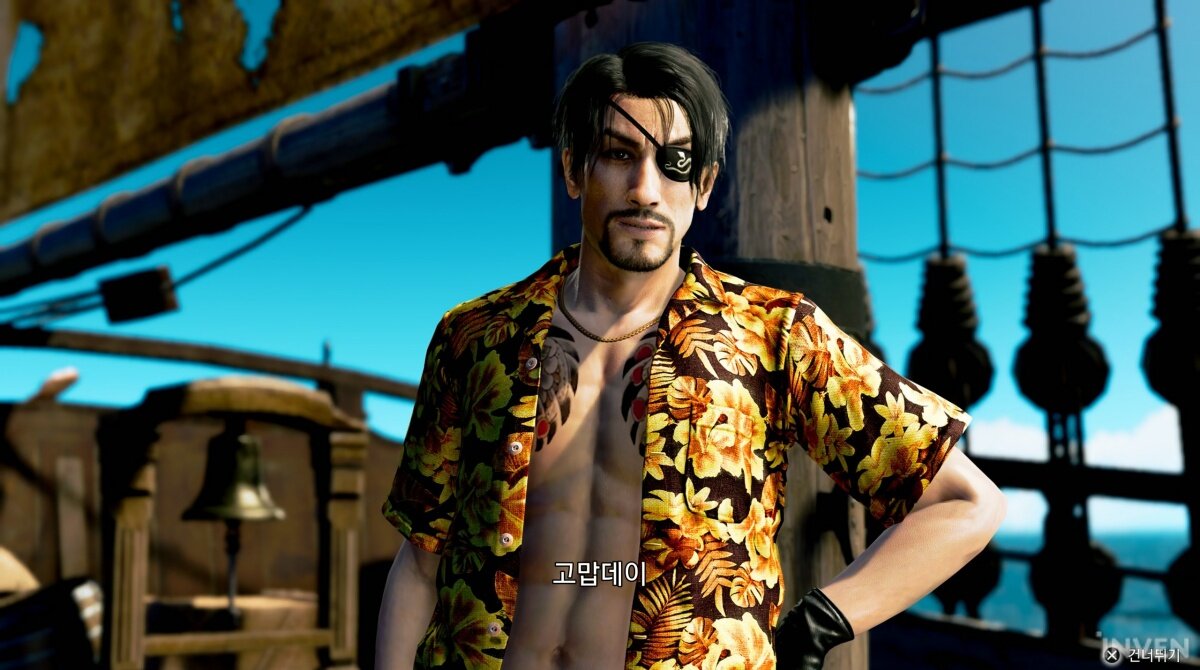
But in this game, Majima is a former Yakuza who has lost his memory. He meets a 10-year-old boy named Noah, saves his life, becomes his friend, and embarks on an adventure together as a pirate.
In the series, Majima changed his outward personality depending on his environment. In Zero, he hid the passion within him with a serious demeanor. In the first game, he revealed his madness through various events, and as he rose to a high position within the Yakuza organization, he also showed the appearance of a serious organization executive rather than eccentric behavior.
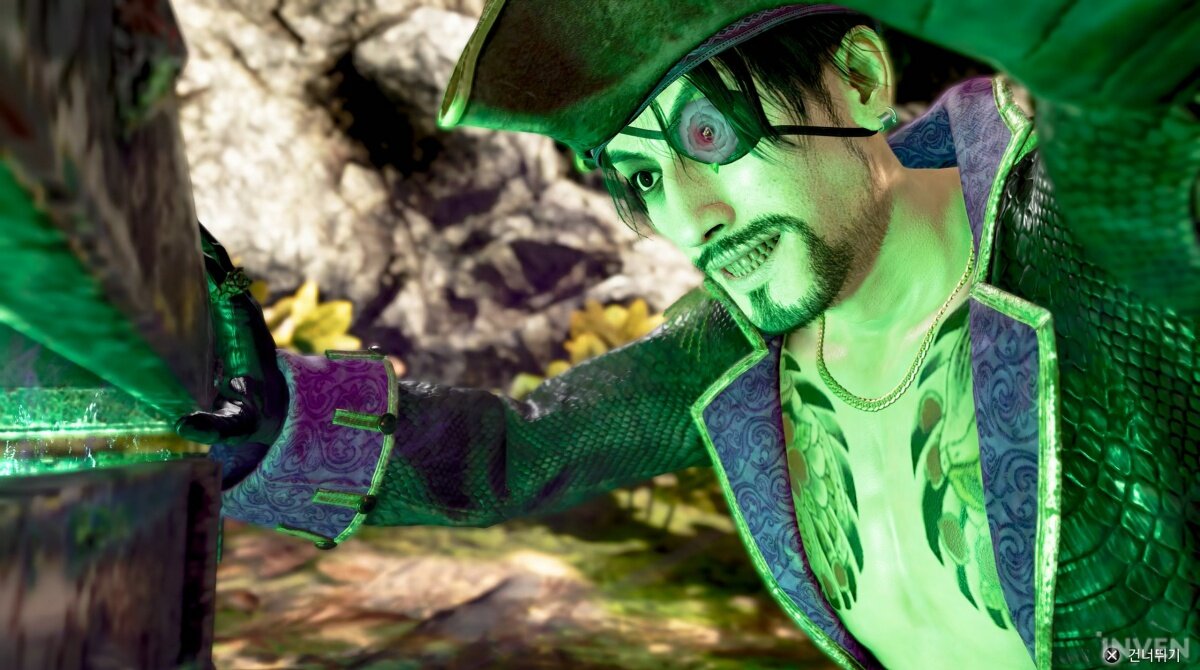
Therefore, Majima, who has lost all his memories, is left with only his true nature. And the true nature of Majima that the player meets in Like a Dragon 8 is violent to the wicked, but full of affection and knows how to repay kindness. At the same time, he is an insightful adult who sees through the hearts of others. Furthermore, he is a loyal person who supports the dreams of his young friend and goes out to sea with him, even after realizing that he is from the Yakuza.
Majima in Like a Dragon 8 retains his previous characteristics such as his eyepatch, dagger, and unique dialect. In addition, he is a human being who has the qualities that Ryu Ga Gotoku Studio thinks a protagonist should have.
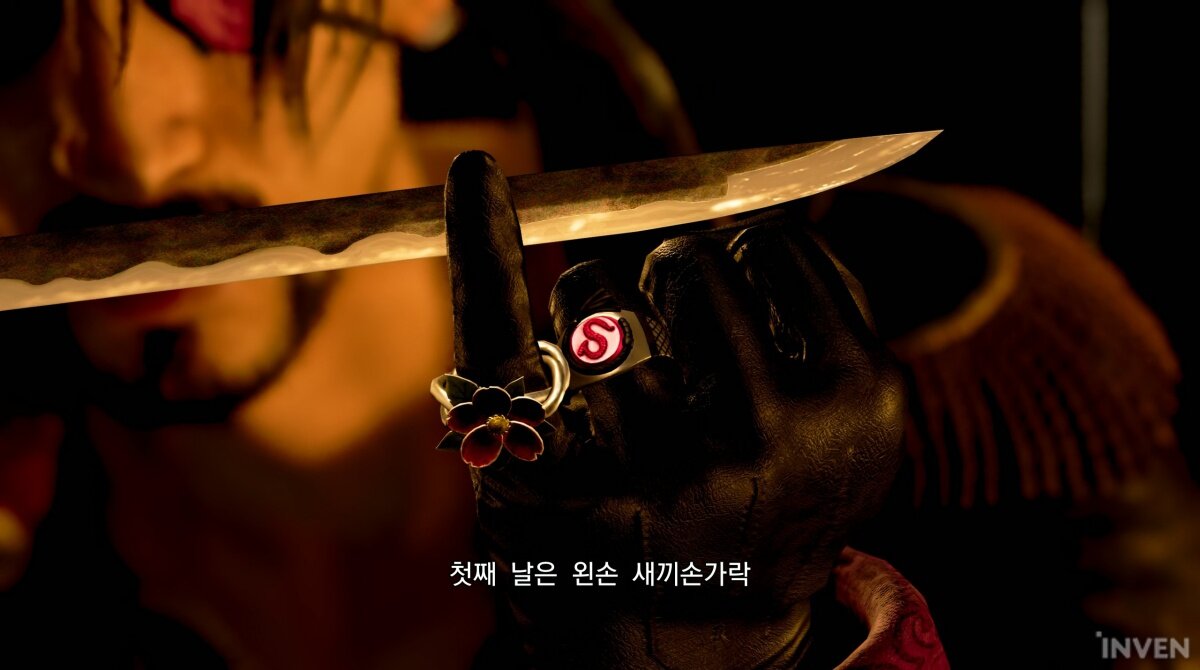
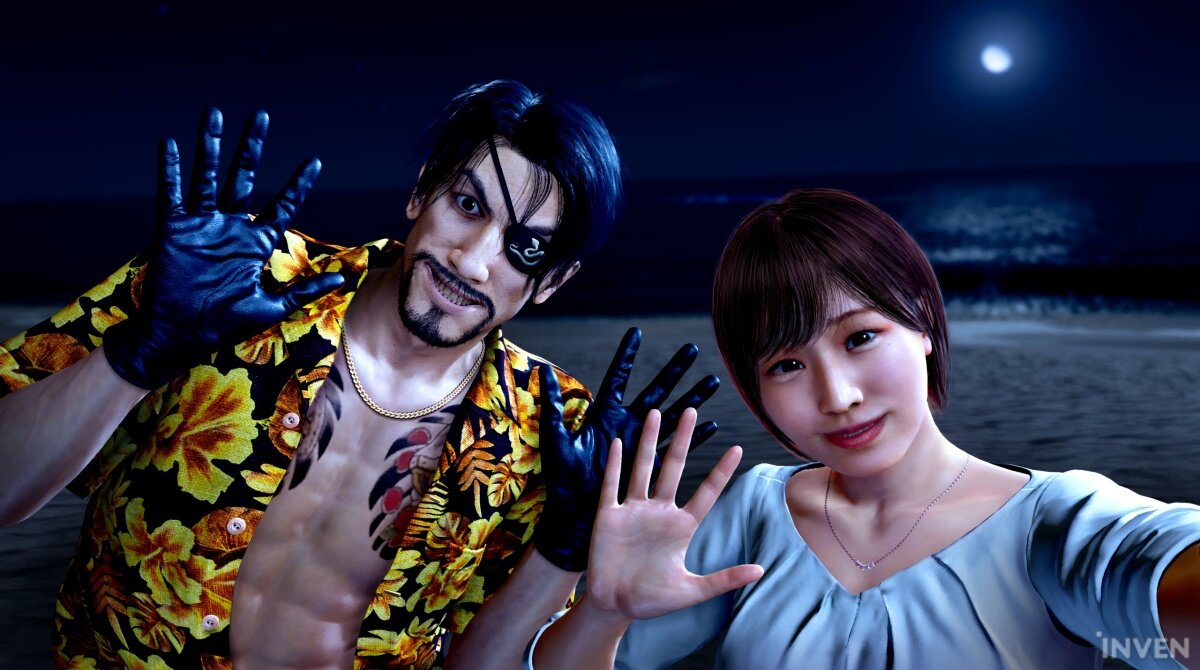
Majima was such a person when he fought properly, was reckless but full of justice, and took off the Yakuza clothes. In fact, the developers' idea itself started with the image of Majima that came to mind. Naturally, the story of Majima becoming a pirate in a haphazard way rather than an inevitable development and adapting to the situation at that time is depicted in the game.
But the combination of a former Yakuza and a medieval pirate is quite tasty. This is because Majima's image fits well with the clichés of pirates. His unique quirky appearance and movements are reminiscent of Johnny Depp's Jack Sparrow, and his clear beliefs are similar to those of pirates in manga.
At the same time, the life of the sea, where you don't know when you will die, reminds you of the serious Like a Dragon story that sometimes explodes in unexpected sections.
7 is half numbered
Perhaps the Most Spin-Off-Like Spin-Off
This work is really faithful to the phrase 'spin-off'.
Like a Dragon 7 was a spin-off in name, but it was more of a prequel before the current timeline of the 7th game, or a midquel that deals with the middle of the work. It was closer to the process of filling in the empty period that existed between Kiryu's joining.
But this Like a Dragon 8 has a different approach. It expands the story freely in the aftermath of the previous work, in that timeline. However, unlike the spin-off Like a Dragon Ishin, the same person leads the story.
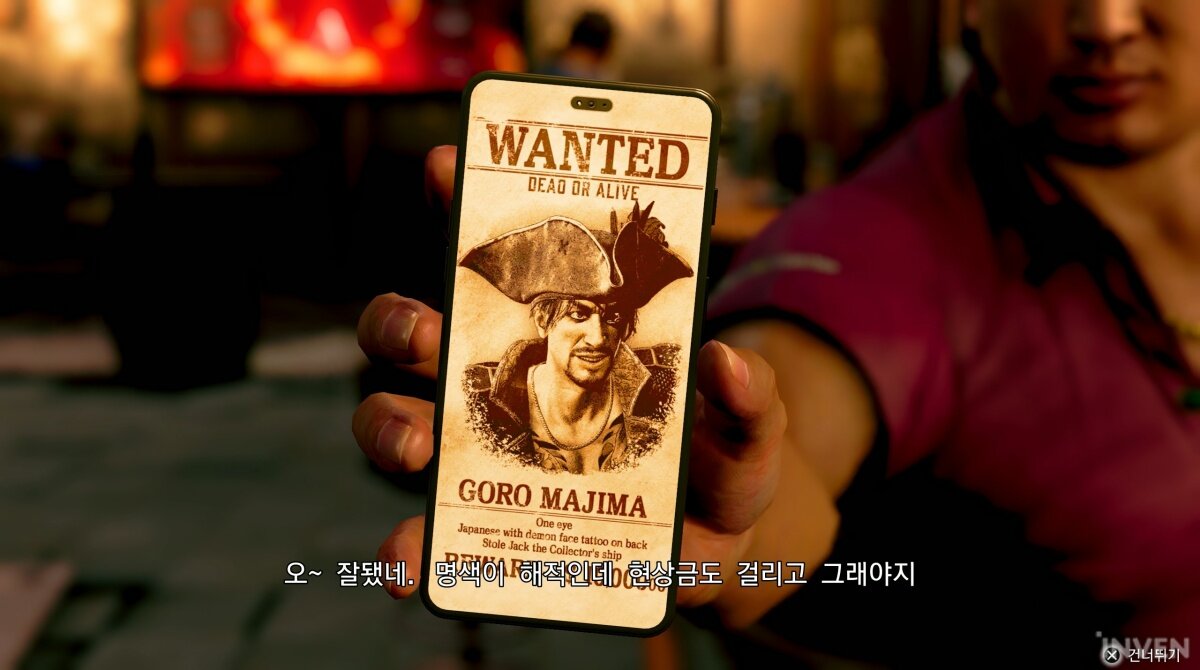

But as I wrote above, the words that I became a pirate in a haphazard way are actually connected to the story and composition of the game. There are still pirates these days, but how can pirates in 21st century Hawaii wearing medieval European costumes and firing cannons fit in?
The game spends a lot of time in the early stages of the story to create a reason for the existence of pirates and the process of Majima becoming a pirate. Compared to the main series Like a Dragon, the number of chapters is small, but since the early to mid stages are spent on this build-up process, it is difficult to erase the feeling that the story is floating.
In the middle, I sometimes wonder if I can go out like this, but I adjusted the settings within the range that is somewhat tolerated, saying 'because it's Like a Dragon'. The series itself expresses serious social problems frankly and sharply, but it is also good at mixing the production and world that appear in B-movies as if they were real.
The developers are so good at utilizing the harmony of the story that makes unrealistic elements feel realistic. This time, the story unfolds so precariously that it seems to have reached the end of that understandable level.

If the unrealistic element is this pirate, the realistic element is the power struggle between illegal organizations in Hawaii. And in this process, the nuclear waste problem that was not resolved in the previous work resurfaces and returns to the connection point with the existing series.
However, this connection point with the existing series is not clear either. With the exception of Taiga Saejima, all the main characters are new characters. And the ending of the story is not aimed at the ultimate resolution of the previous incident, but the problem between the pirate Majima and the Hawaiian forces is the focus and leads to the ending.
In fact, the story of Majima and the background and ending of the previous work are the starting point, but that's the end of it. Until the ending, at best, characters or NPCs from the existing work reappear.
But since the connection with the previous work has been blurred so much, it has naturally become the best work to start the series with. If you start with this Like a Dragon 8 and enjoy the previous works, you will feel like you are enjoying a prequel sequel.
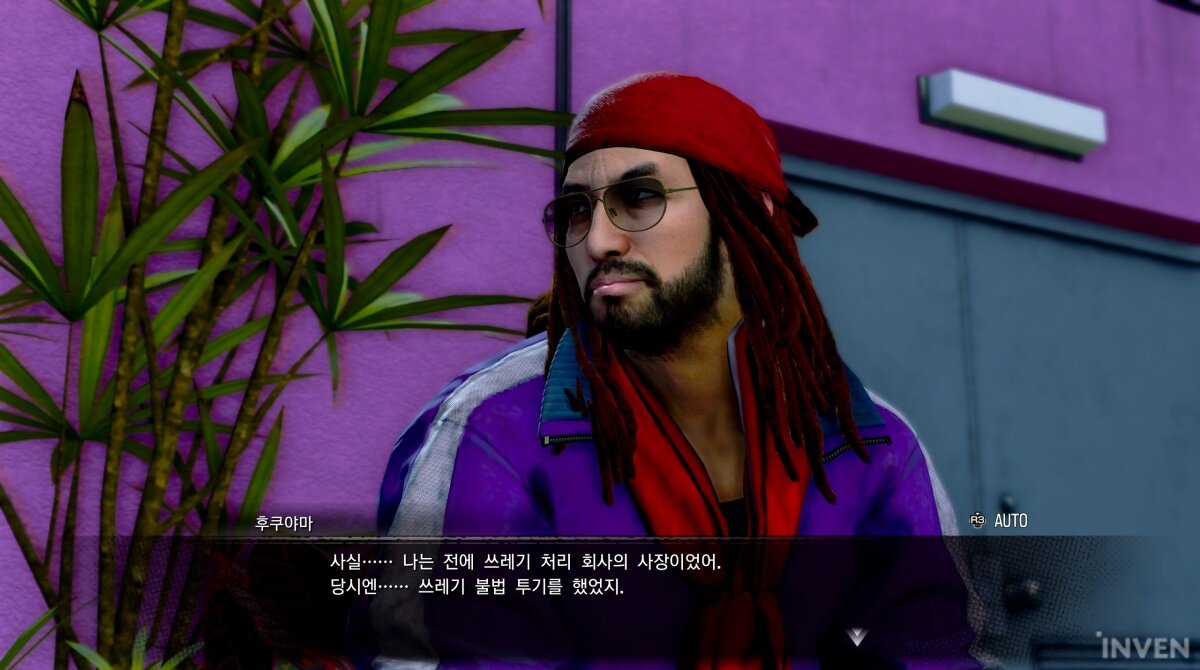
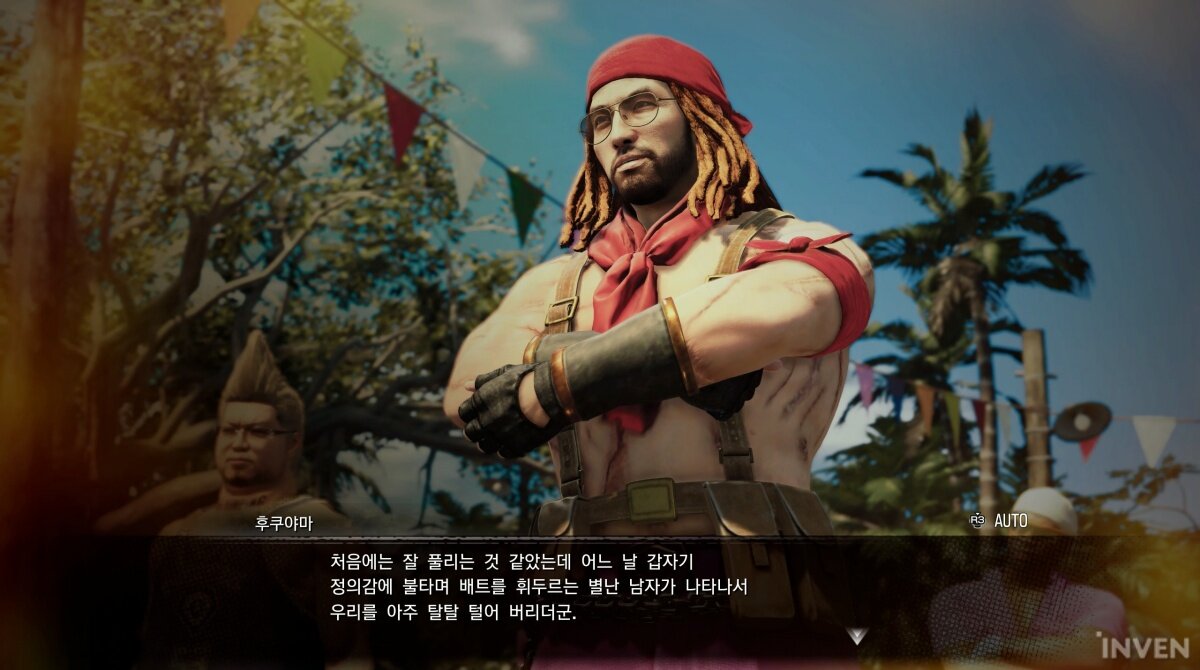
There was such a person in the previous work
Majima's Dream, Noah's Dream
Pirates and the World Seen Through the Eyes of a 10-Year-Old Boy
However, there is a device that brings this unrealistic pirate element into the complete story of the game, and that is the boy Noah.
Noah is a boy who saved Majima, who was washed up on the island alone. However, he was weak and lived on the island as if he was trapped, but he met Majima, a foreigner, and revealed his adventurous spirit and left the island. Majima supports Noah to leave the island and goes on a quest to find the ultimate pirate dream together.
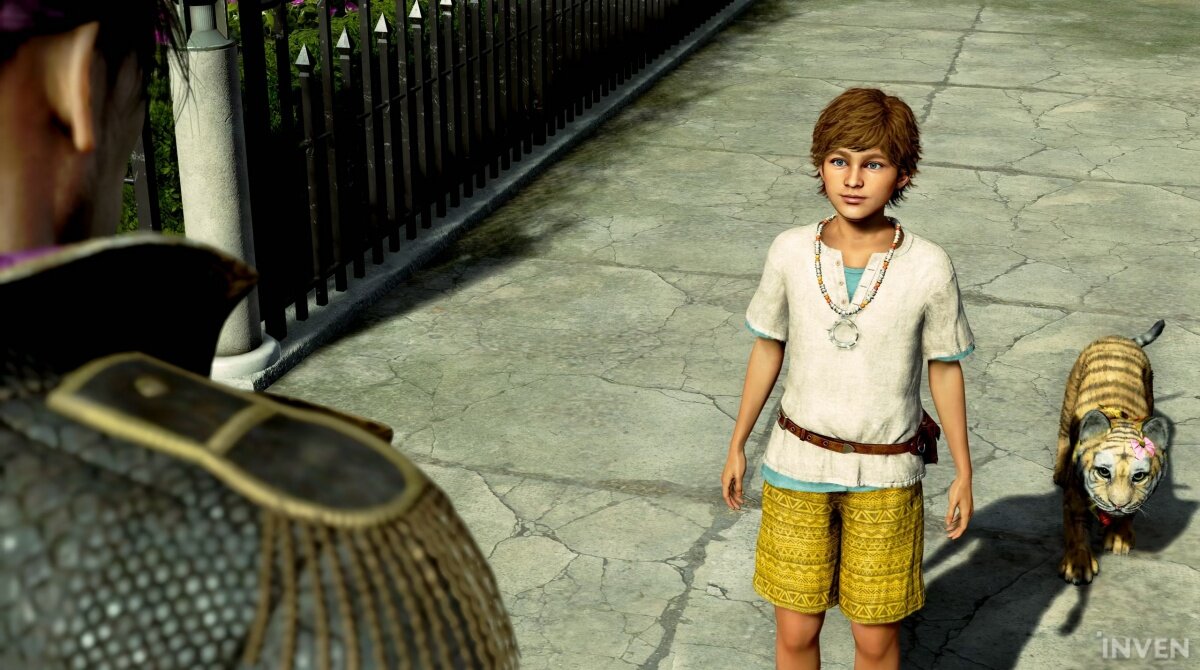
In almost every story of the game, Noah travels with Majima. Due to the characteristics of the Like a Dragon series, the companionship with a 10-year-old boy is quite awkward.
Immediately in the game, he orders milk when he enters a bar, and Majima is restless because he can't properly explain what kind of store this is in front of an adult store. And even though they are not real pirates, people die quite often.
But the pirates in the game are drawn from the perspective of a 10-year-old boy, Noah. For Noah, who has been trapped on the island for a long time, sailing on a pirate ship is an adventure to find treasure. The many people and sights he encounters for the first time in Honolulu become an exploration.


The pirates in the game are pirates seen from Noah's perspective, and they draw the ideal of pirates. So, rather than emphasizing cruelty, it highlights the romance as a pirate. Freely embarking on adventures and finding treasures.
The adults in the game also want to protect Noah. Noah's entry into this brutal world divides the villains and the non-villains, and the development of the story is also determined.
This boy's adventure creates the royal road story development of the game. However, rather than being just a completely upright content, it is set up so that you can naturally empathize with the characters who want to protect the appearance of the boy Noah from an adult's perspective. And that representative is Majima, who the players control.

As this orthodox story flows, the unique conspiracies and narrative twists of Like a Dragon have decreased. If you expected a story unique to Like a Dragon, focusing on the characters that appeared in the early to mid stages and continuing the story until the end of the game, you may be disappointed. There is also a twist about the treasure in the ending, but it remains as a twist itself rather than a '떡밥' of a new series. As much as that, the story of the game feels relatively short if you only consider the main story.
Can I go back to action?
Series' Highest Level of Action Control, Play
Like Like a Dragon 7, this work also returns to the traditional action game for battles. However, the difference between the Mad Dog of the Yakuza battle style and the newly added Pirate is so great that the fun of the battle itself has a better feel than the previous Like a Dragon series.
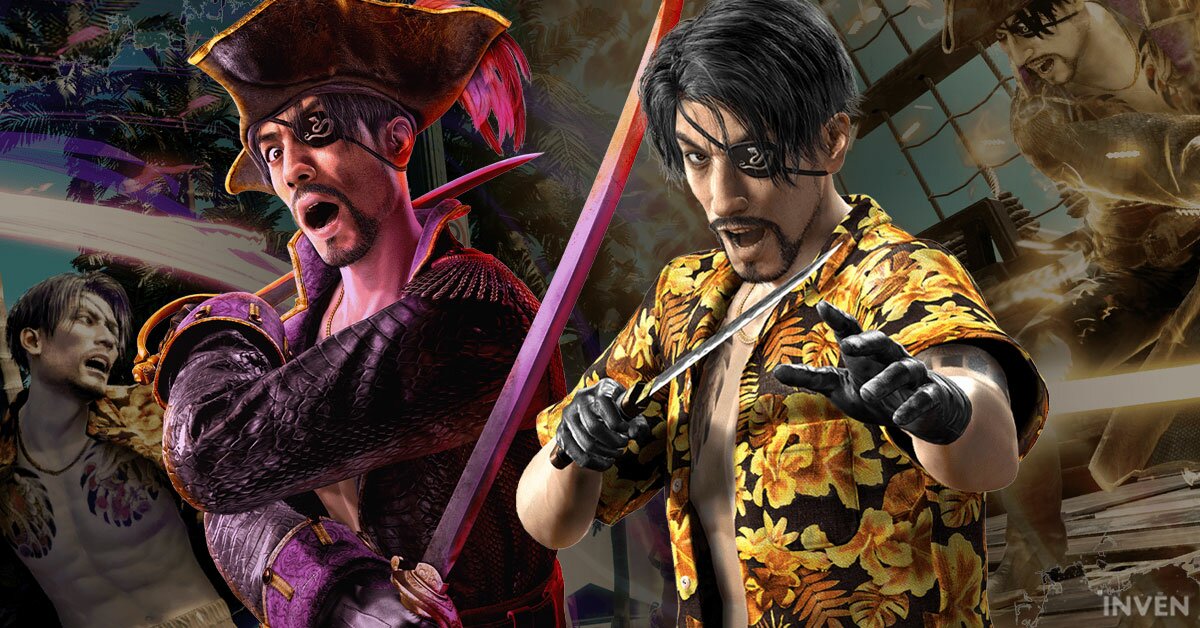
Mad Dog contains Majima's traditional fighting using bare-handed fighting and daggers. Pirates focused on capturing the action of pirates as the name suggests, such as two cutlasses suitable for pirate costumes, a chaser gun, and a wire hook.
Basically, the Pirates style is given as the basic style for maritime exploration, and the Mad Dog is given as the basic style in Honolulu City, but you can freely change it at any time during battle.
Also, the Pirates style has different strengths, such as flying cutlasses like boomerangs or easily suppressing a large number of enemies by shooting powerful guns. On the other hand, Mad Dog focuses on each enemy and makes it easy to defeat them, and the sway motion is much faster, making it good for avoiding attacks.


In fact, Pirates is basically much stronger and easier to attack, so it is used more often. However, Mad Dog's special skill, Doppelganger, is easy to drive one enemy into and hit, and it is also good for evasion, so it is more useful in boss battles.
Except for Honolulu City, many battles are fought with companions, and thanks to these battles with companions, I was able to solve the game more easily.
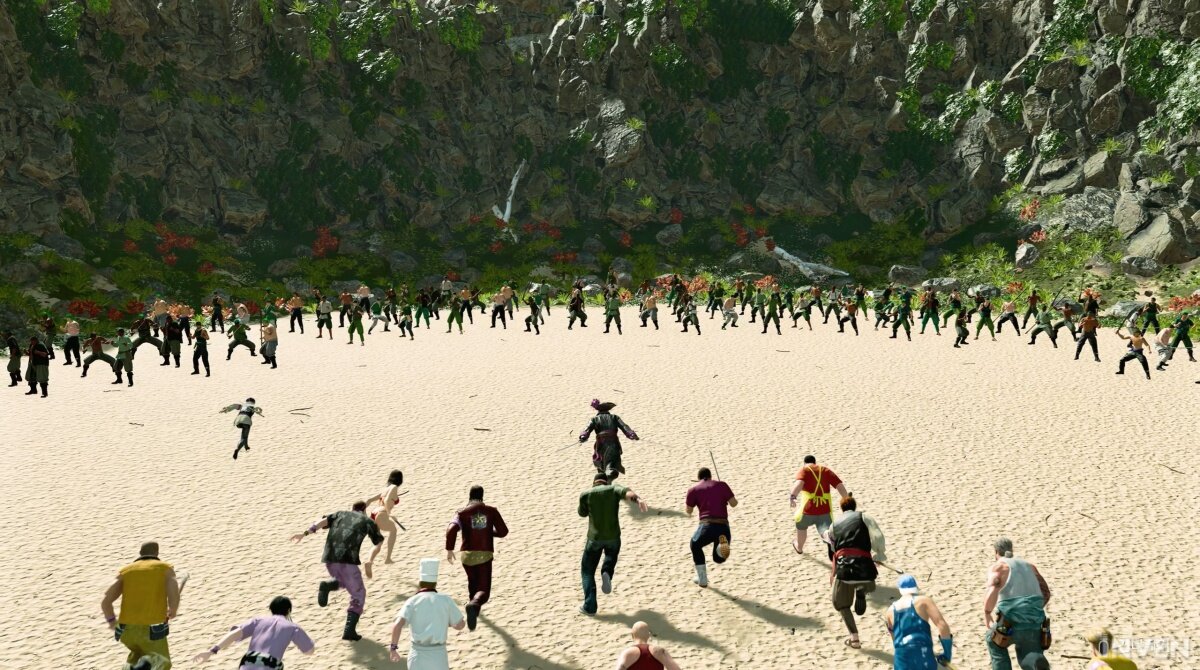
Also, the speed has been increased overall with the addition of jumping. There is almost no input delay unique to the Like a Dragon series, so you can enjoy a more refreshing battle than any other work. In particular, large-scale battles with many people give a definite fun as a large-scale battle that cannot be felt in the RPG series.
Easy and Light Rather Than Deep
Maritime Content Possible Because It's Pirate Majima
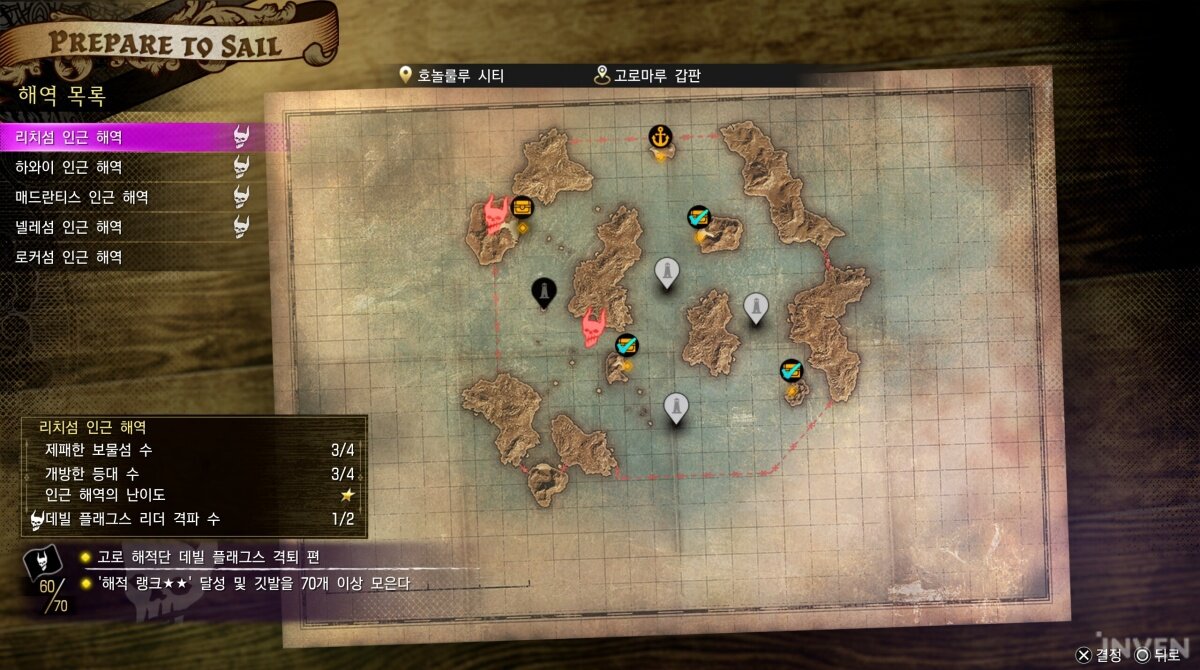
Naval warfare is the most notable content in this work. In fact, you will encounter quite a few enemies when moving from island to island. However, this only adds fun as a new content, and does not contain a deep navigation system enough to be released as a separate game. Boarding battles also only exist when fighting specific content called Pirates Coliseum or named enemies.

Naval warfare feels like an encounter battle on the sea. The player directly drives the ship and rushes in, or uses cannons to attack the left and right enemies. The enemy in front can also be attacked with a machine gun that goes straight ahead.
This intuitive battle concept is directly connected to the actual operation. If you look at it badly, you can say that it is not deep, but if you think about it differently, you can approach naval warfare more easily. As you encounter naval warfare a lot as an encounter concept, it seems that the fatigue has been reduced with a simple system rather than an excessively complex element.
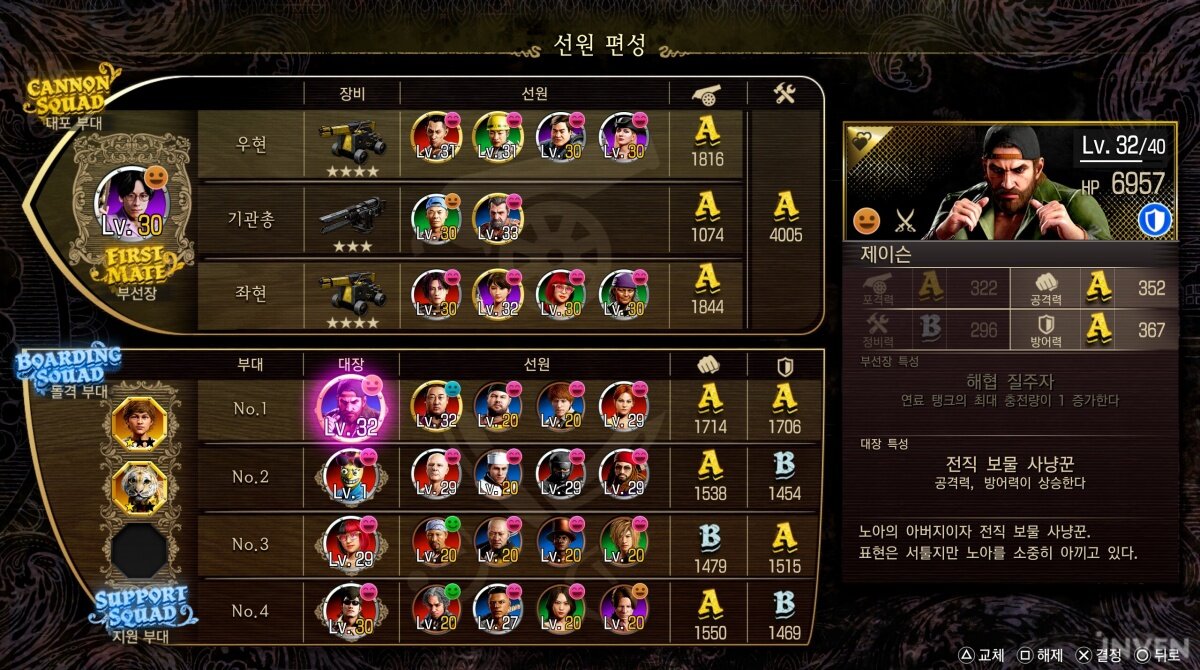
The formation of a pirate crew to carry out naval warfare like this is included as a major management element in this work, like the cabaret club management or company management of the previous series.
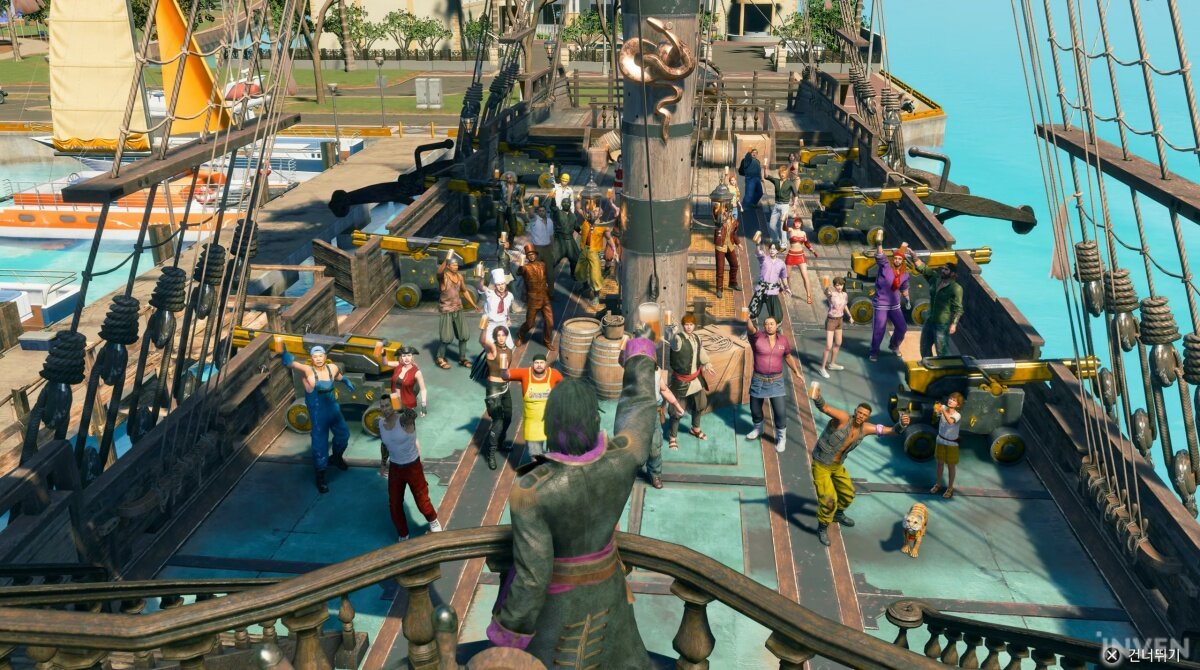
In fact, there are many pirate applicants in Honolulu City, and they also join the pirate crew as a sub-story reward. In particular, the pirate crew sets up more than 30 crew members, and up to 20 people can compete together in boarding battles, making it possible to have quite large-scale battles in the battle part.
I was able to play while expecting that new pirate crews would be added in addition to enjoying the unique gag-filled side stories. However, it is fun to enjoy a dinner with the pirate crew and give gifts to grow them, but in the end, the battle is the core, so the fun is different from the management content.
The field on the sea is close to the concept of a semi-open world divided into regions, but even the area of one region is not very large. Even then, if you pass the ring on the sea, you are accelerated and guided to go only this way. So, it is closer to semi-automatic navigation that moves along a fixed sea chart rather than the fun of exploration.
The island challenge content to find treasures replaces the existing dungeons and is based on defeating enemies. Still, there is a definite reward called treasure at the end of the battle, so I wanted to challenge it more.
Anyway, the content of the game is an inseparable part of the existing Like a Dragon. In the end, it is implemented as a maritime content for Pirate Majima rather than being introduced into future series.
How to Connect Mad Dog and Pirate
Growth and Open Field Connecting Honolulu and the Sea
There are many contents that you will not meet and pass by if you only follow the game story. In fact, if you watch the ending and load the save file and enter the after-clear mode, about half of Honolulu City is darkened.
In particular, most of the various play spots, which are the core of the series, are attempted to be played only after the ending if you do not take care of them separately.

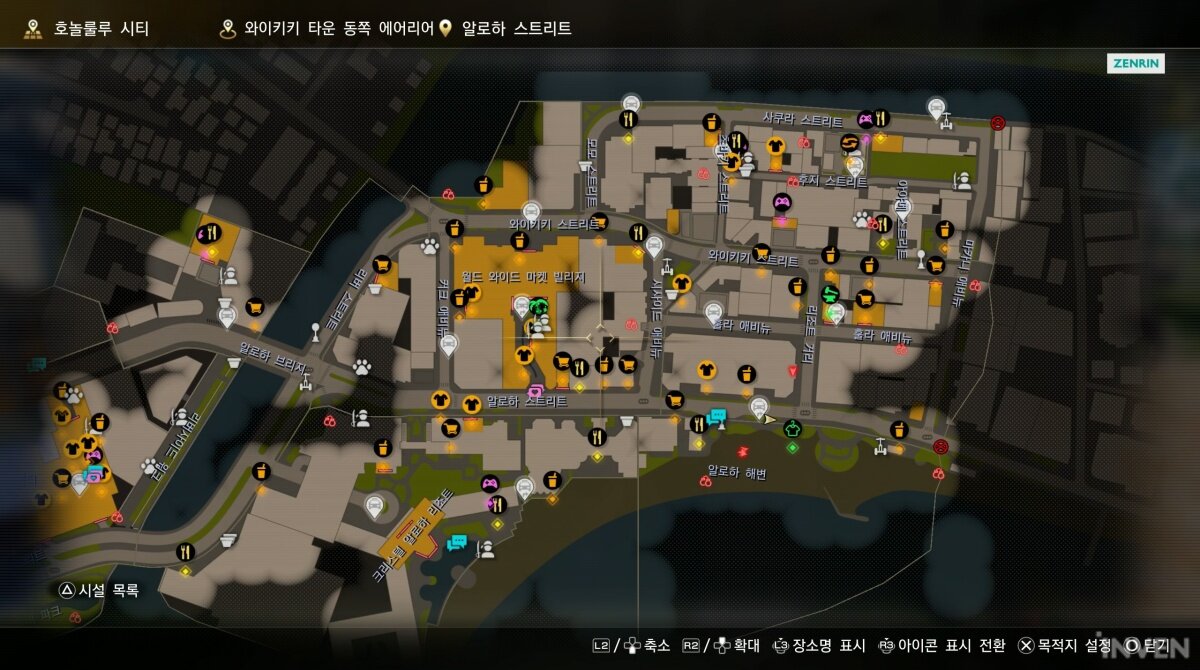
This is largely due to the fact that the game composition is tightly organized as a whole. The overall main story scale and progress are made to follow linearly and quickly, except for the mandatory sub-stories. First of all, it's a way of saying, clear the game and play more freely.
And I also feel the intention to focus on the newly created naval warfare in the process.
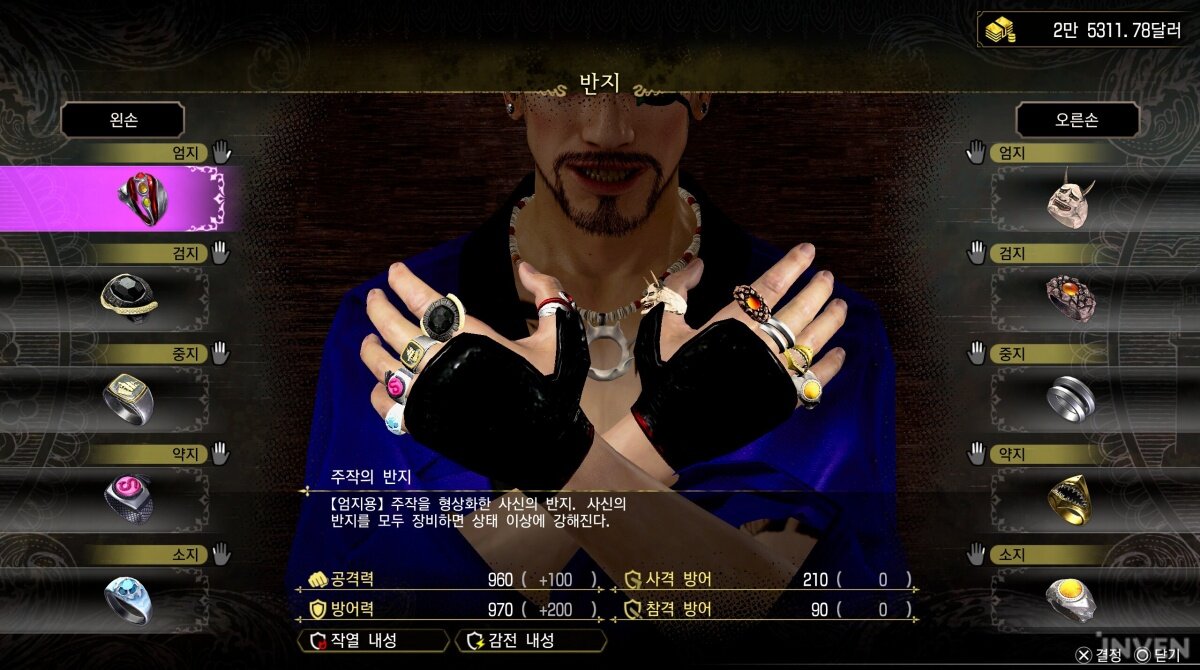
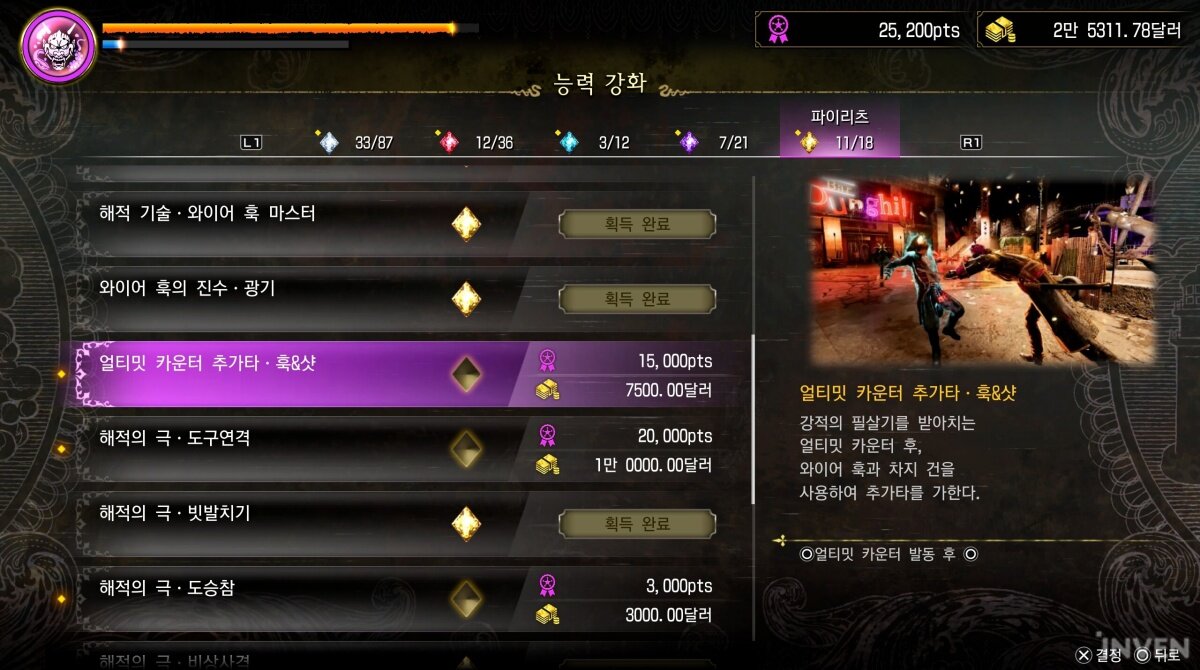
Majima's growth is only two things: wearing and strengthening rings without levels. Ship strengthening and ring purchase are possible with money, but Majima's strengthening requires more fame in addition to money. Fame is earned by raising the pirate crew level at the same time as pirate treasures or various activities. If you catch one bounty enemy well, you can earn more than 10,000 dollars, but fame requires steady play.
You have to play maritime content, treasure hunting, etc. at the same time.
Pirate and Majima. Apart from the simple image harmony between the two, how to connect the heterogeneous setting of medieval pirates in this era. Also, how to connect the existing land-based play and pirate content in terms of play. The result of that consideration seems to be the distribution of the content that is now out.
Lightly and Continuously
A Separate Story and Like a Dragon Talking About the Next
The story of the game is similar to the existing Like a Dragon story structure, but it goes to a simple and upright story. It is a new Like a Dragon that can be enjoyed by new players. The number of chapters is also relatively small, and there is almost no connection with existing games.
On the other hand, in the play of the game, the basics of Like a Dragon are definitely taken, but the maritime warfare that is lightly added pursues a different feeling. There are many things to play even after the story is over, and there are enough elements to dig into over time.

And after the ending and all the staff rolls go up, the game becomes Like a Dragon once again. I can't say it directly because it's a spoiler, but the story shows the appearance of Goro Majima, not the pirate Majima. The game talks about the dream that Majima drew. It may be forced, but it was not much different from the dream that Pirate Majima wanted. Just looking at that alone, series fans may feel a small value in this work?
If you look at it small, Like a Dragon 8 is really just a separate, side story of the series. But if you look at the entire series, it also looks like a small comma for the next series. The Like a Dragon series is trying to pass the torch to the next generation by those who led a generation of Like a Dragon, such as Kiryu, Majima, Saejima, and Dojima, around Kiryu. And that was what the 8th episode symbolized, and the spin-off confirms that once again. So the last of the Like a Dragon 8 story remains not 'end' but 'continue'.


Finally the Protagonist, Goro Majima
The fastest speed and the best action in the series
Pirate that fits Majima's image perfectly, that production
Abundant play spots, pleasant side stories
Honest and finished story in one episode
The last appearance of Majima that fans will nod to
Too honest story than the existing Like a Dragon
Less than expected, simple pirate content
Similar islands and sea adventures with less personality
The regret of a spin-off that is smaller than the main story
웹진 인벤강승진 기자
2025-02-21