Post
Chris Sawyer, a genius who will never return to the optimization-lacking game industry.
Do you know RollerCoaster Tycoon (RCT), released in 1999? RCT, considered the origin of today's theme park builder games, was among the top-selling games along with other outstanding games of the time after its release in 1999.
This game, which reportedly sold 4 million copies by 2002, lists three key developers as creators: Chris Sawyer, Simon Foster, and Alistair Brimble. Here, Foster and Miller supported graphics and sound, and Chris Sawyer took charge of game design and programming.

RCT calculated hundreds of rides, thousands of guests, and the artificial intelligence of guests and amusement park staff, but required only a few tens of MB of storage space. This complex management simulation, and a high-quality game loved by fans around the world, required only this much capacity.
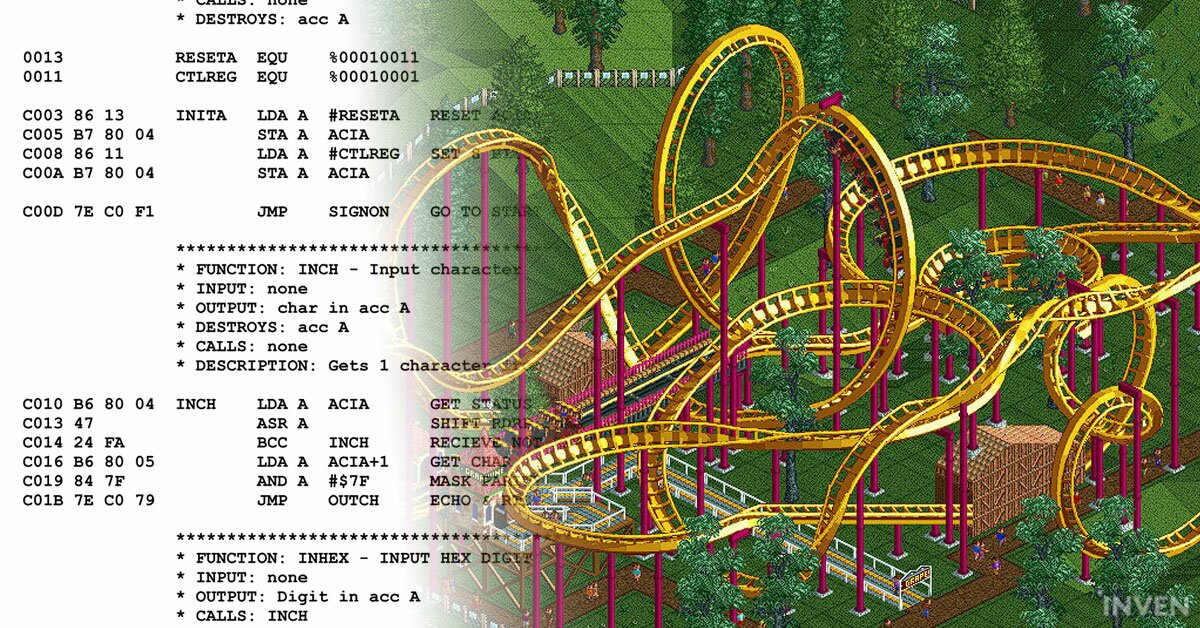
The background to making such a complex simulation with low capacity was Chris Sawyer's stubbornness. Even before today's Unreal Engine, Unity, and other game engines, C, C++, etc., with high code readability were used as the mainstream language for PC games in the mid-1990s for fast development speed and easy maintenance. However, Chris Sawyer used assembly language, which had become a minority even at that time.
Assembly language is a low-level language that is slower and less efficient than later game languages. The reason is simple. Unlike high-level languages where the compiler translates human-understandable code, assembly language requires inputting commands closer to the level that the CPU can directly understand. In addition, memory and register management had to be done directly. The code itself is difficult for humans to understand, and it takes more work, so development time takes several times longer. Of course, it was much more difficult to modify or patch incorrect parts later.
Nevertheless, there is something to be gained by using assembly language. That is optimization. Although slower than C language, Sawyer optimized each memory and operation in assembly language. Thanks to this, the game realized the complex world of RCT with a 90MHz CPU and 16MB of memory, even though it implemented tremendous calculations and weather elements. It is not today's CPU unit, GHz. It's 0.09GHz.
Even in 1999, 'Quake III Arena', which was a high-spec game at the time, required a minimum specification of a 233Mhz CPU, 64MB of RAM, 500MB of storage space, and an additional 8MB VRAM 3D acceleration support card.
Chris Sawyer may have started development with assembly language early on and was more proficient in using assembly language, so he used a game language that suited him. In fact, he himself thought assembly language was faster and more efficient.
However, RCT came out into the world with optimization and workmanship that might have been difficult to achieve at the time due to his stubbornness against the times. And it remains a masterpiece remembered to this day.
And 25 years later
A quarter of a century has passed since Sawyer released the first RCT. The performance of gaming devices, including PCs, has improved beyond recognition, and as a result, worlds that require visual splendor and computational tasks that are incomparably more complex are being implemented in games. It is a level of development that cannot be simply compared to RCT 25 years ago.
ButHas the experience of players enjoying the game grown as much as the external appearance that has grown over 25 years?
Today, games from large production companies boast splendid productions and vast content like movies. However, the capacity also requires tens to hundreds of GB. Capacity increase is inevitable as high-resolution textures and high-quality sound and other assets are additionally increased. However, they are reluctant to organize unnecessary data accumulated during the game development process. Wasted resources accumulate, and that leads directly to the expanded capacity of the game.
The number of games that require huge specifications as much as the increased capacity is also increasing. It is also a problem to simply require high specifications, and it is also a problem to provide an unsatisfactory play experience such as lag or frame drops even if the required specifications are met.
The highly anticipated 'Cyberpunk 2077' had its console version sales suspended due to optimization issues in the early stages of its release, and normal play was possible only after several patches were made on the PC.
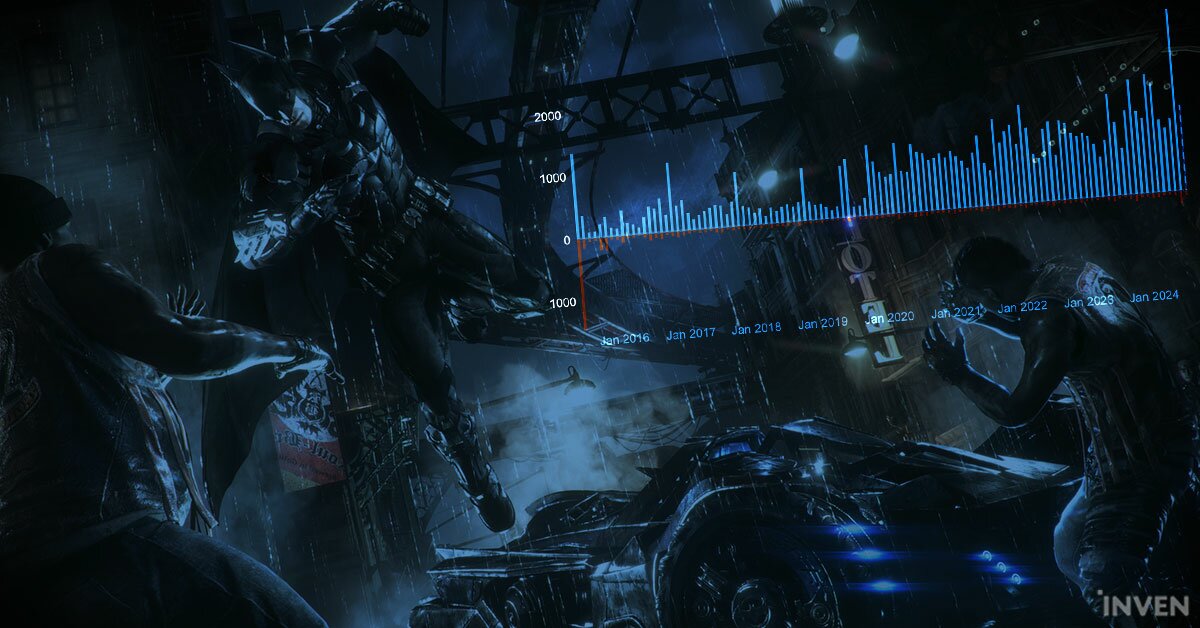
The impression that 'Cyberpunk 2077' gave is so great that it is easily forgotten, but ▲'Assassin's Creed Unity', which had to release even DLC for free as compensation due to the worst optimization and bugs, ▲'Batman: Arkham Knight' PC port, which did not even reach 30fps even on high-spec PCs at the time, leading to a temporary suspension of Steam sales, ▲'GTA Trilogy Definitive Edition', which had a broken physics engine, frame drops, and crashes even though it was a remaster of an old game, etc. Optimization problems continue to this day.
Insufficient optimization is corrected with a late patch, turning early buyers into paid beta testers. Naturally, trust in early game purchases has decreased. Among gamers, there is even a self-deprecating saying that 'pre-order buyers are fools'.
Productivity, division of labor, and optimization
If a stubborn developer like Chris Sawyer puts effort into optimization, gamers may have nothing to ask for. But unfortunately, developers like Chris Sawyer are neither needed in today's game market, nor does having them guarantee the release that gamers want.
The core of today's game development isProductivityThere are anywhere from dozens to thousands of people involved in one game. Of course, not all of them are full-time employees, and there are also contract workers or project participants from outsourcing companies, but in any case, their labor costs are the game's development costs. That means the amount that needs to be recovered later.
In particular, development is also done through investment, and marketing costs for AAA games have increased to more than 30% of the total budget. It is analyzed that nearly half of the 350 billion won development cost of GTA5, released in 2013, was marketing costs, and marketing costs for AAA games in 2020 are said to be over 100 billion won.
In the end, unless there is a fatal optimization issue, it has become a practice to proceed with the release first and then improve it with patches rather than delaying the release.
Also, in the enlarged development scale with numerous developers participating in the work, it is rare for one person to take charge of everything from programming to design to optimization like Chris Sawyer. All development parts of the game are finely divided and divided, and the part leaders who lead them are also people with strengths in specific areas. There is no room for Sawyer's thorough optimization and craftsmanship in coding to be demonstrated.
Developers focus on their respective parts, and that is woven together to become one game. Within that, numerous assets come out, and elements that hinder optimization constantly occur in the complexity. But fixing that problem is not simply a problem for one developer, but a new collaboration between several teams must be made. It is not easy to go back on that path in a development process that is always worried about schedule and cost.
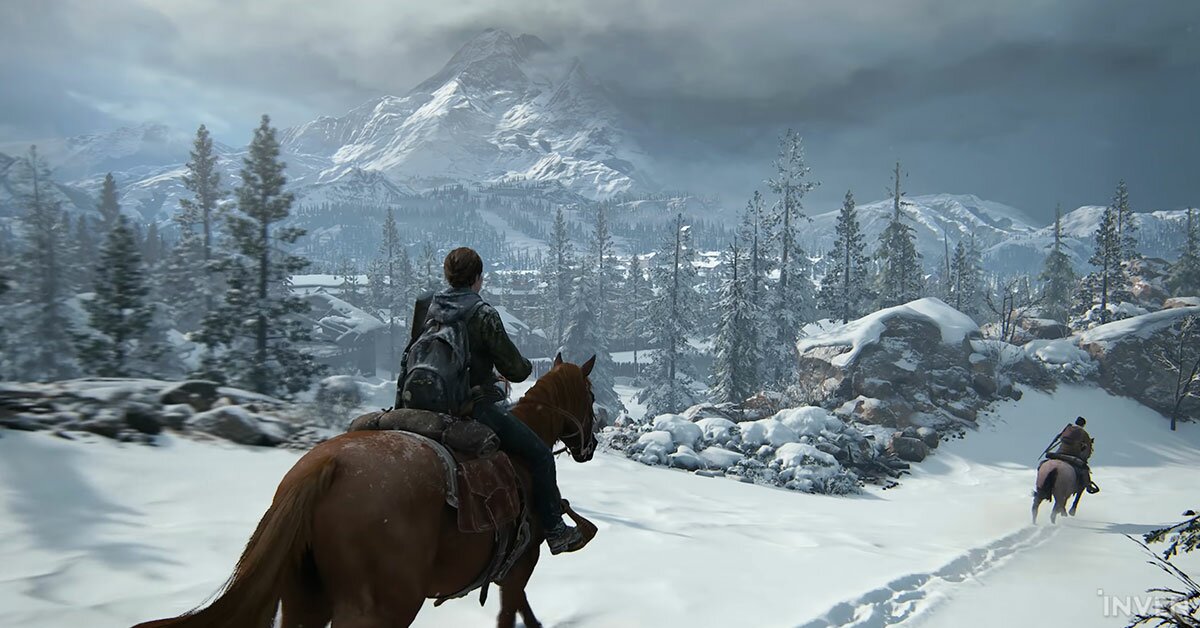
There is also an example that proves that the final stages of work are not easy in the process of meeting the release date. Naughty Dog's 'The Last of Us Part 2' implemented tremendous graphics and animation that exceeded the performance limits of the PS4 at the time of its release. However, frame-by-frame animation work continued until just before the release to optimize the precisely implemented character physics calculations. This led to about a year of excessive crunch, and there were even employees working 80 to 100 hours a week at the end of the project. And this extreme optimization work just before release led to the resignation of employees and caused graphic bugs and some performance degradation problems in the early stages of release.
Sawyer of everyone needed because he can't come out anymore
Chris Sawyer, who was later called an engineering genius, pursued traditional development methods and became a person far removed from modern game development. Sawyer himself could not adapt to modern development methods, and after the criticism of 'Locomotion', he only ported 'Transport Tycoon' and did not participate in large game projects. Of course, copyright issues with Atari also played a part in cutting off Sawyer's development career.
What is clear is that Chris Sawyer's method of managing everything alone is not accepted today. In fact, game engines such as Unreal Engine and Unity, which have much faster development speeds, support automatic optimization such as profilers and also support multi-threading calculations. In addition, technological advancements such as DLSS and FSR, which upscale low-resolution rendering screens, help to create effects close to optimization even after the game is released.
That's why game companies proceed with the release schedule with the belief that if the game is good, it will sell even if the optimization is a mess. In fact, fun games sell well even if they receive negative labels on Steam. This is a sales volume obtained by sacrificing users' smooth play experience. The opportunity to have a more enjoyable experience is also pushed back to the next moment called a patch. There is no guarantee that even that will be fully improved.

Make optimization seem less important
Because there is technology that aims for productivity and doubles it, optimization is bound to be pushed out of priority. Therefore, it is clear that Sawyer's method, which relied on the genius of one person, is an old technique that cannot be applied today. ButSawyer's optimization development philosophy, which maximized efficiency, is not outdated.
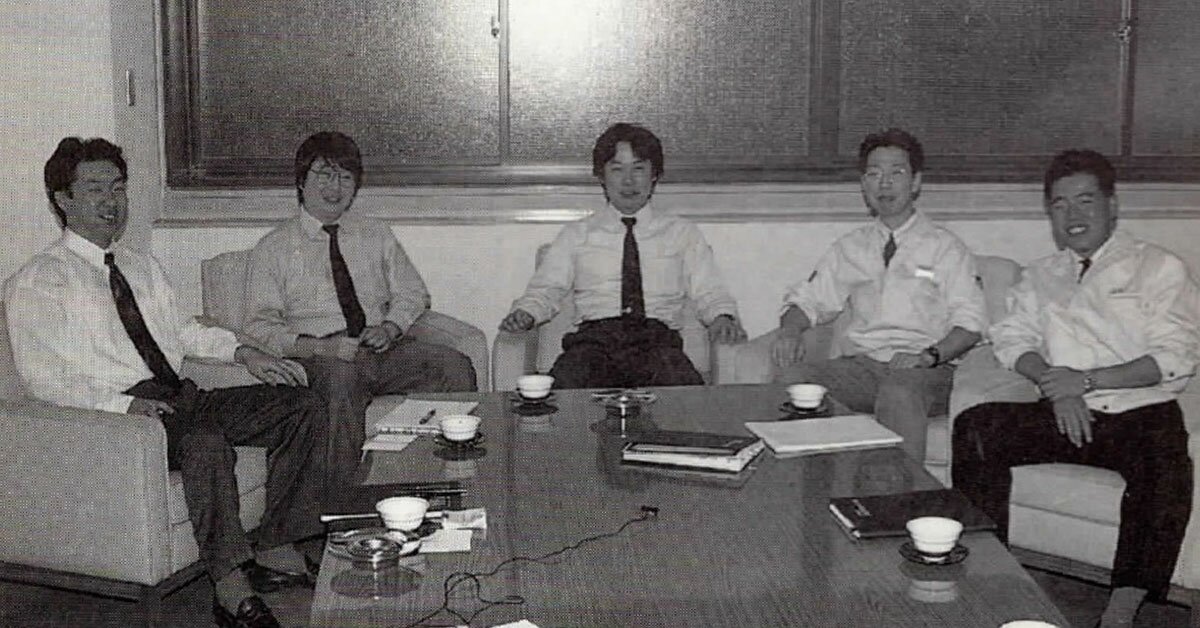
Nintendo's legendary Famicom game 'Super Mario Bros.' is a game in which full-scale division of labor was made in video game development. At the time, the cartridge capacity was only 40KB, so the development team had no choice but to devote all their efforts to this optimization work.
Miyamoto Shigeru, known as the father of Mario, is famous for designing the overall world of the game, but in order to fit the game within 40KB, it was necessary to optimize all graphics, sound, and animation data. And in this process, developers in charge of each part of the game, such as Takashi Tezuka, Toshihiko Nakago, and Koji Kondo, optimized each other, and the game design was changed from time to time so that it could be drawn in a direction that suited the game.
With the goal of capacity optimization, the entire development team wanted to improve all parts of the game, including game design. Thanks to that effort, the optimization was completed within an additional month of development, and 20 bytes of capacity could be left over.
Not all developers can be Sawyer. There should be no practice of grinding developers like consumables.
However, it is necessary to think about whether we are missing out on efficiency and wasting unnecessary things, rather than just relying on flashy graphics and cool textures, and to look back in the development process.
I hope that Sawyer of this era, suitable for today's game development, will come out. That's also my expectation as a gamer. It's also because I don't have the courage to buy a new GPU that has gone crazy and risen in price with my own money anymore.
Webzine InvenKang Seung-jin, Reporter
2025-03-13