Post
Overcoming a "Not Pretty" Game with Marketing - Balatro
In early last year, the indie game 'Balatro' appeared out of nowhere and stole everyone's time, receiving praise from gamers for showcasing innovative gameplay while utilizing poker rules. Its reputation grew even larger by winning awards in three categories at the year-end 'The Game Awards,' and this year at GDC 2025, it won four awards, becoming 'the most beloved game by developers' of last year.
However, let's be honest. How many people would readily purchase this game just by looking at the screenshots on the Steam store page? Balatro's visual style is far from pretty(?), and in fact, it has an appearance that makes it look like illegal gambling to those in high places.
This was also a challenge for Playstack, which publishes the game on behalf of the one-person developer LocalThunk. What is needed to market a game with an unattractive appearance? Of course, the game must be fun above all else, but if the game wasn't fun, Playstack wouldn't have decided to distribute it.
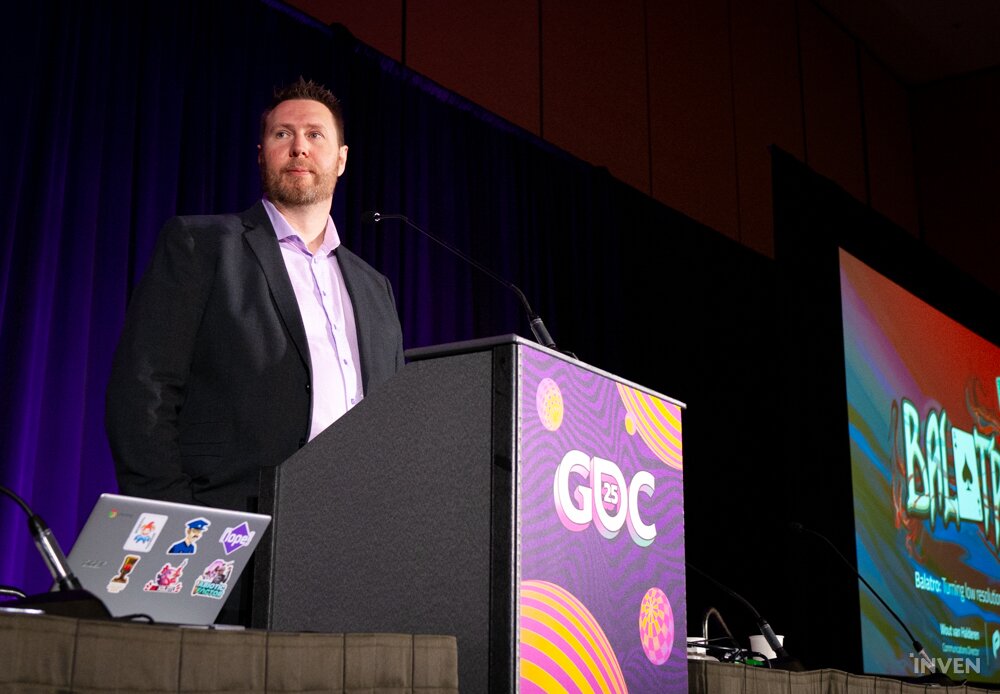
Wout Van Halderen, the Communications Director at Playstack, is a hidden contributor who helped Balatro gain worldwide fame. He even accepted the award on behalf of LocalThunk, who doesn't like to appear in front of people, at The Game Awards ceremony.
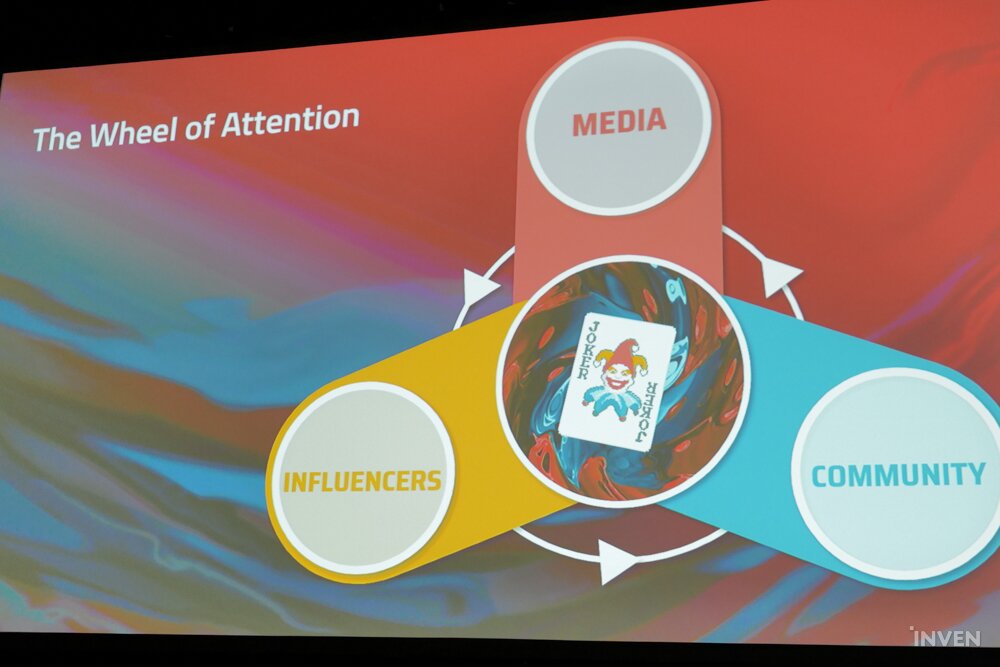
At the lecture that day, his marketing secret for 'Balatro' was to use the 'Wheel of Attention'.
Competing with gameplay, not visuals
As soon as he started the lecture, Wout confessed that marketing Balatro was not easy. Since there were no fancy screenshots or trailers, it was nearly impossible to captivate people with a first impression. So, instead of focusing on traditional advertising or increasing social media attention, he focused on the core fun of the game, which you can't stop once you start, and the gameplay optimized for streaming.
In fact, the publisher Playstack had a similar experience before. It was a similar situation when they published the indie game 'The Case of the Golden Idol'. That game also had visuals that couldn't be captured at first glance, and since it was a puzzle game, the screen wasn't very colorful. It wasn't even a very suitable game for streaming. When streamers focused on the game, it was boring for the viewers.
There are three ways for a game developer to market their game. First, approach influencers and media directly on your own. You can save money, but it takes a lot of time and is not professional, so it's difficult to guarantee results. Second, hire a PR agency. A professional team will take care of the work, but the cost is high, and if you terminate the contract, you will lose the external relationships that the PR agency has built up. The third is to work with a publisher, which has its own advantages and disadvantages, such as guaranteeing the development schedule and distributing profits.
In the case of Golden Idol, Playstack chose to hire an external agency, and Wout was a member of that external agency. And they decided to focus on distributing the game's 'demo' instead of the visuals. He recalled, "People who played the demo were enthusiastic about the game, and we decided to use that enthusiasm in the campaign."
The approach to influencers was also unique. Acknowledging that the game was not suitable for streaming, they instead asked them to mention the game on social media. For example, one influencer posted positive feedback about the demo, and Wout used it in the trailer. He also asked media giants like Jason Schreier, hoping for the best, and his Twitter influenced other media officials, leading to additional coverage. And Golden Idol later received coverage in major media outlets when the DLC was released.
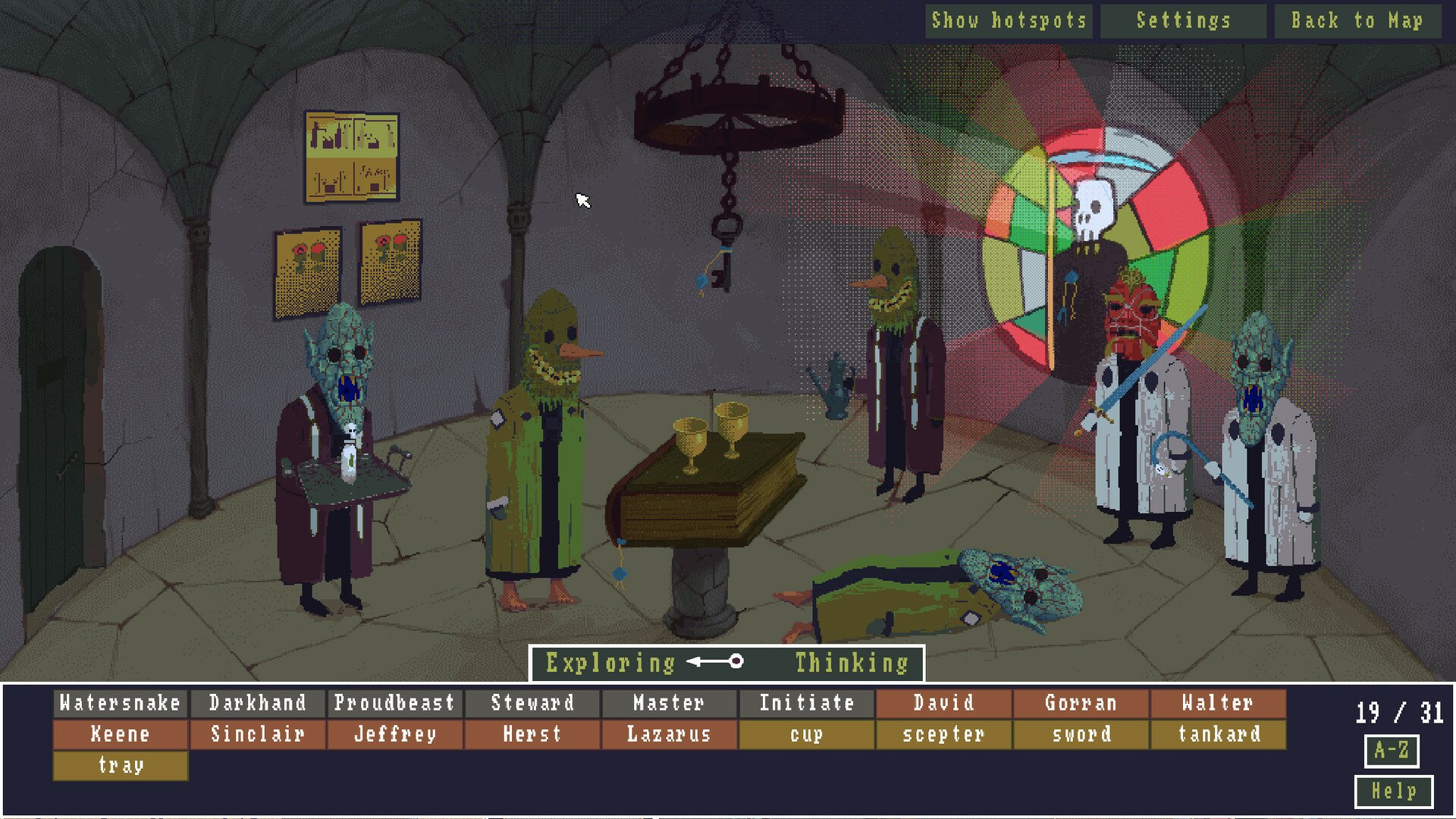
The marketing for Balatro also started based on the lessons learned from Golden Idol. In Wout's eyes, it was difficult to persuade the public with screenshots and trailers of Balatro, but it was encouraging to see the team members playing the game without realizing how much time had passed during internal testing. The team once again decided to use the demo as the core strategy for marketing.
The first demo started with a post on Reddit by developer LocalThunk. According to him, LocalThunk asked Playstack at the time of the publishing contract, "How many copies do you think it will sell?""I don't know, maybe six?"He replied. However, contrary to his expectations, the first demo was played by over 5,000 people without promotion, and it gained attention from famous influencers through word of mouth. At the time, the demo was limited to 50 rounds, but players enjoyed the game for 5 or 6 hours and actively shared feedback in the community.
The second demo was distributed in time for the Steam Next Fest, but it did not officially participate in the Next Fest (because once you submit to one fest, you cannot submit to the next). It was a demo that only included 40 of the 150 jokers, but players showed themselves playing the game for 30 to 60 hours. Wout joked, "I took it down quickly because I was afraid they would mistake it for the release version because they were playing the game for too long."
Media, Influencers, Community: His 'Wheel of Attention'
Wout then used a model called the 'Wheel of Attention' to market Balatro. It is a strategy of turning a wheel that moves with three pillars: media, influencers, and community.
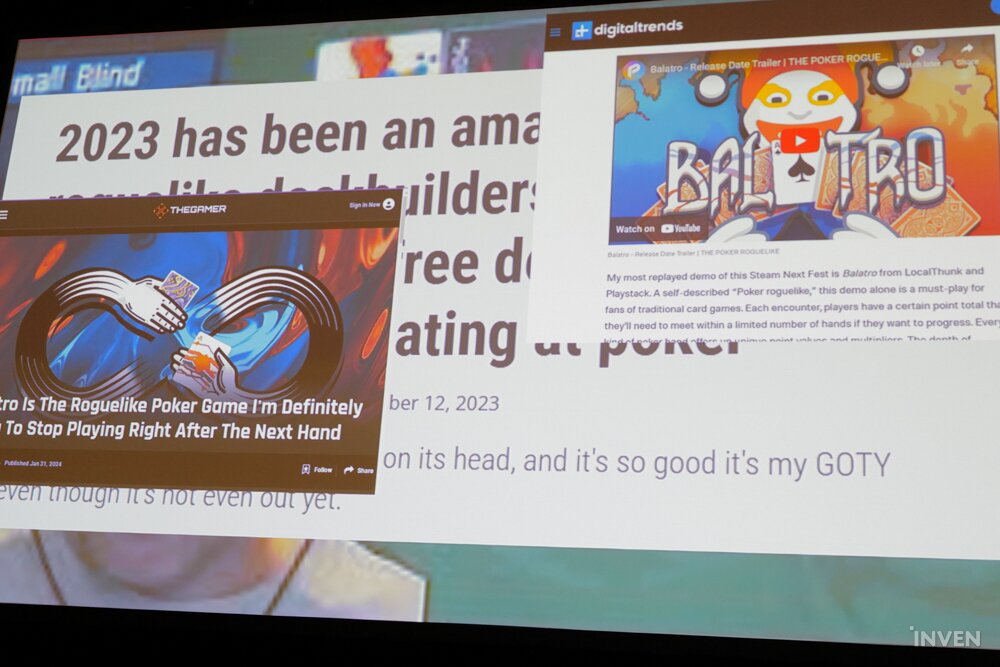
First, media. They didn't show much interest in 'Balatro' in the early days. According to Wout, the media chooses which games to cover from the hundreds of requests they receive every day, and Balatro's appearance was not a big advantage in that process. However, things were different after the demo data was accumulated. The title of 'Most Played Demo During Steam Next Fest' played an important role in turning the media's attention.
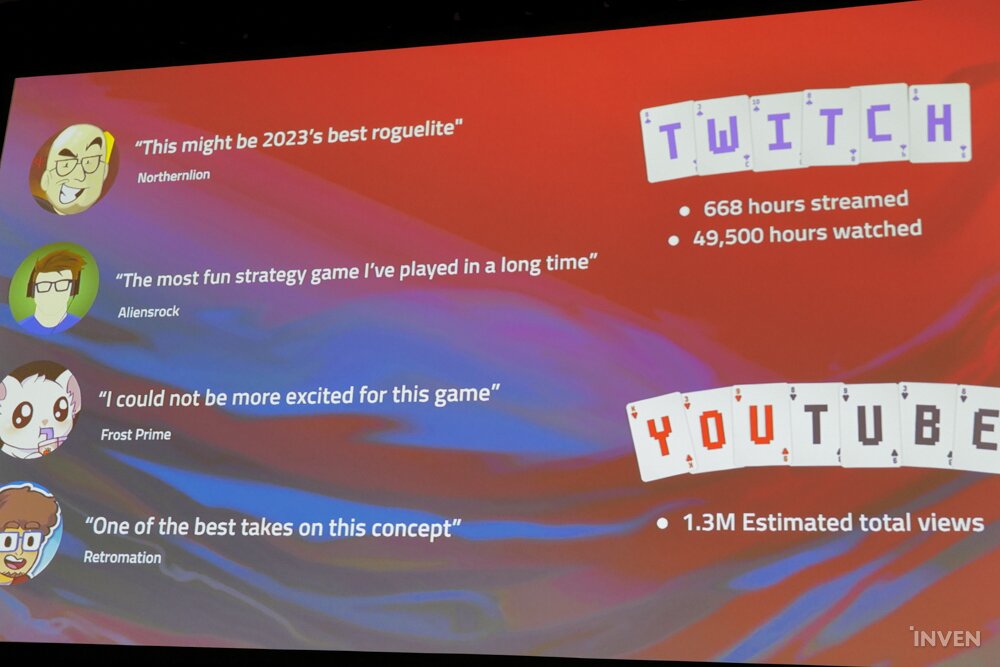
Second, influencers. There are many ways to find influencers to promote the game, but Wout didn't just try to contact those with a lot of subscribers. Instead, he contacted influencers who often played games that were related to Balatro in some way. Influencers who mainly played games like 'Slay the Spire', 'Super Auto Pets', and 'Binding of Isaac' were the targets.
Third, community. Discord was operated from before the release. The number of members has grown from 300 to 10,000. Wout said, "It's good for the community manager to be with you from the beginning, not after the game is released," and the community that gathers in this way naturally plays a role in promoting the game on social media and other platforms.
According to Wout, there was a time when 'media' did not respond to Balatro among the three pillars in the early days, but as a result of inducing high interest from the other two pillars, he was able to naturally increase the media's attention. In that way, the 'Wheel of Attention' he mentioned rolled faster over time.
Accelerating the growing interest
The third demo, which was distributed for the last time before the release, was officially presented through Steam Next Fest. According to Wout, the demo just before the release played the role of "adjusting the release timing like a compressed spring and bursting it out." Thanks to the well-rolling Wheel of Attention, it was possible to confirm a user ratio that was clearly different from before.
Even after the release, they did not forget to maximize the momentum with marketing. The most important of these was the streamer tournament, which gave away a total of 700 Steam keys as prizes. Six influencers participated in a 24-hour Balatro tournament, and one streamer played Balatro for a whopping 19 hours and won the tournament. The Steam keys given to each influencer as prizes were distributed to their respective communities and used to spread the word.
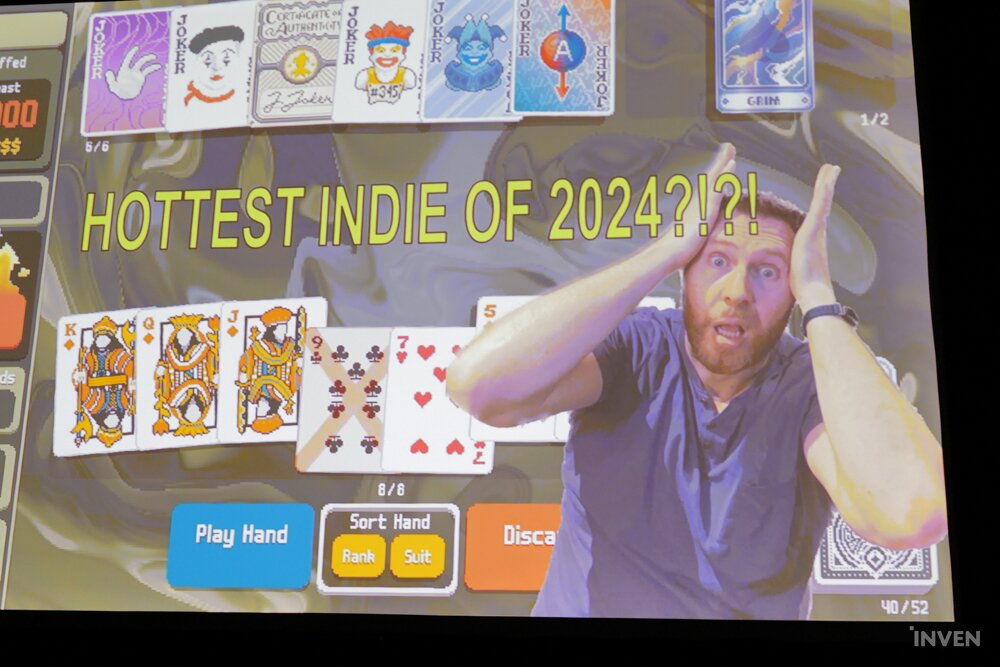
Wout explained that he did not pay the participating influencers any fees other than the Steam keys when hosting this streamer tournament. Instead, he proposed to allow them to use videos of less than 1 minute in length for promotion, and the scenes of streamers having a good time were included on the Balatro store page or in the trailer. He said, "Showing streamers genuinely enjoying themselves was the best marketing."
Sparkling ideas that make a difference
Of course, not everything was good. As we all know, 'Balatro' faced a crisis when it was removed from the stores of some countries due to gambling controversies. However, Wout said that even this was able to increase the game's attention by becoming a hot topic.
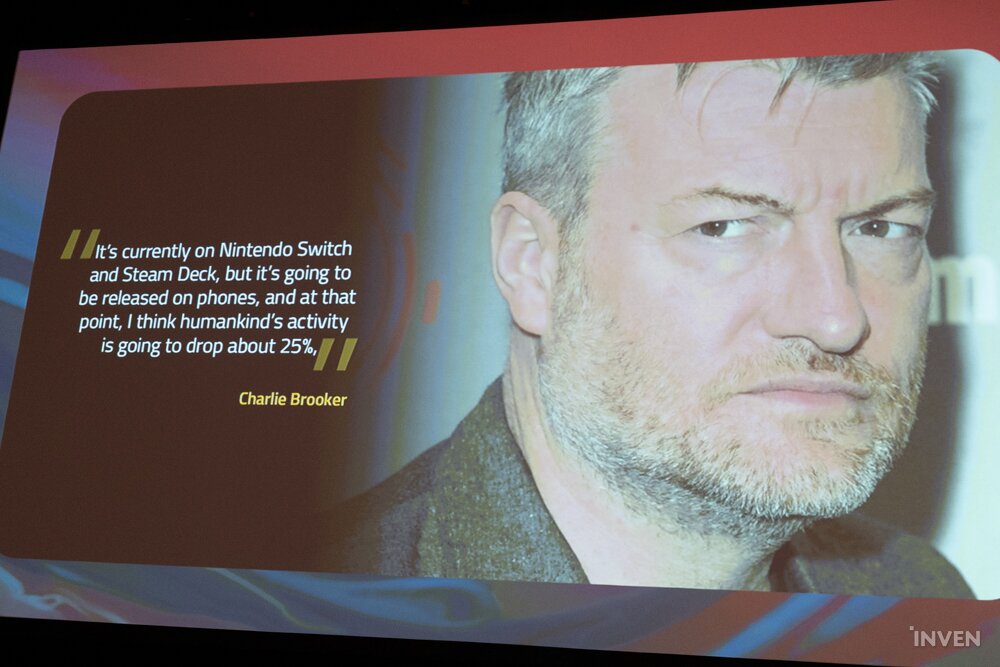
Since then, Balatro has continued to attract attention through various collaboration events with other games, physical package sales, and the release of a mobile version. In particular, at the time of the mobile version release, Charlie Brooker, the writer of the British drama 'Black Mirror', said,"This game will reduce the productivity of all mankind by about 25%"His tweet caused a great stir. Then, as everyone knows, it won three awards at The Game Awards, leaving its name in the global game industry.
Finally, Wout warned against survivor bias (the error of analyzing only successfully surviving cases), saying, "Not everything will work if you apply it as we did," and advised that if you have a brilliant idea that can take advantage of the strengths of the game you are marketing, you can make the game shine.
웹진 인벤김규만 기자
2025-03-22