Post
Galaxy S26, S26+, S26 Ultra Comparison: Which Model is Right for You?The Samsung Galaxy S26 lineup is impressive, but many users are struggling to choose a model due to the blurred lines between them. All models share the same processor, RAM, storage, and most features, but the base model is $400 cheaper and received significant upgrades this year. Dive into a detailed comparison of each model's display, design, camera, performance, battery, and price to find the Galaxy S26 that's right for you.
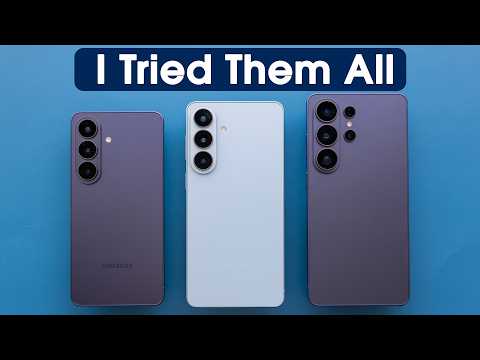
1. 📱 Display: Size, Resolution, and the Ultra's Special Features
· The Galaxy S26 lineup shows differences in display size and resolution by model.
· The S26 Ultra features a 6.9-inch display, the S26 Plus a 6.7-inch, and the S26 base model a 6.3-inch display.
· The S26 base model, at 6.3 inches, is now classified as a small phone, but it's lightweight, easy to use with one hand, and highly portable.
· The S26 Ultra and Plus offer Quad HD+ resolution, while the S26 base model provides Full HD (1080p) resolution.
· Interestingly, the S26 Ultra and Plus are shipped with 1080p resolution set by default to improve battery life.
· The S26 Plus has the same resolution as the Ultra but a slightly smaller display, technically resulting in better pixel density.
· The S26 Ultra features an anti-reflective display, though its anti-reflective effect is minimal compared to its predecessor, the S25 Ultra.
· The biggest feature of the Ultra model is its 'Privacy Display' function. It can be set to apply to specific apps, PIN/password entry, or notifications only, blocking the screen from all angles except directly in front, offering strong privacy protection.
· All models support a maximum brightness of 2,600 nits and a variable refresh rate from 1Hz to 120Hz, providing fast and smooth screen transitions.
· The S26 Ultra features a 6.9-inch display, the S26 Plus a 6.7-inch, and the S26 base model a 6.3-inch display.
· The S26 base model, at 6.3 inches, is now classified as a small phone, but it's lightweight, easy to use with one hand, and highly portable.
· The S26 Ultra and Plus offer Quad HD+ resolution, while the S26 base model provides Full HD (1080p) resolution.
· Interestingly, the S26 Ultra and Plus are shipped with 1080p resolution set by default to improve battery life.
· The S26 Plus has the same resolution as the Ultra but a slightly smaller display, technically resulting in better pixel density.
· The S26 Ultra features an anti-reflective display, though its anti-reflective effect is minimal compared to its predecessor, the S25 Ultra.
· The biggest feature of the Ultra model is its 'Privacy Display' function. It can be set to apply to specific apps, PIN/password entry, or notifications only, blocking the screen from all angles except directly in front, offering strong privacy protection.
· All models support a maximum brightness of 2,600 nits and a variable refresh rate from 1Hz to 120Hz, providing fast and smooth screen transitions.
| Category | S26 | S26 Plus | S26 Ultra |
|---|---|---|---|
| Display Size | 6.3 inches | 6.7 inches | 6.9 inches |
| Resolution | Full HD (1080p) | Quad HD+ | Quad HD+ |
| Max Brightness | 2,600 nits | 2,600 nits | 2,600 nits |
| Refresh Rate | 1-120Hz | 1-120Hz | 1-120Hz |
| Anti-Reflective | None | None | Yes |
| Privacy Display | None | None | Yes |
00:45 - 03:56
1. 📱 Display: Size, Resolution, and the Ultra's Special Features
· The Galaxy S26 lineup shows differences in display size and resolution by model.
· The S26 Ultra features a 6.9-inch display, the S26 Plus a 6.7-inch, and the S26 base model a 6.3-inch display.
· The S26 base model, at 6.3 inches, is now classified as a small phone, but it's lightweight, easy to use with one hand, and highly portable.
· The S26 Ultra and Plus offer Quad HD+ resolution, while the S26 base model provides Full HD (1080p) resolution.
· Interestingly, the S26 Ultra and Plus are shipped with 1080p resolution set by default to improve battery life.
· The S26 Plus has the same resolution as the Ultra but a slightly smaller display, technically resulting in better pixel density.
· The S26 Ultra features an anti-reflective display, though its anti-reflective effect is minimal compared to its predecessor, the S25 Ultra.
· The biggest feature of the Ultra model is its 'Privacy Display' function. It can be set to apply to specific apps, PIN/password entry, or notifications only, blocking the screen from all angles except directly in front, offering strong privacy protection.
· All models support a maximum brightness of 2,600 nits and a variable refresh rate from 1Hz to 120Hz, providing fast and smooth screen transitions.
· The S26 Ultra features a 6.9-inch display, the S26 Plus a 6.7-inch, and the S26 base model a 6.3-inch display.
· The S26 base model, at 6.3 inches, is now classified as a small phone, but it's lightweight, easy to use with one hand, and highly portable.
· The S26 Ultra and Plus offer Quad HD+ resolution, while the S26 base model provides Full HD (1080p) resolution.
· Interestingly, the S26 Ultra and Plus are shipped with 1080p resolution set by default to improve battery life.
· The S26 Plus has the same resolution as the Ultra but a slightly smaller display, technically resulting in better pixel density.
· The S26 Ultra features an anti-reflective display, though its anti-reflective effect is minimal compared to its predecessor, the S25 Ultra.
· The biggest feature of the Ultra model is its 'Privacy Display' function. It can be set to apply to specific apps, PIN/password entry, or notifications only, blocking the screen from all angles except directly in front, offering strong privacy protection.
· All models support a maximum brightness of 2,600 nits and a variable refresh rate from 1Hz to 120Hz, providing fast and smooth screen transitions.
| Category | S26 | S26 Plus | S26 Ultra |
|---|---|---|---|
| Display Size | 6.3 inches | 6.7 inches | 6.9 inches |
| Resolution | Full HD (1080p) | Quad HD+ | Quad HD+ |
| Max Brightness | 2,600 nits | 2,600 nits | 2,600 nits |
| Refresh Rate | 1-120Hz | 1-120Hz | 1-120Hz |
| Anti-Reflective | None | None | Yes |
| Privacy Display | None | None | Yes |
03:57 - 06:11
2. ✨ Design and Additional Features: Unified Look and the Ultra's S Pen
· This year, the Galaxy S26 lineup adopts a generally similar design language, making the Ultra model no longer look unique.
· All models use an aluminum body; the titanium body, previously exclusive to Ultra models, is gone.
· The S26 base model supports Bluetooth 5.4, while the S26 Plus and Ultra support Bluetooth 6.0. Better audio features are expected in the long run.
· Ultra-Wideband (UWB) functionality has been added to all models, allowing for precise location tracking features like with Samsung Galaxy Tags.
· The S26 Ultra has become thicker due to changes in its telephoto lens (larger sensor, lens moved in front of the prism). This may cause the device to wobble when using the S Pen.
· One of the biggest advantages of the S26 Ultra is its S Pen. This year, the S Pen's position has moved to the side, which might lead to accidental touches, but it still offers various uses such as writing, drawing, and signing documents.
· All models use an aluminum body; the titanium body, previously exclusive to Ultra models, is gone.
· The S26 base model supports Bluetooth 5.4, while the S26 Plus and Ultra support Bluetooth 6.0. Better audio features are expected in the long run.
· Ultra-Wideband (UWB) functionality has been added to all models, allowing for precise location tracking features like with Samsung Galaxy Tags.
· The S26 Ultra has become thicker due to changes in its telephoto lens (larger sensor, lens moved in front of the prism). This may cause the device to wobble when using the S Pen.
· One of the biggest advantages of the S26 Ultra is its S Pen. This year, the S Pen's position has moved to the side, which might lead to accidental touches, but it still offers various uses such as writing, drawing, and signing documents.
06:12 - 11:02
3. 📸 Camera Performance: Ultra's Overwhelming Detail and Zoom
· The S26 base model and S26 Plus feature identical cameras, so we primarily compared the S26 base model with the S26 Ultra.
· Main Rear Lens:
· In sufficient light, it's initially hard to notice a big difference.
· The Ultra provides more bokeh (background blur) and a shallower depth of field due to its larger aperture.
· The S26 base model can also achieve background blur if you get close enough to the subject, but not to the same extent as the Ultra.
· Zoom Performance:
· From 2x zoom, the Ultra's larger sensor advantage begins to show.
· At 5x zoom, the Ultra demonstrates overwhelming performance, delivering excellent results with subjects separated from the background without distortion.
· The S26 base model's background separation capability significantly diminishes at 5x zoom.
· At 10x zoom and beyond, the Ultra preserves much more detail, while the S26 base model shows strange light flares around tree branches.
· At 30x zoom, the Ultra provides much more natural photos, whereas the S26 base model shows unnatural, AI-corrected-like results.
· The maximum zoom is 30x for the S26 base model and 100x for the Ultra. While maximum zoom has limited practical use, the Ultra captures significantly more detail.
· Ultra-Wide Lens:
· In bright environments, it's hard to notice significant differences in color, distortion, etc., between the two models.
· Low-Light Performance:
· The Ultra's larger sensor performs better in low-light conditions.
· Video:
· Both models support an impressive 'Horizon Lock' feature, maintaining a level horizon even when rotating 360 degrees.
· The Ultra offers more natural background blur and better low-light performance, but in bright environments, there isn't a big difference in color, etc.
· Front Camera:
· There isn't a big difference between the two models, and it may come down to personal preference.
· Conclusion:
· The cameras on the S26 base model and Plus perform less well than the Ultra, but they deliver excellent results in bright and easy conditions.
· However, in specific situations like zoom, portrait photos, background blur, and low light, the Ultra clearly offers the best performance.
· Main Rear Lens:
· In sufficient light, it's initially hard to notice a big difference.
· The Ultra provides more bokeh (background blur) and a shallower depth of field due to its larger aperture.
· The S26 base model can also achieve background blur if you get close enough to the subject, but not to the same extent as the Ultra.
· Zoom Performance:
· From 2x zoom, the Ultra's larger sensor advantage begins to show.
· At 5x zoom, the Ultra demonstrates overwhelming performance, delivering excellent results with subjects separated from the background without distortion.
· The S26 base model's background separation capability significantly diminishes at 5x zoom.
· At 10x zoom and beyond, the Ultra preserves much more detail, while the S26 base model shows strange light flares around tree branches.
· At 30x zoom, the Ultra provides much more natural photos, whereas the S26 base model shows unnatural, AI-corrected-like results.
· The maximum zoom is 30x for the S26 base model and 100x for the Ultra. While maximum zoom has limited practical use, the Ultra captures significantly more detail.
· Ultra-Wide Lens:
· In bright environments, it's hard to notice significant differences in color, distortion, etc., between the two models.
· Low-Light Performance:
· The Ultra's larger sensor performs better in low-light conditions.
· Video:
· Both models support an impressive 'Horizon Lock' feature, maintaining a level horizon even when rotating 360 degrees.
· The Ultra offers more natural background blur and better low-light performance, but in bright environments, there isn't a big difference in color, etc.
· Front Camera:
· There isn't a big difference between the two models, and it may come down to personal preference.
· Conclusion:
· The cameras on the S26 base model and Plus perform less well than the Ultra, but they deliver excellent results in bright and easy conditions.
· However, in specific situations like zoom, portrait photos, background blur, and low light, the Ultra clearly offers the best performance.
11:03 - 12:24
4. 🚀 Performance and Internal Specifications: Same Processor and 5G Differences
· The Galaxy S26 lineup generally shares similar internal specifications.
· All models in the US market are equipped with the 'Snapdragon Elite Gen 5 for Galaxy' processor, providing powerful performance.
· There are differences in 5G connectivity. The S26 base model only supports sub6 5G, while the S26 Plus and Ultra support both sub6 and mmWave 5G.
· All models offer 12GB RAM and 256GB or 512GB storage options.
· The S26 Ultra model has an additional option offering 1TB storage and 16GB RAM. This is much more expensive but suitable for users who want the best performance and storage.
· All models in the US market are equipped with the 'Snapdragon Elite Gen 5 for Galaxy' processor, providing powerful performance.
· There are differences in 5G connectivity. The S26 base model only supports sub6 5G, while the S26 Plus and Ultra support both sub6 and mmWave 5G.
· All models offer 12GB RAM and 256GB or 512GB storage options.
· The S26 Ultra model has an additional option offering 1TB storage and 16GB RAM. This is much more expensive but suitable for users who want the best performance and storage.
| Category | S26 | S26 Plus | S26 Ultra |
|---|---|---|---|
| Processor | Snapdragon Elite Gen 5 for Galaxy | Snapdragon Elite Gen 5 for Galaxy | Snapdragon Elite Gen 5 for Galaxy |
| 5G Support | sub6 | sub6 + mmWave | sub6 + mmWave |
| RAM | 12GB | 12GB | 12GB (16GB option) |
| Storage | 256GB / 512GB | 256GB / 512GB | 256GB / 512GB / 1TB |
12:25 - 13:56
5. 🔋 Battery and Charging: Efficiency Based on Usage Patterns
· Battery capacities are 5,000mAh for the S26 Ultra, 4,900mAh for the S26 Plus, and 4,300mAh for the S26 base model.
· In video playback tests, all models showed similar battery life, with the S26 base model lagging slightly.
· However, for CPU/GPU-intensive tasks like video editing or high-spec gaming, the Ultra model with its larger battery capacity is likely to last longer.
· Charging speeds vary by model. The S26 base model supports 25W wired charging, the S26 Plus 45W, and the S26 Ultra supports an upgraded 60W wired charging this year.
· Wireless charging speeds also differ: 15W for the S26 base model, 20W for the S26 Plus, and 25W for the S26 Ultra.
· In video playback tests, all models showed similar battery life, with the S26 base model lagging slightly.
· However, for CPU/GPU-intensive tasks like video editing or high-spec gaming, the Ultra model with its larger battery capacity is likely to last longer.
· Charging speeds vary by model. The S26 base model supports 25W wired charging, the S26 Plus 45W, and the S26 Ultra supports an upgraded 60W wired charging this year.
· Wireless charging speeds also differ: 15W for the S26 base model, 20W for the S26 Plus, and 25W for the S26 Ultra.
| Category | S26 | S26 Plus | S26 Ultra |
|---|---|---|---|
| Battery Capacity | 4,300mAh | 4,900mAh | 5,000mAh |
| Wired Charging | 25W | 45W | 60W |
| Wireless Charging | 15W | 20W | 25W |
13:57 - 15:50
6. 💰 Price and Final Recommendation: What's Your Choice?
· The Galaxy S26 base model is $899, the S26 Plus is $1,099, and the S26 Ultra is $1,299.
· Galaxy S26 (Base Model):
· It's $400 cheaper than the Ultra, and this year it received many upgrades, including increased storage and UWB support, which justifies the $100 price increase.
· If camera performance isn't your top priority, it will be a sufficiently satisfying choice for many users.
· Its advantages include being small, portable, and easy to use with one hand.
· Disadvantages include the absence of a periscope lens for long-range zoom and not having a main sensor as large and bright-apertured as the Ultra.
· Galaxy S26 Plus:
· Compared to its predecessor, the S25 Plus, there aren't significant changes other than a price increase, which is disappointing. In the past, the mid-tier model was often recommended, but its appeal has diminished this year.
· Galaxy S26 Ultra:
· It's the most expensive, but if budget isn't a constraint, it's undoubtedly the best choice.
· It offers innovative privacy display features and industry-leading camera performance.
· Galaxy S26 (Base Model):
· It's $400 cheaper than the Ultra, and this year it received many upgrades, including increased storage and UWB support, which justifies the $100 price increase.
· If camera performance isn't your top priority, it will be a sufficiently satisfying choice for many users.
· Its advantages include being small, portable, and easy to use with one hand.
· Disadvantages include the absence of a periscope lens for long-range zoom and not having a main sensor as large and bright-apertured as the Ultra.
· Galaxy S26 Plus:
· Compared to its predecessor, the S25 Plus, there aren't significant changes other than a price increase, which is disappointing. In the past, the mid-tier model was often recommended, but its appeal has diminished this year.
· Galaxy S26 Ultra:
· It's the most expensive, but if budget isn't a constraint, it's undoubtedly the best choice.
· It offers innovative privacy display features and industry-leading camera performance.