Post
Story of Seasons: Grand Bazaar - Perfect Guide to Wheat Cultivation, Watering, Fertilizing, and Quality GradesLearn how to grow wheat to its highest quality in Story of Seasons: Grand Bazaar. This guide compares various cultivation methods, including watering frequency, fertilizer use, and sprinkler utilization, to present the optimal harvest time and techniques.
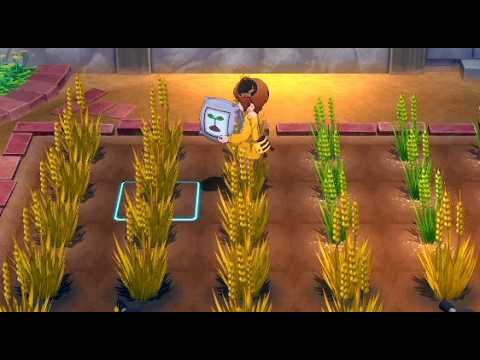
1. 🌾 Wheat Cultivation Basics: Manual Watering vs. Sprinklers
· Compares watering wheat once a day versus using a sprinkler.
· Explores how sprinklers speed up growth, and what results come from manual care.
· The experiment takes place in an underground area with no rain.
· The upper section is manually watered once a day, while the lower section relies on sprinklers.
· Fertilizer is consistently applied daily, starting from 0.5.
· Explores how sprinklers speed up growth, and what results come from manual care.
· The experiment takes place in an underground area with no rain.
· The upper section is manually watered once a day, while the lower section relies on sprinklers.
· Fertilizer is consistently applied daily, starting from 0.5.
00:00 - 00:45
1. 🌾 Wheat Cultivation Basics: Manual Watering vs. Sprinklers
· Compares watering wheat once a day versus using a sprinkler.
· Explores how sprinklers speed up growth, and what results come from manual care.
· The experiment takes place in an underground area with no rain.
· The upper section is manually watered once a day, while the lower section relies on sprinklers.
· Fertilizer is consistently applied daily, starting from 0.5.
· Explores how sprinklers speed up growth, and what results come from manual care.
· The experiment takes place in an underground area with no rain.
· The upper section is manually watered once a day, while the lower section relies on sprinklers.
· Fertilizer is consistently applied daily, starting from 0.5.
00:46 - 01:40
2. 💧 Watering Frequency and Fertilizer Effects: Quality Grade Boost Experiment
· Checks how quality changes when watering only once a day and applying fertilizer.
· Compares the results of only applying fertilizer without watering.
· The goal is to raise the wheat's grade to 7.
· Sprinklers water twice a day, morning and evening.
· Manual watering is done only once a day.
· Experimental results show that crop growth speed varies with watering frequency.
· Compares the results of only applying fertilizer without watering.
· The goal is to raise the wheat's grade to 7.
· Sprinklers water twice a day, morning and evening.
· Manual watering is done only once a day.
· Experimental results show that crop growth speed varies with watering frequency.
01:41 - 03:43
3. 📊 Experimental Environment and Initial Setup: Starting from Fall 9
· The experiment begins on Fall 9, with the date displayed in the upper right corner.
· Watering and fertilizing are done at 9 PM on the first day.
· Sprinklers water automatically, while manual watering is done once in the morning.
· The field quality is already at its maximum level.
· Therefore, the speed of quality grade increase may vary for each player.
· Fertilizer is applied daily; sprinklers water twice (morning and evening), and manual watering is done once.
· Watering and fertilizing are done at 9 PM on the first day.
· Sprinklers water automatically, while manual watering is done once in the morning.
· The field quality is already at its maximum level.
· Therefore, the speed of quality grade increase may vary for each player.
· Fertilizer is applied daily; sprinklers water twice (morning and evening), and manual watering is done once.
03:44 - 04:23
4. 📈 Wheat Growth Speed Comparison: Sprinklers vs. Manual Watering
· Growing wheat with sprinklers, watering twice a day, results in growth up to approximately grade 6.5.
· Manual watering once a day slows growth, but the experiment tests if increasing fertilizer application days can raise it to grade 7.
· The experiment showed that even with delayed manual watering, the maximum grade reached was only 6.5.
· Manual watering once a day slows growth, but the experiment tests if increasing fertilizer application days can raise it to grade 7.
· The experiment showed that even with delayed manual watering, the maximum grade reached was only 6.5.
04:24 - 07:46
5. ⏳ Cultivation Process Timelapse: Daily Fertilizer and Watering Routine
· Every morning, wake up, apply fertilizer, and water the upper section.
· Repeat this process until harvest, checking the current grade.
· After achieving a field evaluation grade of 99, time progresses for investigation.
· Loading times are cut out and shown through editing.
· On Sunday, Fall 16, harvest wheat planted a week prior.
· Repeat this process until harvest, checking the current grade.
· After achieving a field evaluation grade of 99, time progresses for investigation.
· Loading times are cut out and shown through editing.
· On Sunday, Fall 16, harvest wheat planted a week prior.
07:47 - 09:25
6. 🌾 Harvest Result Analysis: Sprinkler Use Achieves Grade 6.5
· The lower left area, using sprinklers, shows a confirmed grade of 6.5.
· Planting wheat with sprinklers allows for harvest in about a week.
· Applying the highest grade fertilizer daily and cultivating on a max-quality field results in a grade increase up to 6.5.
· Even with manual watering once a day and extending the cultivation period, it's difficult to raise the grade beyond 6.5.
· In conclusion, watering twice a day is recommended, even without installing sprinklers.
· Planting wheat with sprinklers allows for harvest in about a week.
· Applying the highest grade fertilizer daily and cultivating on a max-quality field results in a grade increase up to 6.5.
· Even with manual watering once a day and extending the cultivation period, it's difficult to raise the grade beyond 6.5.
· In conclusion, watering twice a day is recommended, even without installing sprinklers.
09:26 - 11:01
7. ❓ Fertilizer Only, No Watering: Growth Stalled
· Applying fertilizer without watering does not result in crop growth.
· Growth only occurs with watering, and watering twice a day slightly speeds it up.
· Fertilizer's effect lasts all day, so watering at night if dry increases quality.
· If you're not aiming for sprinklers or rare crops, this method seems suitable for growing wheat.
· Growth only occurs with watering, and watering twice a day slightly speeds it up.
· Fertilizer's effect lasts all day, so watering at night if dry increases quality.
· If you're not aiming for sprinklers or rare crops, this method seems suitable for growing wheat.
11:02 - 11:57
8. 📈 Final Conclusion: Optimal Wheat Cultivation Method
· Manually watering on the first day and then relying on sprinklers from the next day is also a good strategy.
· Watering once a day takes about 9 days, while watering twice a day with sprinklers takes about 7 days.
· Wheat can be cultivated up to a maximum grade of 6.5.
· Watering once a day takes about 9 days, while watering twice a day with sprinklers takes about 7 days.
· Wheat can be cultivated up to a maximum grade of 6.5.