Post
Baldur's Gate 3 Review ⭐9.8
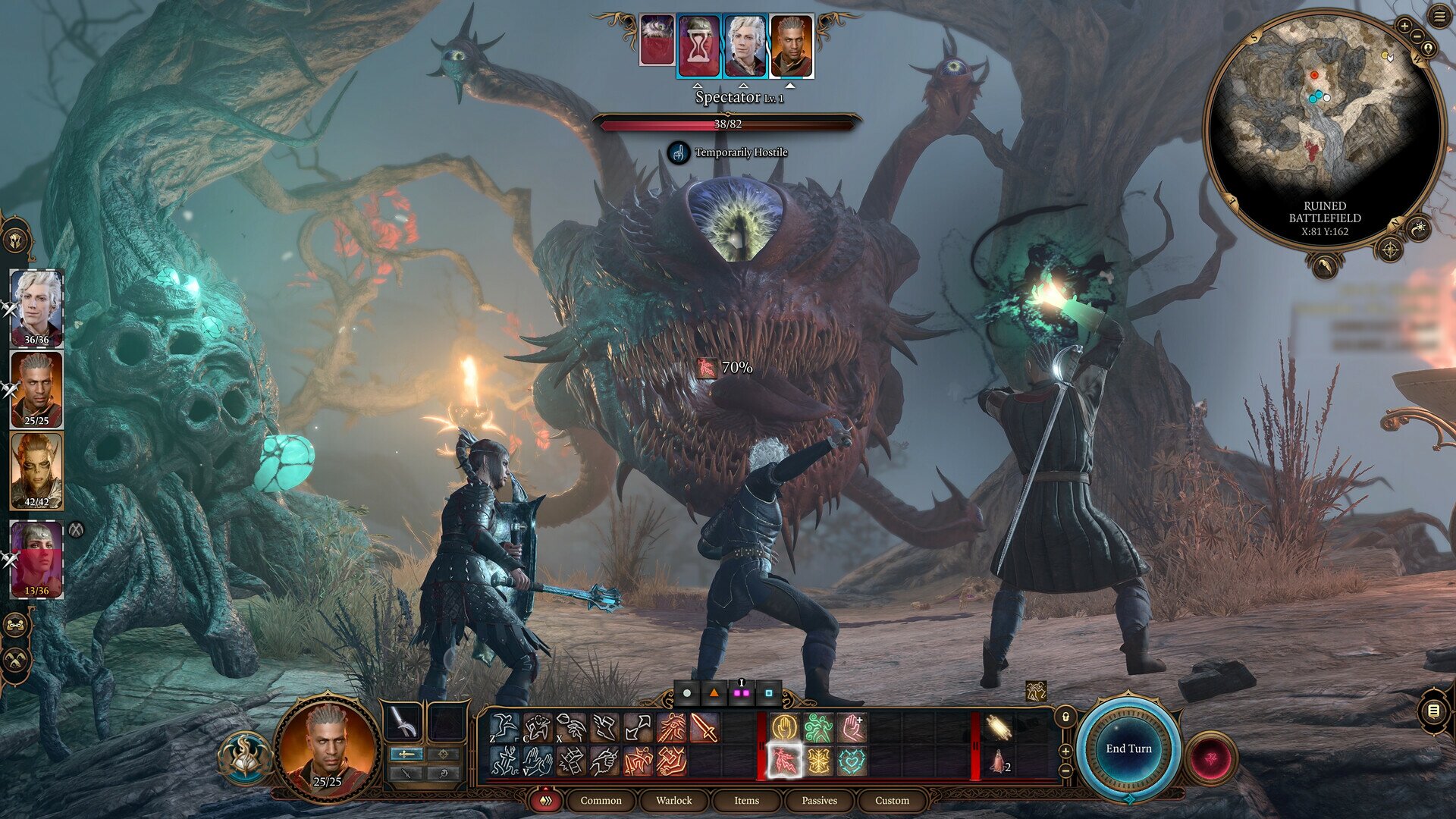
Larian Studios' 'Baldur's Gate 3 (hereinafter Baldur's 3)' officially launched on the 4th, after about 3 years of Early Access. Baldur's 3 has been a hot topic in many ways, from the initial development news to its official release.
The first is that it is a game that continues the legacy of the immortal masterpiece, the Baldur's Gate series, after 23 years, and the second is that Larian Studios, not BioWare, which developed the first and second installments, took over the development, bringing about changes that are no exaggeration to say that it is a different game from the previous work, beyond a prequel.
Above all, unlike recent AAA-class games, whose prices are rising but whose completeness is disappointing, Baldur's 3 started development in 2017 and went through 3 years of Early Access, showing off near-perfect completeness and a huge amount of gameplay in the release version, receiving great reviews.
Thanks to these results, it has succeeded in renewing the all-time high score of over 7,000 overwhelmingly positive recent reviews on Steam and 97 points on Metacritic. At this point, a question arises. What aspects of this game are attracting people to give it such generous reviews? Is it simply because it announced the revival of an old masterpiece IP? Or is it because the game is so vast?
Perhaps everyone has different opinions depending on their perspective and thoughts, but those who have played Baldur's 3 will commonly feel this emotion. "A work that reminded me of the essence of RPG, also known as role-playing game, which I had forgotten for a long time."
장르명: CRPG
출시일: 2023.08.04
리뷰판: 4.1.1
서비스: 라리안 스튜디오
플랫폼: PC, PS
플레이: PC
컨셉 플레이에 최적화 된 시스템
Before talking about Baldur's 3, it is necessary to know about the ecosystem of this genre first. Today's RPGs are often understood as a genre that simply includes character development elements, but the original meaning of Role-Playing Game is a genre based on role-playing.
In the early days, RPGs were played offline with friends, similar to board games. It was mainly enjoyed on the table, so it was called TRPG, and the Dungeon Master created a storyline based on the rulebook, and the players played each character and attacked the mission.
The real fun of TRPG is creating your own character and exploring the world. There is nothing as intuitive and visible as a computer, so individual imagination and acting are required, but that is also the charm of this genre, and the fun of the game varies greatly depending on how deliciously I act.
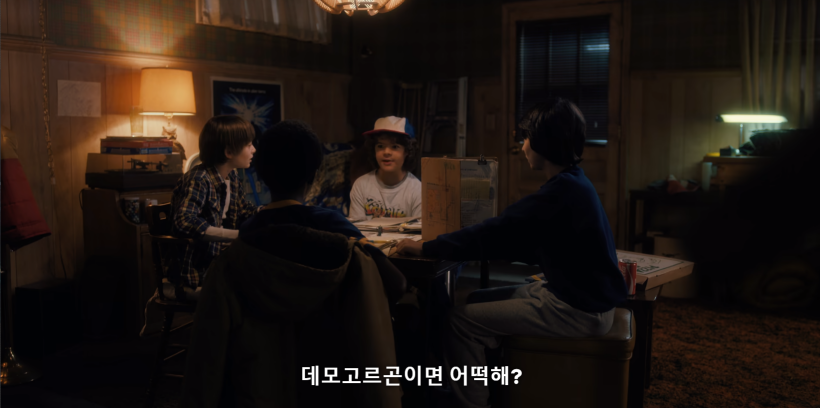
In North America, this culture is firmly established, so scenes of friends playing TRPGs sometimes appear in dramas such as 'The Big Bang Theory' and 'Stranger Things'. However, TRPGs had many limitations in terms of location, entry difficulty, and party recruitment, and as time passed, CRPG (Computer Role-Playing Game) was created to make it easier to enjoy them as computer games.
Many things have changed as TRPG has been changed to CRPG, a computer game. Among them, the biggest difference is that players do not need to act themselves, and the characters in the game move within a set framework. It has the advantage of being intuitive and convenient, but even if you create detailed character settings, it is difficult to feel the same level of immersion as before, as it moves within a limited system.
Baldur's 3 also progresses through adventures within a set story in a large framework, and the choices are also somewhat set. However, the range of choices is much wider than in typical games, and different results are obtained depending on the character settings, so it feels well-organized. In particular, thanks to the story that changes from moment to moment depending on the character settings I created, it gives me a more realistic feeling that I am exploring the D&D world.
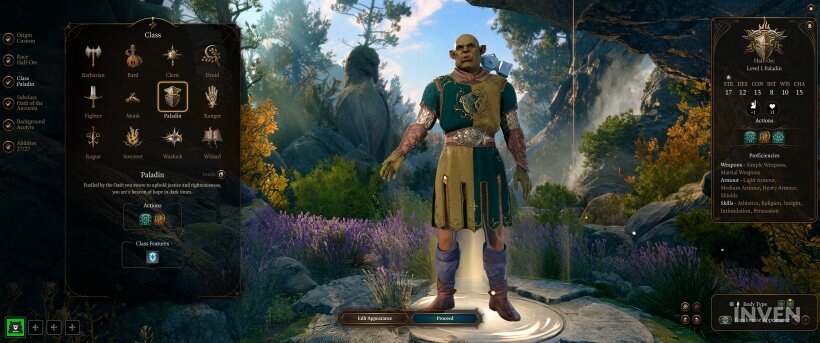
Various races such as humans, elves, half-elves, half-orcs, drow, githyanki, dwarves, gnomes, halflings, githyanki, and dragonborn appear in the game. Some races are derived from several tribes and have their own characteristics. Here, you can choose 12 classes, subdivided schools, and 11 origins to complete one character, and depending on which setting you choose, there will be significant changes in conversations with NPCs and combat styles in the future.

For example, if you choose a half-orc as a race, a race-specific option appears when a threat is needed. If you choose this option and succeed in the dice roll, a description appears that you are just staring silently, but most opponents show an amazing effect of coming out in a low profile on their own. It's like the face itself is applied as a kind of free pass without having to bother mixing words.
A unique device that allows you to maintain the concept also appears in the job. For example, paladins choose one of three oaths as a sub-class. And in the game, there are often situations where you have to do something as a paladin, but if you commit an act that goes against the oath you have chosen, you will fall and be able to use the power of darkness. You are free to do bad things with this in mind, but if you want to maintain the concept that you are a paladin, you must forcibly continue to play with conviction.
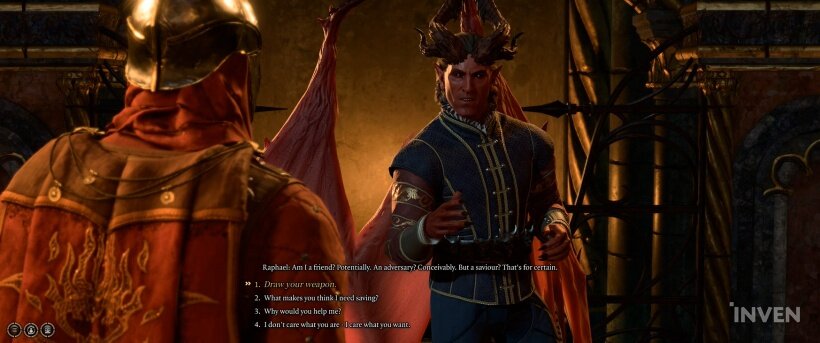
As such, there are numerous settings and choices in the game, and the results vary depending on the player's actions. The method of giving immediate feedback no matter what choice you make makes you think and choose what will happen, rather than a long and boring conversation.
In summary, it guarantees maximum freedom in setting play and at the same time allows you to firmly grasp each concept. This well-organized system is directly related to the fun of the game, and allows you to feel a different experience every time you play it multiple times.
This interaction, in which the player's choices affect the story progression and, furthermore, the player can feel the changes in the world, is enough to instill in the player the perception that they are truly exploring that world.

Also, it is worth noting that role-playing is not only applied to the player, but also expanded to affect the companions who go on adventures together.
For example, in a typical RPG, there are companions who go on adventures with the player. These companions are reliable helpers who provide various help in the adventure, but when you think about it, they are just NPCs that move within a set setting. In other words, no matter how harshly the player drives them, they only provide unwavering help in the system.

On the other hand, the companions in Baldur's 3 are different. There are 7 origin characters in the game, and you can choose one of them as your player character. The remaining origin characters who are not selected can be welcomed as companions during the game, and they join the party with their own circumstances.
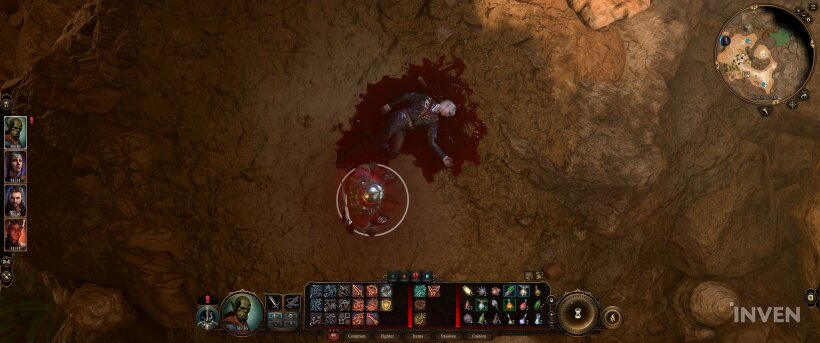
Basic gameplay flows around the player, but sometimes companions intervene in the middle of conversations in situations related to the companion's circumstances. At this time, the companion tries to move according to his own thoughts, and depending on what choice the player makes, his favorability may decrease, or he may even leave the party and become hostile.
Conversely, if the favorability goes all the way, the relationship becomes stronger and develops into such a relationship. Fortunately, each companion has a clear tendency, so if you understand what the setting is in advance, you can temporarily cut off the party and act according to the situation. And even if you go to the worst situation, if you roll the dice well, you can refer to it a few times, so it doesn't feel very tight.
The companions in Baldur's 3 are not companions who unconditionally follow without conditions. The companion relationship that started because of mutual understanding is strengthened by sharing various events and having deep inner conversations at the campsite, and progresses to a relationship beyond companionship. This process, along with the concept setting, allows you to have affection and immerse yourself in each character.
Freedom of high play that you can do as you think
As mentioned earlier, TRPG is played based on the player's imagination. So, although intuition is poor, it is possible to solve the game as I thought based on tremendous freedom.
For example, even when fighting an enemy, you can say, "I'm going to bend my knees in front of the enemy for a moment to induce carelessness, and then gain momentum to quickly dash and slash." Of course, since it is a game with strict rules, the success or failure is determined through a complicated procedure.
Unless a virtual reality game comes out, CRPG cannot guarantee infinite freedom like TRPG because it has to implement game play and combat within the program. This is the same for Baldur's 3. However, there are so many things you can do and devices you can interact with around you that you can actually do almost all the plays that players can imagine in the game.

Even if it is limited freedom, the types of actions supported in the game are vast and you can do almost anything, so the difficulty of the game varies greatly depending on the player's imagination.
For example, in a typical game, if a door is locked, it is treated as an inaccessible space. However, in Baldur's 3, there are many ways to open the door. You can pick the door with a lockpick or break it if you have the strength. Or you can smartly use magic to solve it. This is the same for boxes.
If you can't go to high walls and buildings, you can stack boxes around you to make stairs and jump. If you are worried about falling, you can use falling magic. Or you can find a tunnel nearby and pass through the tunnel with magic that makes your body smaller. What I've said so far is just an example, and you can interact with more things in the game.
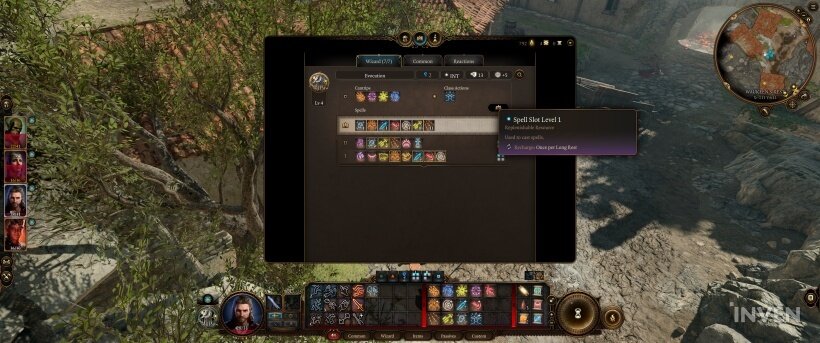
As such, if you have the skills and abilities provided in the game, you can actually play freely as you want. This highly free play allows players to think constantly, which also motivates them to continue enjoying the game.
Freedom-filled play shines even more in combat. One of the biggest changes that differentiates Baldur's 3 from its predecessors 1 and 2 is that it has changed from real-time pause combat to turn-based combat. As the battle changed to turn-based, many parts changed compared to the previous work.
In the early days of Early Access, there were really many likes and dislikes about this. However, this is probably a matter of taste because the feeling given by each genre is really different. Personally, I felt that Baldur's 3's turn-based method based on the D&D 5th rule was more suitable for the original.

Unlike action games that exchange attacks and defenses in real time, turn-based games have a limited number of actions that can be taken in one turn. Therefore, strategic judgment is much more important than in other genres of games. Most turn-based games allow you to create strategies within the unique resources that the character has. If you go deeper, the amount of damage may increase depending on external factors such as terrain and location.
On the other hand, Baldur's 3 allows you to create a variety of unpredictable strategies by using not only the character's abilities, but also damage caused by various actions and terrain, and various consumables. If you simply fight, you can just use the skills you have, but if you want to have a slightly more complex but easy fight, you can prepare as much as you can to gain an advantage.
For example, you can usually carry an oil barrel and lay it in advance in a place where a battle is likely to occur, and then lure the enemies there. After that, if an ambush companion detonates the oil barrel with fire magic, it can inflict massive damage at once and start the battle. Or you can climb up a ladder and then break the ladder, or move surrounding objects to create a barricade to block the approach of enemies.
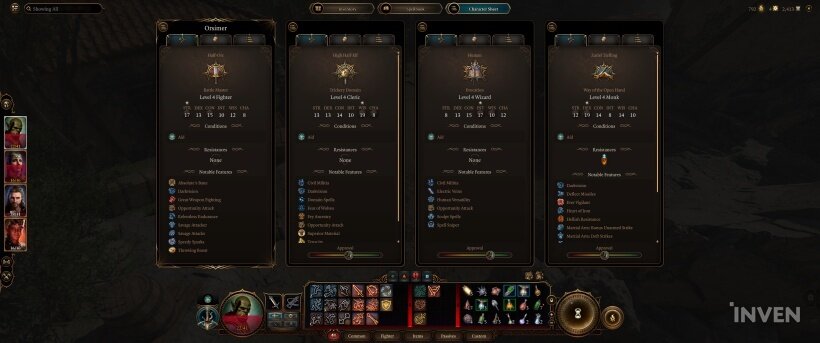
These strategic plays that require creativity and highly free battles continuously induce the interest of the game and, furthermore, allow you to maintain the tension of the game even in the mid-to-late stages. Of course, it would be very tiring to do all the battles like this. If you have a certain level of specs, it provides a level of difficulty that can simply be pressed with specs, so even beginners can enjoy it without difficulty.
In particular, the number of character development is so wide that dozens of strategies can be created depending on which build the party is combined with. Therefore, there is an impression that turn-based games are slow-paced and repetitive, but at least in Baldur's 3, it was difficult to feel this.
Since TRPG itself is a rather unfamiliar genre in Korea, it is difficult to say that CRPG, which is based on it, is popular. This is because online games had already settled in the Korean game market before TRPG was spread. Currently, it has become a minority hobby that only those who know it know. In a way, Old School RPG for us could be 'The Kingdom of the Winds'.
Therefore, the D&D 5th rule, which is the basis of Baldur's 3, may feel unfamiliar. All result values are determined by dice, and the same is true for combat. Magic has good effects, but the number of uses is limited until you take a long rest, so it is awkward to manage character resources. The process of building character stats and skills is also very complicated compared to the latest RPGs, so it is difficult to say that it is an easy and user-friendly game even as a compliment.
Also, the balance between jobs in the D&D 5th rule is disappointing, so the arrows fired by fighters are more powerful than rangers, and bards are versatile jobs with a wide hexagon. Basically, it's a single-player game, so you can develop and enjoy it in the direction you want, but it can be disappointing to see that the companion job you created to roll moderately is more powerful than the character you worked hard to develop.
In addition, the lack of official Korean language support also raises the barrier to entry due to language. Due to the nature of the CRPG genre, where you have to read and select fingerprints, you cannot fully enjoy the game 100% if you do not understand and understand the situation. Imagine going on a trip abroad without knowing English and being bombarded with questions at immigration. If you say one wrong word, you may have to return home immediately.
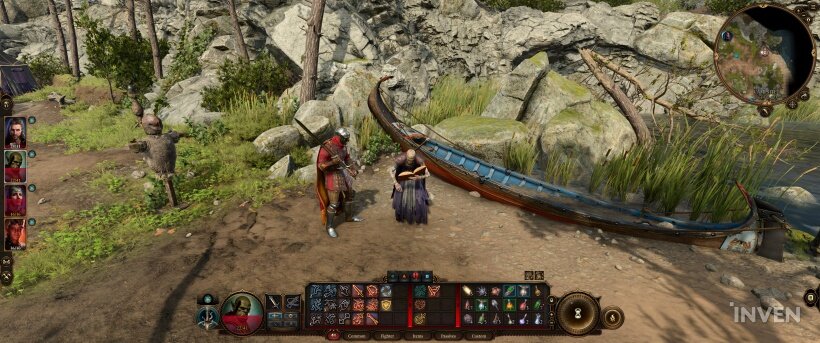
However, even considering all of this, I think Baldur's Gate 3 is a work that RPG gamers should definitely try at least once. It is no exaggeration to say that it is a royal table for those who like RPGs, such as adventure that stimulates curiosity, attractive storyline, systematic combat system, and level design that calls for challenge.
Larian Studios has established a unique position in the CRPG market through the Divinity series. I felt it from the previous game, but I think it is a developer that thinks about how RPG fans can enjoy the game and how to capture the emotions of TRPG well.
Compared to the latest games, Baldur's 3 has many unnecessarily complicated and difficult parts. In that case, I recommend that you don't try to find information and go to the optimal route, but just play as you are drawn to it. Every choice brings its own fun, and this will be the easiest and surest way to enjoy Baldur's 3 100%.
- 완벽에 가깝게 구현한 D&D 세계관
- 내가 만든 캐릭터로 만드는 특별한 서사
- 생각한 거의 모든 것을 할 수 있는 자유도
- 체계적인 탐험과 전략적인 전투 시스템
- 살짝 아쉬운 직업 간 밸런스
웹진 인벤정수형 기자
2023-08-11