Post
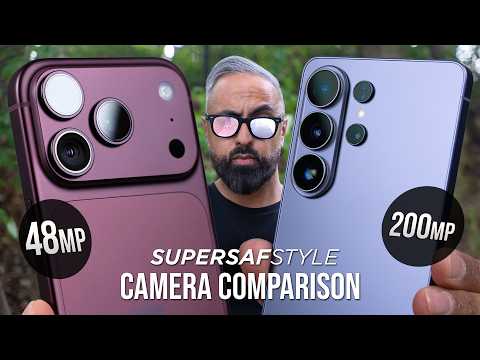
Análisis comparativo del rendimiento de la cámara del iPhone 18 Pro Max vs. el Galaxy S26 UltraAn in-depth comparative analysis of the iPhone 18 Pro Max and Galaxy S26 Ultra, showcasing the pinnacle of smartphone camera performance. We delve into everything from photos and videos to special features to help you decide which device is the best fit for you.
1. 📸 Basic Camera Performance: Color, Detail, and Resolution Comparison
· For basic camera shots, the iPhone offers natural colors, while Samsung provides more vivid and rich colors.
· The iPhone allows color adjustment based on photo styles and captures more detail with its default 24MP shooting.
· Samsung shoots at 12MP by default, but a 24MP setting is available by installing the Camera Assistant app.
· Both devices support high-resolution shooting, with the iPhone supporting 48MP and Samsung supporting 50MP or up to 200MP for even higher detail.
· The iPhone allows color adjustment based on photo styles and captures more detail with its default 24MP shooting.
· Samsung shoots at 12MP by default, but a 24MP setting is available by installing the Camera Assistant app.
· Both devices support high-resolution shooting, with the iPhone supporting 48MP and Samsung supporting 50MP or up to 200MP for even higher detail.
| Category | Details |
|---|---|
| Default Color Tone | iPhone: Neutral, Samsung: Vivid |
| Default Resolution | iPhone: 24MP, Samsung: 12MP (Adjustable) |
| Max Resolution | iPhone: 48MP, Samsung: 200MP |
00:12 - 01:44
1. 📸 Basic Camera Performance: Color, Detail, and Resolution Comparison
· For basic camera shots, the iPhone offers natural colors, while Samsung provides more vivid and rich colors.
· The iPhone allows color adjustment based on photo styles and captures more detail with its default 24MP shooting.
· Samsung shoots at 12MP by default, but a 24MP setting is available by installing the Camera Assistant app.
· Both devices support high-resolution shooting, with the iPhone supporting 48MP and Samsung supporting 50MP or up to 200MP for even higher detail.
· The iPhone allows color adjustment based on photo styles and captures more detail with its default 24MP shooting.
· Samsung shoots at 12MP by default, but a 24MP setting is available by installing the Camera Assistant app.
· Both devices support high-resolution shooting, with the iPhone supporting 48MP and Samsung supporting 50MP or up to 200MP for even higher detail.
| Category | Details |
|---|---|
| Default Color Tone | iPhone: Neutral, Samsung: Vivid |
| Default Resolution | iPhone: 24MP, Samsung: 12MP (Adjustable) |
| Max Resolution | iPhone: 48MP, Samsung: 200MP |
01:51 - 02:46
2. ⚙️ Variable Aperture Feature: Usability and Actual Effect Analysis
· The newly added variable aperture feature on the iPhone 18 Pro Max allows adjustment of background blur effects by setting various F-stops.
· It's particularly useful for controlling the focus range when shooting close-up subjects, but in auto mode, it rarely goes beyond F1.8, so the perceived effect in everyday use might not be significant.
· In low-light conditions, it uses an F1.48 aperture to capture more light and can also create lens flare effects.
· Overall, it's an interesting feature, but it doesn't seem to significantly impact the everyday photography experience.
· It's particularly useful for controlling the focus range when shooting close-up subjects, but in auto mode, it rarely goes beyond F1.8, so the perceived effect in everyday use might not be significant.
· In low-light conditions, it uses an F1.48 aperture to capture more light and can also create lens flare effects.
· Overall, it's an interesting feature, but it doesn't seem to significantly impact the everyday photography experience.
02:47 - 03:24
3. 🌃 Low-Light Photography: Sharpness and Detail Comparison
· In low-light environments, both devices show decent photo quality, but the iPhone provides sharper and cleaner results.
· Especially in complex low-light situations, the iPhone preserves more detail and balances the foreground and background well.
· Even in indoor low-light shots, the iPhone delivers cleaner and sharper images, showing an advantage in text readability.
· Overall, the iPhone demonstrates superior performance in low-light photography.
· Especially in complex low-light situations, the iPhone preserves more detail and balances the foreground and background well.
· Even in indoor low-light shots, the iPhone delivers cleaner and sharper images, showing an advantage in text readability.
· Overall, the iPhone demonstrates superior performance in low-light photography.
03:41 - 04:31
4. 🏞️ Ultra-Wide Camera: Sharpness and Macro Photography Comparison
· Both devices are equipped with excellent ultra-wide cameras, but Samsung's results are generally sharper.
· Samsung effectively applies post-processing sharpening, bringing out the details in ultra-wide images.
· The iPhone's ultra-wide images tend to be rendered a bit softer, and this difference is particularly noticeable in low-light conditions.
· Samsung also provides sharper results in macro photography, and overall, Samsung has the edge in ultra-wide camera performance.
· Samsung effectively applies post-processing sharpening, bringing out the details in ultra-wide images.
· The iPhone's ultra-wide images tend to be rendered a bit softer, and this difference is particularly noticeable in low-light conditions.
· Samsung also provides sharper results in macro photography, and overall, Samsung has the edge in ultra-wide camera performance.
04:32 - 06:20
5. 🔭 Telephoto Camera: Optical Zoom Performance and Expandability Comparison
· The iPhone offers 4x optical zoom, while Samsung is equipped with two telephoto lenses supporting 3x and 5x optical zoom.
· Starting from 3x zoom, Samsung's optical zoom delivers superior results compared to the iPhone's digital zoom.
· At 4x zoom, the iPhone's telephoto lens performs well, and from 5x zoom onwards, Samsung's second telephoto lens takes over.
· Beyond 10x zoom, Samsung's image processing technology shines, providing cleaner results than the iPhone even at 20x and 40x zoom.
· Samsung supports up to 100x zoom, offering a significant advantage in terms of expandability.
· Starting from 3x zoom, Samsung's optical zoom delivers superior results compared to the iPhone's digital zoom.
· At 4x zoom, the iPhone's telephoto lens performs well, and from 5x zoom onwards, Samsung's second telephoto lens takes over.
· Beyond 10x zoom, Samsung's image processing technology shines, providing cleaner results than the iPhone even at 20x and 40x zoom.
· Samsung supports up to 100x zoom, offering a significant advantage in terms of expandability.
| Zoom Level | Comparison Result |
|---|---|
| 3x | Samsung Superior (Optical Zoom) |
| 4x | iPhone Superior (Optical Zoom) |
| 5x | Samsung Superior (Optical Zoom) |
| 10x and above | Samsung Superior (Image Processing) |
| Max Zoom | iPhone: 40x, Samsung: 100x |
06:21 - 07:07
6. 🌃 Low-Light Telephoto Photography: Noise Processing and Detail Comparison
· In low-light telephoto shots, both devices show similar performance at 2x zoom.
· At 3x zoom, Samsung's telephoto lens might yield poorer results than the iPhone's crop.
· At 4x and 5x zoom, each device's optical zoom lens performs well, with the iPhone showing brighter results.
· From 10x zoom onwards, the iPhone's noise increases, while Samsung effectively processes the noise.
· At 20x zoom, Samsung's processing makes text appear cleaner, but excessive processing can reduce readability. The iPhone shows less processed results relatively.
· At 3x zoom, Samsung's telephoto lens might yield poorer results than the iPhone's crop.
· At 4x and 5x zoom, each device's optical zoom lens performs well, with the iPhone showing brighter results.
· From 10x zoom onwards, the iPhone's noise increases, while Samsung effectively processes the noise.
· At 20x zoom, Samsung's processing makes text appear cleaner, but excessive processing can reduce readability. The iPhone shows less processed results relatively.
07:24 - 09:01
7. 🧑🤝🧑 Portrait Mode: Color, Edge Detection, and Zoom Usage Comparison
· In portrait mode using the main camera, both devices deliver excellent results, but the iPhone's colors are more natural, and black representation is more realistic.
· At 3x zoom, Samsung, with its dedicated zoom camera, provides more detail.
· At 4x and 5x zoom, both devices perform excellently, with the iPhone showing more natural results, especially in edge detection for complex hair or clothing.
· Samsung can sometimes result in unnatural separation between the subject and the background.
· Overall, the iPhone is preferred in portrait mode for its more natural rendering and color tones.
· At 3x zoom, Samsung, with its dedicated zoom camera, provides more detail.
· At 4x and 5x zoom, both devices perform excellently, with the iPhone showing more natural results, especially in edge detection for complex hair or clothing.
· Samsung can sometimes result in unnatural separation between the subject and the background.
· Overall, the iPhone is preferred in portrait mode for its more natural rendering and color tones.
09:03 - 09:54
8. 🤳 Selfie Camera: Field of View, Features, and Low-Light Performance Comparison
· Both devices offer good selfie quality, but the iPhone supports a wider field of view and the Center Stage feature.
· The Center Stage feature is convenient for video recording as it automatically tracks the subject to keep them in frame.
· Both devices have excellent dynamic range and deliver good results in selfie portrait mode.
· For low-light selfie shooting, using the flash is recommended, and the iPhone's Center Stage feature enhances the selfie experience.
· The iPhone has a slight edge in selfie camera performance due to the Center Stage feature.
· The Center Stage feature is convenient for video recording as it automatically tracks the subject to keep them in frame.
· Both devices have excellent dynamic range and deliver good results in selfie portrait mode.
· For low-light selfie shooting, using the flash is recommended, and the iPhone's Center Stage feature enhances the selfie experience.
· The iPhone has a slight edge in selfie camera performance due to the Center Stage feature.
09:55 - 10:57
9. ✨ AI Editing Features: Photo Styles, Generative Edit, and Pro Control Comparison
· The iPhone's Photo Styles feature allows users to adjust the tone and texture of photos as desired.
· Samsung has traditionally offered powerful AI editing features, and since the iOS 17 update, the iPhone also supports similar levels of AI editing.
· Both devices allow image editing using prompts and show good results for tasks like changing clothing colors.
· The iPhone's new 'Expand' and 'Spatial Reconstruction' features open up new possibilities in image editing.
· The Pro Control feature has been added to the iPhone's camera app, allowing professional-level settings without external apps.
· Samsung has traditionally offered powerful AI editing features, and since the iOS 17 update, the iPhone also supports similar levels of AI editing.
· Both devices allow image editing using prompts and show good results for tasks like changing clothing colors.
· The iPhone's new 'Expand' and 'Spatial Reconstruction' features open up new possibilities in image editing.
· The Pro Control feature has been added to the iPhone's camera app, allowing professional-level settings without external apps.
11:00 - 11:56
10. 🎬 Video Recording: Image Quality, Dynamic Range, and Low-Light Performance Comparison
· Overall, both devices are capable of high-quality video recording.
· In terms of dynamic range, the iPhone is superior, showing better results, especially in cloud rendering.
· In low-light video recording, the iPhone also provides sharper and cleaner results. Samsung uses coating technology to reduce lens flare.
· The iPhone demonstrates a better ability to correct flickering lights.
· Samsung supports 8K video recording across all its cameras, including ultra-wide and telephoto, offering more detail and editing flexibility.
· In terms of dynamic range, the iPhone is superior, showing better results, especially in cloud rendering.
· In low-light video recording, the iPhone also provides sharper and cleaner results. Samsung uses coating technology to reduce lens flare.
· The iPhone demonstrates a better ability to correct flickering lights.
· Samsung supports 8K video recording across all its cameras, including ultra-wide and telephoto, offering more detail and editing flexibility.
| Item | Comparison Result |
|---|---|
| 4K Quality | Similar |
| Dynamic Range | iPhone Superior |
| Low-Light Video | iPhone Superior |
| 8K Video | Samsung Superior (All Cameras Supported) |
11:57 - 12:28
11. 🏃♂️ Video Stabilization and Special Features: Action Mode, Horizon Lock, Cinematic Mode Comparison
· 4K video stabilization performance is excellent on both devices, but comparing Action Mode and Super Steady Mode, the iPhone shows better dynamic range and sharpness.
· Samsung's new Horizon Lock feature is an innovative function that maintains a level horizon even when the camera is rotated 360 degrees.
· In Cinematic Mode, both devices deliver good results, but the iPhone is superior in edge processing.
· The iPhone offers a feature to edit regular videos into cinematic videos, increasing its versatility.
· Both devices support Log shooting, providing flexibility for post-production.
· Samsung's new Horizon Lock feature is an innovative function that maintains a level horizon even when the camera is rotated 360 degrees.
· In Cinematic Mode, both devices deliver good results, but the iPhone is superior in edge processing.
· The iPhone offers a feature to edit regular videos into cinematic videos, increasing its versatility.
· Both devices support Log shooting, providing flexibility for post-production.
13:16 - 14:44
12. 🎵 Audio Recording: Noise Cancelling and Sound Quality Comparison
· Both devices offer AI-based noise-canceling features. Samsung uses 'AI Audio Eraser,' and the iPhone uses 'Audio Mix.'
· The iPhone's Audio Mix provides various modes like In-Frame, Studio, and Cinematic, allowing adjustment of the noise-canceling level.
· Actual test results show that both devices effectively remove background noise, but which method is superior is left to user judgment.
· Overall, both devices provide excellent audio recording quality.
· The iPhone's Audio Mix provides various modes like In-Frame, Studio, and Cinematic, allowing adjustment of the noise-canceling level.
· Actual test results show that both devices effectively remove background noise, but which method is superior is left to user judgment.
· Overall, both devices provide excellent audio recording quality.
14:45 - 15:14
13. 🏆 Final Conclusion: iPhone 18 Pro Max vs. Galaxy S26 Ultra
· Both devices boast excellent camera performance, so you can expect satisfactory results regardless of your choice.
· The iPhone excels in natural color tones, superior low-light performance, stable video recording, and innovative editing features.
· Samsung holds an advantage in vivid colors, overwhelming zoom capabilities, diverse shooting options (8K, 100x zoom), and powerful AI editing features.
· The optimal choice may vary depending on your shooting style and preferences.
· The iPhone excels in natural color tones, superior low-light performance, stable video recording, and innovative editing features.
· Samsung holds an advantage in vivid colors, overwhelming zoom capabilities, diverse shooting options (8K, 100x zoom), and powerful AI editing features.
· The optimal choice may vary depending on your shooting style and preferences.