Post
[Town Star] Making Gasoline for Your Town
Town Star has various starting strategies, but they share a primary objective: making Gasoline. After selecting the location of your town, you obtain $20,000 and 40 units of Gasoline. Gasoline is used when you ship your produced goods, and it does not recharge automatically over time.
Therefore, you need to start making Gasoline before spending the initial supply of 40 units, or you won’t be able to make further trades. If the 40 units run out before completing a Gasoline-producing system, you will likely go bankrupt as you will have to pay your workers without any trade income.
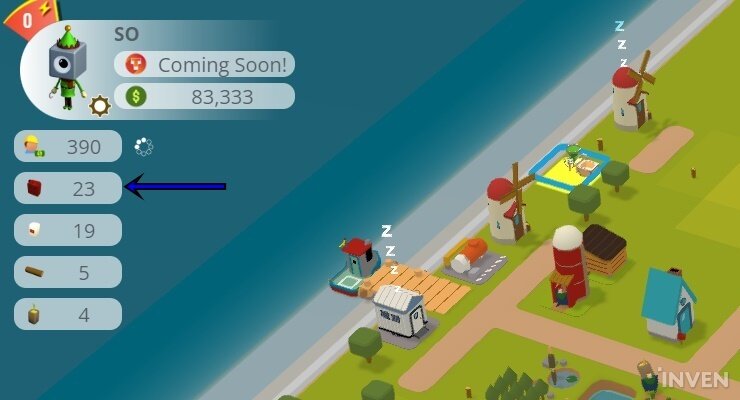
■ Step.1 Start producing primary goods
Choose your starting strategy: farm or ranch?
In the early stage, you can only produce basic products like Wheat. You are given Wheat Fields and Farmer tiles as initial supply. But you earn only $3,000 from selling 10 units of Wheat. Another basic resource, Lumber, only yields $2,500 for each 10 units.
You might think the income is decent enough. But remember, your goal is to complete a Gasoline-producing system before you use up the initial supply. The system includes Oil Pumps, Refineries, Power Plants, and Water Pumps/Facilities. If you waste Gasoline on selling low-value products, you may not be able to set up the facilities at all.
Therefore, you need to make more money by selling processed goods, instead of basic products like Wheat or Lumber. Popular goods are produced from the Windmill or ranch facilities. Windmills can produce Flour (Wheat), Sugar (Sugar Cane), and Salt (Salt Water). In the case of ranch facilities, Chicken Coops produce Eggs, Milk Barns produce Milk, and Sheep Pens produce Wool.

Most strategies start in a similar way. For the basic Wheat-Flour strategy, start by making three Wells and Wheat Fields respectively, and then build a Lumberjack House to collect Lumber. Sell ten units of Wheat two or three times to make extra money.
If you have some Wheat stored in your Silo, build one or two Windmills. If you’d like to cut down the cost spent on workers, complete the construction of two Windmills after gathering enough materials to produce Flour. Then click on Windmill to make Flour, and sell it by ten units. The trade interval will be longer compared to when you sell unprocessed Wheat. Be careful not to spend too much money, and expand your town at a slow pace. If you can’t pay your workers because of fund shortage, the workers will stop working.
For the ranch strategy, start off in the same way, but build two Feed Mills and Troughs, and one Ranch House. When your Troughs begin to fill up, build a Sheep Pen and start producing Wool. If your town is by the coast, place Salt Fields instead of Wheat Fields, produce Salt using your Windmill, and then sell the Salt.
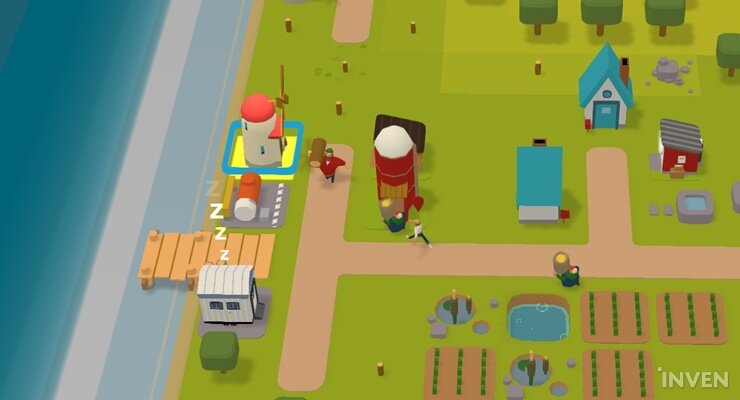
Watch where you build! Boost productivity by understanding water, wind, and shade.
In the course of producing primary goods, it’s important to understand water, wind, and shade. First, water is an essential resource either in farms or ranches. The initial water resource, the Well, needs workers to draw and deliver water to each facility, which can negatively affect your productivity.
Ponds are useful water resources to make up for that. But it’s difficult to place a Pond early in the game as it costs $10,000, and a farmworker needs to deliver 10 units of water to build it. But if you manage to place it, it automatically provides 2 units of water to 8 closest tiles, and 1 unit to the secondary tiles.
Auto-supply can be a great advantage. It takes more time for a worker to draw and deliver water than to grow crops. A single Pond can be more efficient than several workers. A Wheat Field, for example, requires three units of water to start producing Wheat. If your water resource is a Well, a farmworker must travel back and forth three times. But if you have a Pond next to the field, it provides two units of water automatically, so your worker only needs to deliver once. If you have two Ponds, your field will start producing Wheat immediately.
If your town is in Forest terrain, use Marsh tiles to your advantage as well. It doesn’t provide water to a large area like a Pond, but it provides one unit of water to the adjacent tiles.

You need to watch out for wind and shade when building Windmills or Milk Barns. First, wind influences the productivity of Windmills; and wind itself is influenced by buildings’ height. Tall buildings like the Windmill or Silo block wind within a 3-tile radius, so they must be at least 3 tiles away from Windmills. Worker houses block wind within a 2-tile radius, while relatively low buildings like the Storehouse block wind only in the neighboring tile. Low buildings such as the Feed Mill, Chicken Coop, or Sheep Pen do not influence wind flow, so they can be placed right next to Windmills.
Also, most starter buildings create shades like they block wind. Crop growth is negatively affected in shaded tiles. Wheat, for example, only takes 20 seconds to grow in the optimal condition. But if the Wheat Field is surrounded by Windmills and worker houses, it will take 160 seconds to produce Wheat.
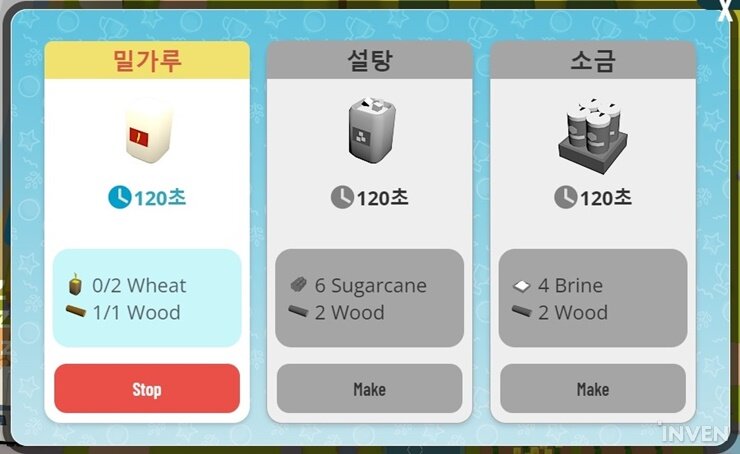
The bottom line is quite simple. Don’t place tall buildings near Wheat Fields, but place a Pond or Marsh to automatically supply water.
The ideal location for Windmills would be the town’s edge. As tall buildings, Windmills block wind flow and create shade, so it is not advised to place them in the town center. Put at least three tiles between Windmills, and place Chicken Coops, Sheep Pens, or Feed Mills in-between them, since these facilities are not affected by wind or shade.
When expanding your town, destroy and reconstruct buildings to increase productivity and stability of the town. There is a small tip for placing worker houses, which block wind and create shade at the same time. Place a road on the town’s corner, and place all worker houses around it, since workers will not return home as long as there’s work to do. In short, it’s best to separate the Windmill area, farming area, and residential area.
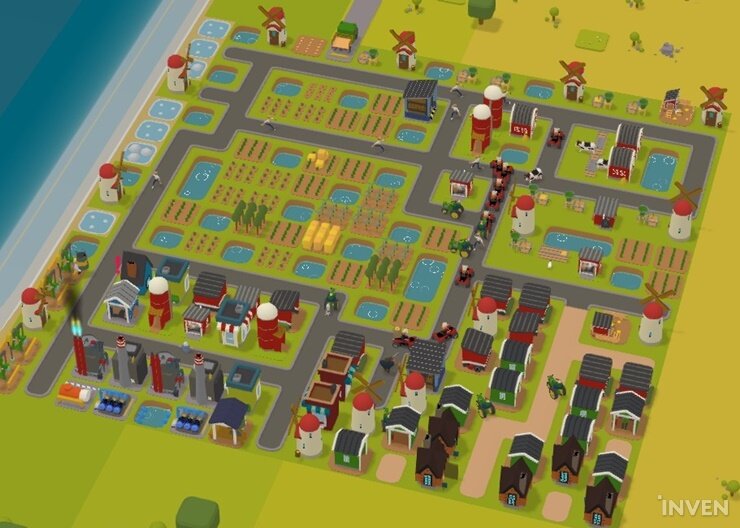
■ Step.2 You are ready! Pump and refine oil.
Start with Oil Pump, Refinery, Wind Turbine… And then, the Power Plant.
If you keep selling processed goods such as Wool or Flour, your fund will soon exceed $100,000. And you will have 20 to 25 units of Gasoline, assuming that you spend 1 unit on each trade, and that you haven’t wasted it on selling basic products like Wheat or Lumber.
Now it’s time to start building facilities to make Gasoline. You need to pump Crude Oil, refine it into Petroleum, and then process it into Gasoline. In order to do that, you need to produce Crude Oil, and provide electricity and industrial water as well.
First, build three or four Oil Pumps and one Worker House. Note that industrial facilities create “pollution”, which hinders crop growth in nearby tiles. So, you need to place industrial facilities away from your farming area. It’s common to place them at the corner, alongside higher-level production facilities or worker houses.
Once you build Oil Pumps, they will produce Crude Oil automatically, and workers will collect and store it in a Fuel Storage. Fuel Storages can store up to 40 units of Crude Oil, Petroleum, Gasoline, and Jet Fuel. If you still have that initial Gasoline supply of 40 units, you won’t need two storages.
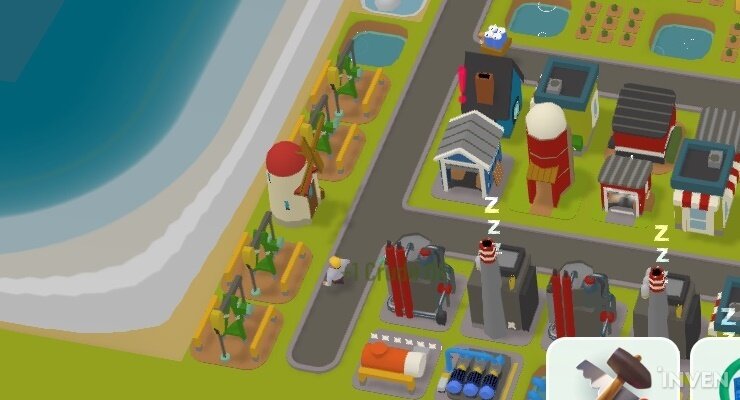
If you have some units of Crude Oil in storage, you’re almost there. Now build a Refinery and other facilities to start the refining process. You need a Refinery, Wind Turbine, Warehouse, and a Water Facility that will produce Water Drums. Like Windmills, Wind Turbines are also influenced by wind, so place two or three of them among low buildings.
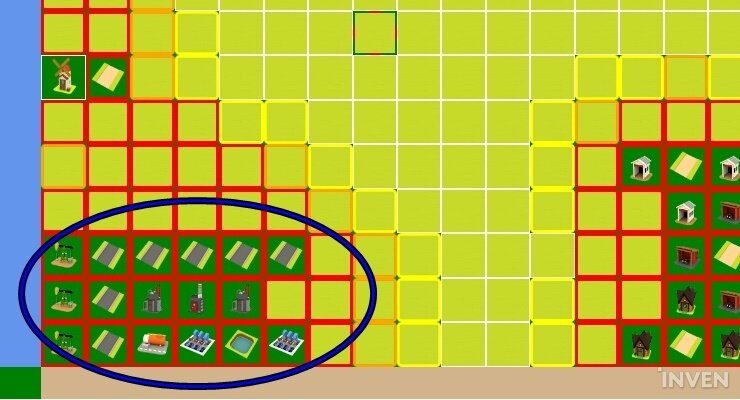
Before building a Refinery, place a Pond first, and place two Water Facilities on both sides. Water Facilities provide Water Drums to a 1-tile radius, and they are needed to build a Power Plant later on. Then build a Refinery on the north side of the Pond. The two Water Facilities will provide a total of two Water Drums automatically, so Refinery workers do not have to spend time delivering water.
Now you just wait it out. After the Refinery is constructed, refine stored Crude Oil into Petroleum, and then into Gasoline. If you’d like to maximize productivity, build a second Refinery. Refine Crude Oil into Petroleum in the first one, and Petroleum into Gasoline in the second one. Then place a Power Plant between the two Refineries. Power Plants automatically provide one to three units of Energy to nearby tiles. After this point, you won’t need Wind Turbines any more, and you can choose to sell extra Energy (though it is of low value).
You’ve now completed an automated Gasoline-producing system. You will no longer have to worry about running out of Gasoline.
GameFi Inven
2023-01-13